Showing posts with label Probe. Show all posts

Wednesday, April 12, 2023

Because no good interview should go unused

Early this year I prepared a written Q-and-A-style interview -- for a venue that ceased operations before the interview posted. That's life in the glamorous world of publishing. Well, I operate my own venue, now, don't I? 

So, here 'tis that interview. (For more about any title mentioned in the interview -- or about any title of mine, for that matter -- click its thumbnail cover on the righthand column.)

My first book
(in its original edition)
When did you start writing? 

I began writing as a (very) part-time hobby in 1982. My day job at the time, supervising a software-development department, was very demanding—but at least by that October I’d completed the master’s degree program which for years had been consuming all my evenings and weekends. For diversion beginning late that year, I started on what eventually became my first novel (the technothriller Probe), which I sold in 1990 and was published in 1991. Also in 1991, I began a new day job, my most demanding yet. After that, I scarcely had time to write anything new for the next several years.

In 1999, I gave myself a sabbatical to try out the full-time writing life. Fun! After about a year, though, I returned to a day job. Not until 2004, with a contract in hand for my second book (the science-fiction novel Moonstruck, published in 2005) did I become a full-time writer. A second sale suggested the first book wasn’t a fluke.

What drove you to come up with your debut book?

It was on a dare! I was reading something entirely forgettable—and so, its name and author forgotten—and complaining about it. My wife said something like, “I suppose you can do better.” Clearly, I had to try. It turned out I could write and that I enjoyed it. 

Tell me about your published works. How did they happen? 

Mu most recent novel
As I type, I have 23 published books and two more in the final stages of pre-publication. Each one has (pardon the pun) its own story.

Mainly, I write science fiction and technothrillers that revolve around new—or possible future—technologies of particular interest to me. Many of the novels involve space flight. (This seems like a good time to mention that for seven years I worked as a NASA contractor. I know things about space flight.) Other books deal with artificial intelligence and computer science. (By training, I’m a physicist and computer engineer.) I won’t claim to have personal experience in First Contact with aliens or with medical science—but they are interests, and I’ve written novels exploring those topics, too.

Series starter
All that said, sometimes there’s simply a story demanding to be told. That’s how I got involved with a far-future space opera in collaboration with science-fiction Grandmaster Larry Niven. Our first project (Fleet of Worlds) went so well, and was so much fun, we eventually ended up with a five-novel series.

What is your latest book; what does it deal with?

My most recent book
My latest novel (Déjà Doomed, 2021) is science fiction: an archeological, alien-contact mystery—and also a geopolitical thriller—set in the near future on the Moon. Oh, and the stakes are existential. 

My most recent book, however, is a career-spanning collection (The Best of Edward M. Lerner, 2022) with science-fiction stories at all lengths, touching upon every imaginable SF theme. Time travel, space travel, travel between universes, and so much more … they’re all represented in the collection.

Do you deem yourself a pantser or plotter?

I work both ways. At book length, I usually write from a detailed plot outline. If a novel has several point-of-view characters, I always work from an outline—it’s the only way I can keep all the details straight. When a novel is told in first person, however, I sometimes let that character run with the story; that’s the seat-of-the-pants scenario.

For anything shorter than a novelette, I’m quite likely to go the pantser route. 

Friday, February 4, 2022

The best novels of First Contact

For frequent visitors here, my interest in the the First Contact theme will come as no surprise. My fiction has explored the possibilities fairly extensively, for example in Moonstruck, the InterstellarNet series, and, most recently, Déjà Doomed. In "Alien AWOLs: The Great Silence," a chapter in Trope-ing the Light Fantastic: The Science Behind the Fiction, I address the absence of contact -- so far -- in a nonfiction sense. (Click on cover thumbnails on the blog RHS if you're curious about these titles.)

Why am I so interested? First, there’s the Big Question of are we alone. Whatever the answer, the implications are profound. But beyond that, there’s just so much great SF on the topic. A reader recently challenged me to name my favorite First Contact fiction. So: here 'tis! (And as hard as it was winnowing the candidates to a few, the order within my list is not a further ranking.)

(Oh, and please excuse Blogger's odd word-line spacing of this post.)

The list? Drumroll please ...

Friday, August 13, 2021

How could I have missed this!?!

On  July 1, 1991, Warner Book published Probe -- my first novel. 

Original/1991 edition
The 30th anniversary of this career milestone came and went six weeks ago, and I just -- this morning -- realized it. That's madness. Or a senior moment. Maybe both. Regardless, having finally remembered the occasion, I'm going to reminisce a bit. 

(What's the book about? I'll get to that. But nostalgia first -- unless you choose to jump ahead. Which is fine.)

Seeing the novel out the door became quite the adventure. This was in an era before doorstop books, and the acquiring editor wanted my manuscript reduced from 90K words to 75K. Ouch, but ... done. Then he decided my title (Calculating Minds) was too cryptic and pushed for the yet more cryptic Chimera. Then the art department complained -- fairly enough -- they didn't know what cover art went with Chimera, and we wound up with the apt but generic title of Probe. Not that final art for the Warner edition even showed a space probe ...

Second/2000 edition
Beyond being the pre-doorstop-book era, the early Nineties was an epoch of turmoil in publishing. My acquiring editor, champion of the book, left Warner. And his replacement. And his. All before the book was through the editorial process and release to booksellers. Exciting? You bet! Helpful? Not!

Then, to the utter confusion of booksellers and readers alike, the same day my novel came out, a Star Trek-franchise novel of the same name was also released. 

But for all the pain along the way (and, to be fair, education about how the publication world works)? Much good came of it.

Wednesday, April 1, 2020

What's old is new again

Given the COVID-19 pandemic, shelter-in-place rules in ever more places, and the economy more or less stopped, realistically my news of the day hardly rates a mention. All that said ... it pleases me. In particular, I'm happy to announce that ReAnimus Press has just reissued my earliest two novels. With classy new cover art, I hasten to add ....

Kindle link for Probe
My debut novel was Probe -- and it's true what they say. You always remember your first time ;-)

And what, you ask, is the probe of the title? The hero's own robotic spacecraft, prowling the Asteroid Belt for mineral wealth? The alien derelict that Prospector had the (mis)fortune to come upon? Something the military does not want found? Or is it something really out of the ordinary? 

"With a scientist's background and a novelist's eye, Ed Lerner has written a fast-paced thriller sure to please techno-junkies, sci-fi lovers, and anyone who simply enjoys an exciting yarn."

-- Pete Earley,
   NYT bestselling author of Family of Spies: 
   Inside the John Walker Spy Ring

And second, a quite different tale, Moonstruck.

Tuesday, July 19, 2016

That does not compute (or does it?)

A brief round-up culled from recent computer-centric items ...

Tesla Model S
Of late, self-driving vehicles are all over the net (not yet, so much, actual roads). Even before a fatal crash in a Tesla car using the spectacularly misnamed "Autopilot" feature (it's more like advanced cruise control), "U.S. consumers buck investors' rush to self-driving cars." A key quote:

The latest University of Michigan survey found 46 percent of respondents preferred no self-driving, followed by partial self-driving (39 percent) and complete self-driving (15 percent).

Nearly 95 percent of respondents said they wanted to have a steering wheel plus gas and brake pedals so they could take control of a self-driving vehicle when desired, the study found.

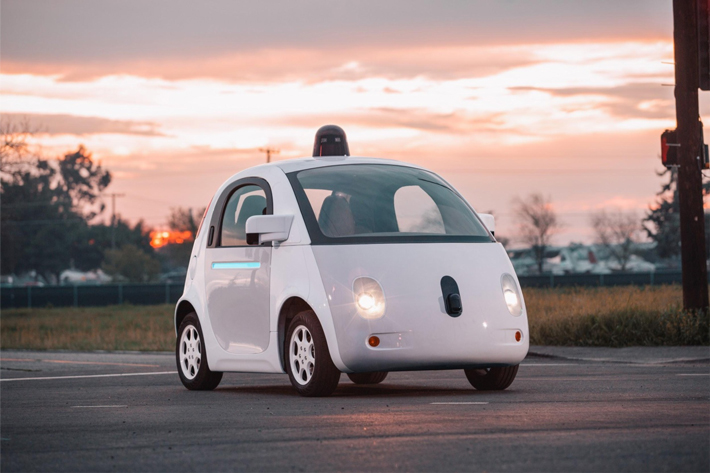
The Google approach
For a look at the broader implications of that accident, consider, "Tesla Autopilot Crash Exposes Industry Divide." And what is that divide? On the one hand are those, like Tesla, favoring an incremental approach to developing and deploying features that will ultimately aggregate to self-driving capability. On the other side are those, like Google, favoring a direct jump to fully autonomous vehicles.

Many concepts for fully autonomous vehicles anticipate intervehicular and vehicle/roadway communications and coordination. Such concepts immediately bring to mind (or should, anyway), the need for robust anti-malware provisions. And so, while not a vehicle-specific article, this is nonetheless cautionary: "Symantec – the popular computer protector – may actually help hackers, feds warn." (Tooting my own horn [heh] for a moment, malware commandeering a computerized car was a minor but critical plot point in my first/1991 novel, Probe.)

And in yet more computer-related items ...

Monday, June 27, 2016

Savoring the moment

Twenty-five years ago, on a shelf in a B. Dalton Bookseller -- remember those? -- I first happened upon copies of Probe for sale. This technothriller was both my first novel and my first pro sale. (My second sale, a short story, ended up being my first pro appearance, having run a few months earlier in Analog.) This sighting came a few days ahead of the book's official publication date of July 1, 1991.

You always remember the first time
Twenty-five years ... a quarter century ... yowza. That's the silver anniversary. I don't suppose Warner Book's artist had this day in mind when incorporating that right-hand silver stripe into the rather abstract cover design.

(Aside to those of you who have read Probe ... who among you finds any resemblance between the cover nearby and the tale told within?)

No way could I have guessed where writing -- in those days, merely a hobby -- would lead: the books and shorter works, both fiction and non-, I would go on to write. The five-novel collaboration with future colleague Larry Niven. The gamut of plots, themes, eras, and science & technologies that my writing would lead me to explore. The friendships I would forge with authors, editors, and agents around the country -- and sometimes farther afield. So many wonderful interactions with readers: at cons and book signings, through email and social media. The cons, tech venues, speaking and teaching gigs, and even, now and again, a nomination or award. This blog. A second career and whole new lifestyle.

Twenty-five years later
But back to Probe ... I like to believe it's held up pretty well over the years. Sure, the novel included what has become the occasional anachronism -- but it also anticipated the commercial mining of asteroids, computerized cars, a networked world, and plenty more au courant ideas. If you're curious, check out this post (Alien probe (no, not that kind)) from when Probe was reissued a bit over five years back.

Am I savoring the moment? Absolutely! But that's insufficient, methinks. I shall savor the day :-)

Tuesday, October 8, 2013

Columbus discovered a new world (here's your chance to top him)

By discovering new worlds of the imagination, of course. You won't even need the support of a deep-pocketed Spanish queen.

(If you hadn't guessed, this is a commercial announcement. But you'll want to read on ....)

Replica of the Nina
In recognition of the upcoming Columbus Day holiday (or my pending appearance October 12th at DC area con Capclave, or just because), FoxAcre Press is running a special through October 17. During the promotion, each of my FoxAcre SF novels and my FoxAcre collection -- in ebook formats only --  is reduced to $2.99.

What titles? Both InterstellarNet-series novels, InterstellarNet: Origins and InterstellarNet: New Order. First-contact novel Moonstruck. Technothriller Probe. Mixed fact and fiction collection Frontiers of Space, Time, and Thought.

As for my freestanding time-travel novella, A Time Foreclosed, it's only $0.99.

Which ebook formats? Kindle, Nook, and iTunes. Check their respective storefronts. (And if a price reduction hasn't yet rippled through for a particular title or format ... check back. The change should be in the works.)

Care to learn more about any of these books (or any other Lerner title)? Over in the right-hand column, click the book-cover thumbnail. Or jump straight to the list of all Edward M. Lerner titles at Amazon.

If you've ever wondered about my writing, now is the time to indulge your curiosity.

As for Capclave, it's among my favorite cons. This year's GOH is George R. R. Martin, of Game of Thrones fame.)

Capclave: where reading isn't extinct


Tuesday, February 5, 2013

Spacing out -- in a good way

So what's new in space exploration?

To begin, a new lunar exploration company. As Ars Technica reports, "Golden Spike wants to start human lunar expeditions within a decade." Though Golden Spike hasn't revealed much in the way of plans, it has a serious list of backers, including Northrop Grumman and the United Launch Alliance. (ULA is a joint venture of Boeing and Lockheed-Martin.) Golden Spike's board of directors includes NASA veterans and notable VCs.

Maybe there's a reason for NASA to ask future Moon visitors to respect its stuff.

Tuesday, November 13, 2012

Time out(s)

I've opined on this blog that time travel is a science-fictional trope -- but that doesn't mean I disapprove. Tropes endure in literature (and not only in SF) because they support great storytelling. And so, on occasion, I indulge ...

If you visit here from an interest in my SF writing -- or if you're curious about it -- I thought I'd mention my new time-travel novella. (A few years ago I did a time-travel novel: Countdown to Armageddon.  Before that, my time-travel short story "Grandpa?" became the award-winning short film "The Grandfather Paradox.")

Anyway ... "Time Out" will appear in the January/February issue of Analog Science Fiction and Fact.

(Or is appearing. Apropos of time travel, we Analog subscribers already have this issue in hand or e-reader. The cover date is the latest you might expect to encounter the print edition at a bookstore. To further muddle the timeline, in e-book outlets the issue will linger for months after the cover date.)

Tuesday, May 1, 2012

Eclectomania

Dunno that that's a real word, but it should be. If enough of you pass it on, it will be.

Buy a Kindle (Beauty not included)
All of today's eclectic topics are writing-centric. We'll start with "Sci-fi publisher announces Tor and Forge will go DRM-free with all e-book titles." Tor has published the majority of my titles, so if DRM is an issue for you ... hang in there.

And in other breaking news: "Microsoft buys stake in Barnes and Noble’s Nook e-reader." Maybe there will be longterm competition in ereaders despite the DoJ's best efforts.

Last October, I posted (see "Inspiration") on the question most often directed at authors. Colleague Michael Flynn recently interviewed a host of SF authors -- including Yr. Humble Blogger -- on that very question. For Mike's take, see "Where Do You Get Your Ideas?"

Friday, May 6, 2011

Alien probe (no, not that kind)

Twenty years ... yowza. That's how long it's been since Probe, my debut novel, first saw print.

Sadly, Probe has also been long out of print.

So: I am pleased to say that Probe is once more available (with new foreword and afterword), this time in a classy trade paperback edition and -- something scarcely imaginable in 1991 -- as an ebook. The nearby cover is from the new edition.

What is the probe of the title? The hero's own Prospector spacecraft, prowling the Asteroid Belt for mineral wealth? The alien derelict that Prospector had the (mis)fortune to come upon? Something the military does not want found? Or is it something really out of the ordinary?

Saturday, February 26, 2011

A new phase of the Moon(struck)

My second novel, MOONSTRUCK, went in and out of print long before the days of this blog. Way before Kindle, too.

I'm delighted to report that MOONSTRUCK is available once more, in a classy trade paperback format and now also for the Kindle. That's the new cover on the left of your screen.

And the story? I could tell you, but these review snippets describe it *so* well ...