Showing posts with label small miracles. Show all posts

Tuesday, September 3, 2024

Happy day (they're here)

Four of my earlier novels are freshly re-released in spiffy new hardback, trade paperback, and ebook editions. All, IMO, still timely. 

The novels in questions are

  • Fools' Experiments: “When the artificial intelligences … go maverick, they turn out to be the true
    weapons of mass destruction. A fast, fun read.” — Sci Fi Weekly
  • Small Miracles: “Suspense and action enough to fuel any thriller, and even to drive it to the big screen.” — SFrevu
  • Energized: “A taut near-future thriller about an energy-starved Earth held hostage by a power-mad international cartel … Lerner’s vision of the future is both topical and possible in this crisp, fast-paced hard SF adventure.” — Publishers Weekly
  • Dark Secret: “I heartily recommend Ed Lerner’s Dark Secret.” — Tangent Online

The new publisher is the aptly named ReAnimus Press. 

In a word ... huzzah!

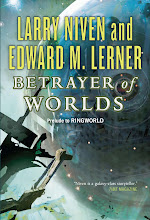
Just one of the spiffy new covers


Friday, June 28, 2024

*Start* of an era

Updated September 3, 2024. Huzzah! As in, posted today, Happy day (they're here). They being four of my earlier -- but still, IMO, relevant -- novels. 

 ===

I'm pleased to announce forthcoming new print and electronic editions of four of my earlier novels. (Why only forthcoming? These things take time, but expect the new editions to appear before summer is out.) 

The novels in questions are

  • (original cover)
    Fools' Experiments: “When the artificial intelligences … go maverick, they turn out to be the true weapons of mass destruction. A fast, fun read.” — Sci Fi Weekly
  • Small Miracles: “Suspense and action enough to fuel any thriller, and even to drive it to the big screen.” — SFrevu
  • Energized: “A taut near-future thriller about an energy-starved Earth held hostage by a power-mad international cartel … Lerner’s vision of the future is both topical and possible in this crisp, fast-paced hard SF adventure.” — Publishers Weekly
  • Dark Secret: “I heartily recommend Ed Lerner’s Dark Secret.” — Tangent Online

The new publisher is the aptly named ReAnimus Press. 

Lots of my other books remain available while you wait ;-)

Tuesday, January 9, 2018

That's life?

For a change of pace here at SF and Nonsense, where physics, astronomy, and IT tend to dominate regular looks at the frontiers of science and tech, this post will consider biology.

We'll begin by "Introducing 'dark DNA' – the phenomenon that could change how we think about evolution." By analogy to dark matter, dark DNA denotes genes that conventional understanding insists must be present in a species's genome -- but aren't. Wild, wacky stuff.

http://blog.edwardmlerner.com/2014/10/slightly-larger-small-miracles.html
And sticking for the moment at the cellular level, consider "Super-strong cell-size origami robots are coming: US physicists unveil game-changing biomorph nanobots."

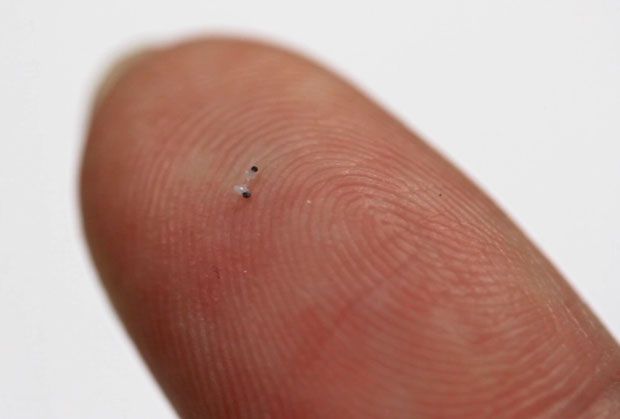
These real-world nanobots are made in part from graphene: an allotrope of carbon atoms arranged into sheets one atom thick. Among possible applications of these nanobots is precisely delivering tiny doses of drugs. In my 2009 novel Small Miracles, the medical nanobots are made from single-wall carbon nanotubes: another allotrope of carbon, that is essentially a bit of graphene sealed into a roll. I love when life imitates art. Especially my art.

Monday, May 8, 2017

MY life, the universe, and everything

File 770, the acclaimed genre website, this morning posted an extended interview/profile of my writing career. I'll crib their introduction rather than adding yet more words:

Retired professional scientist Edward Lerner talks about a host of hard science fiction topics, plus his collaboration with Larry Niven, his participation in SIGMA, and his nonfiction column for Analog.

Check out, if you're curious (and really, given that you're already here, you know you are), Edward M. Lerner: Crafted Science, Convincing Characters.

Friday, November 4, 2016

Back to the future (and futures past)

I try to blog weekly, most often on Monday or Tuesday. Next Tuesday is, of course, the long-anticipated presidential election, and not the ideal time for posting one of my wholly non-political posts. (They're all non-political, if you hadn't noticed.)

So: today it is. And yet, this post -- while entirely non-political -- has its electoral echoes ...

And some quite personal remembrances, too.

Yesterday I attended an IEEE meeting (IEEE being the the Institute of Electrical and Electronics Engineers, a professional society of which I've been a member for 40+ years). That itself isn't especially newsworthy, but the session's topic -- basically the past, present, and future of computer memory -- sure spoke to me. Especially the first talk: "Memories of memories."

An Intel 1103 chip
In 1972, during my master's program in computer science, I chose to do independent study in computer memory. Semiconductor memories existed then --  just barely -- as in the Intel 1103 chip. It held an entire kilobit. Large-scale systems and any application requiring high reliability relied on magnetic memory, most often magnetic-core memory. That semiconductor memories would supplant magnetic technologies was then far from certain.

In 1973, my MS newly completed, I began working at Bell Labs. Telephone switches are both large scale and high reliability, and magnetic memory was the standard. (Our system used magnetic wire memory, rather than magnetic core -- the distinctions not being important to this narrative). Not coincidentally, I was assigned to the team working to introduce semiconductor memory to the telephone switch. Another part of the company handled the memory chip itself, but I designed some of the supporting/surrounding circuitry, analyzed possible failures and their system-level effects, and wrote much of the related software for fault recognition, system reconfiguration, and subsystem-level fault isolation.

So, definitely, that "Memories of memories" presentation spoke to me. As for an election tie-in, my independent study overlapped the consequential 1972 election. The summer of 1973, just before I started at Bell Labs, was in large part spent (in competition with finishing my thesis) glued to a TV watching the Watergate hearings.

Another presidential-election connection: The field trial of a switch with the new memory was in 1974 or '75 (I forget which), at an AT&T office in Macon, GA. I was onsite one night when a hardware fault -- not in anything I'd had any part of, I'm happy to say -- crashed the switch. That outage disrupted long-distance service for, among other locations, a nearby little town called Plains. If that name doesn't ring a bell (telephone pun of course intended), Plains was the home town of -- and campaign headquarters for -- a certain aspiring Georgia governor: Jimmy Carter.
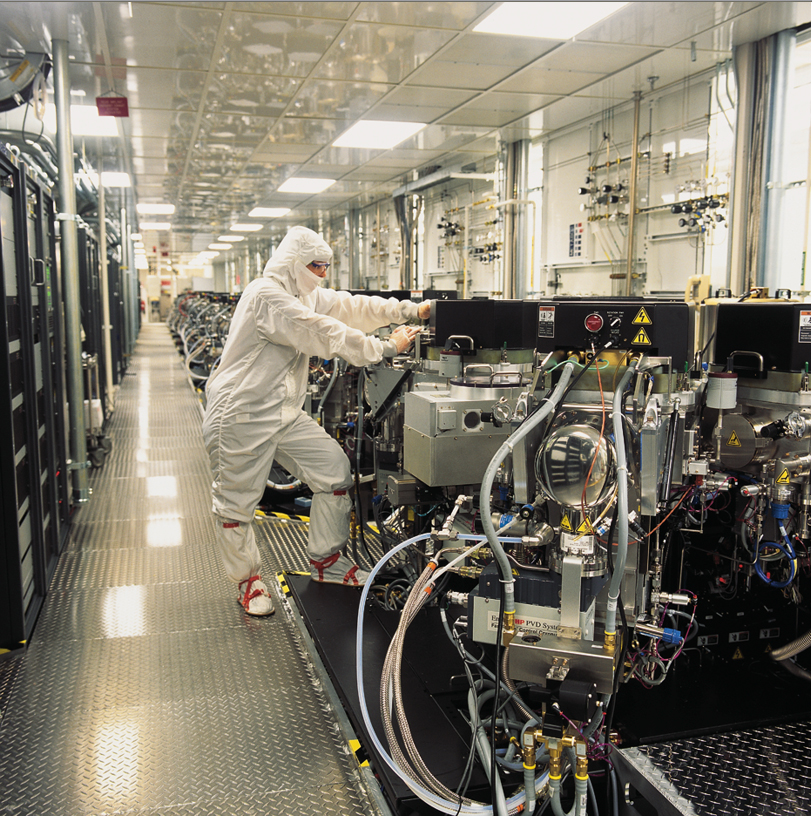
Memory fab (file photo)
I was, however, interested in more than "Memories of memories" from yesterday's session. The specific agenda item that had assured my participation was the group tour of the Micron Technology factory. (Micron is one of the biggest memory-chip manufacturers in the world, and the largest in the US.) I think any engineer gets a kick out of touring any large engineering project, whether factory, power generation, or construction. But to see a semiconductor factory had a particular resonance for me. So off we go for another visit to the past ...

Sunday, October 2, 2016

Psst! Dark Secret is book of the month (and for this month, a steal!)

Phoenix Pick is promoting my newly published novel, Dark Secret, as its October book of the month. BOTM status means that, in ebook formats, you can name your price. Even zero.

They're also offering a deeply discounted bundle of three of my novels: Dark Secret (the end of the world, and what comes next), Small Miracles (medical nanotech), and Fools' Experiments (AI and artificial life).

(For more about on any book, click the thumbnail cover at right.)

You'll want to check this out while the promotion lasts.

Sunday, September 6, 2015

Holiday-weekend reading

I'm playing catch-up -- still -- from twelve days away for Worldcon and an immediately following vacation. But my overflowing to-do list doesn't mean you should go without something of mine to read ...

Phoenix Pick, the publisher (more precisely, the re-publisher) of a couple of my novels, is featuring both books throughout September. Small Miracles, a near-future medical-nanotech thriller, is available all month as an ebook for whatever you choose to pay. 

Beware miracles with a mind of their own

Meanwhile Fools' Experiments, a near-future novel of artificial intelligence and artificial life, is deeply discounted. Try either. Or try both.

http://www.edwardmlerner.com/sample-page/list-of-books/#fools
We are not alone ... and it’s our own damn fault.

Curious? Of course you are. Check out the Phoenix Pick deals of the month. Or click the cover image of either book to read a bit more about it on my authorial website.

And in any event ... enjoy your holiday weekend and the end of summer.

Tuesday, January 20, 2015

Say, kids, what time is it?

What with winter blahs and post-holiday letdown, what better moment could there be for some diversion? And so, drawing upon classical SF and Nonsense subject areas, herewith an assortment of thought-provoking items (well, they provoked my thoughts):

They're bot-tastic
"Robotic Micro-Scallops Can Swim Through Your Eyeballs." And why would you want that? As a medical-delivery system. Eyeballs are attention-getting, of course, but the larger point is that blood, like eyeball fluid, doesn't act like water. Autonomous tiny bots able to make their way through non-Newtonian fluids like blood and vitreous humor (that's doc-speak for eyeball fluid) to inspect, repair, and/or deliver meds with precision will be a Big Step Forward. (Not to mention a Small Miracle(s), but that's a whole 'nother story ;-)  ....)

Shifting our attention to robots on a larger scale, consider "Flying Selfie Bots: Tag-Along Video Drones Are Here: Sports enthusiasts are clamoring for aerial robots that can record their best moves." Read the details or watch the video and you'll see that "here" is a tad overstated -- but with more than a million in Kickstarter funding, this is a product category we can expect to see before long.

Tuesday, October 7, 2014

Slightly larger Small Miracles

I'm pleased to report that my medical nanotech thriller, Small Miracles, briefly out of print (and also electrons), was just re-released in a classy, trade paperback edition. And that new edition comes graced with an eye-catching new cover.

Back in print
What's Small Miracles about? Well, I blogged about that in 2009 when the original HB came out ("Small Miracles") and again in 2010 when the mass market paperback hit the streets ("Real nanotech. Real medicine. And zombies."). But in a buckyball (a nano nutshell, if you prefer) Small Miracles is a near-future, post-human thriller based upon the amazing potential of nanotechnology.

Or, as SFRevu put it:

Tuesday, July 22, 2014

Authorial updates

(11/11/14 update to this update)

For those of you who follow my non-blog writing, a few news items:

Thinking for a bit ;-)
Fools' Experiments, my 2008 technothriller of artificial life and artificial intelligence, has been picked up by Arc Manor for re-release in print and ebook editions. The likely availability date is sometime in January 2015.

Sometimes less is more
Small Miracles, my 2009 technothriller of medical nanotech, has likewise been picked up by Arc Manor for re-release in print and ebook editions. It was released October 7, 2014.

Tuesday, May 14, 2013

Something for everyone

Is Glass half empty or half full?
Think you're ready for Google Glass? Maybe think again. See "Google Glass: A Treat for Hackers":

The report said that hackers will also be able to monitor Google Glass' users' activities on their smartphones ... 
How about another cutting-edge personal product: a smart watch? Maybe what's old is new again. Check out "8 myths about the smartwatch revolution."

Let's move on to more revolutionary tech. I've long been fascinated with nanotechnology (an interest best illustrated by my 2009 novel of medical nanotech: Small Miracles). One of my primary research sources was K. Eric Drexler, commonly credited with bringing nanotech to public attention through his 1987 (and still quite popular) book "Engines of Creation: The Coming Era of Nanotechnology."

Tuesday, January 15, 2013

Future(dr)ama

A fun aspect of writing technothrillers is seeing how close reality comes to my imagined (possible) futures.

Such as with augmented-reality glasses, tech that played an important role in 2009's Small Miracles (otherwise a nanotech novel). Google goggles, aka Project Glass, were a step toward what I'd envisioned, but not quite there. Their user interface relies on spoken commands and speech recognition, and often we would wish to do our networked tasks with a bit of privacy. So I was delighted to see, much as I'd imagined it, that "Your Eyes Can Control Augmented Reality Glasses."

In 2008's Fools' Experiments (largely about artificial intelligence and artificial life), I'd envisioned thought-controlled prostheses. And, indeed, we're close. As in:  "Paralysed woman's thoughts control robotic arm" (that's a Brit spelling courtesy of BBC News, not a typo). The feat requires brain surgery and implanted electrodes, and so the tech isn't yet what I'd envisioned: electronics within the prosthetic device sensitive enough to interact directly with the nervous system. I'm confident that we'll get there.

Tuesday, February 28, 2012

Of wrong turns great and small

No mere fashion statement
As though legions of people walking around apparently talking to themselves -- immersed in remote conversation via their Bluetooth headsets -- isn't off-putting enough, Google plans to bring us voice-recognition computer-interface eyeglasses ... hideous prototype in the nearby picture. See "Head-Mounted Android: Google Reportedly Preps Connected Glasses."

In Small Miracles, I put computer-interface eyeglasses on the main character. Those glasses tracked where Brent was looking -- within the software-displayed image projected by the lenses -- by monitoring IR beams reflecting off the back of the eye. Input was entered via (trained) blinks made looking at menu items and virtual-keyboard keys. All any friend, relative, or colleague saw was his mirrored lenses. Eerily silent and quite antisocial -- but that was the point. Brent was no longer himself, exactly, and I wanted to show him losing touch with humanity.

That people may really go around online like this? I find that scary! And that Android will be the underlying software is all too ironic.

Tuesday, February 21, 2012

Alien aliens (more or less)

For no obvious reason, I got to thinking about my long-concluded "Alien aliens" series of posts. And decided that it wasn't -- concluded, that is. I'd omitted a key category: human-derived aliens. Hybrids, in a word. Some prefer the term transhumans.

For example: uploads. That's what you get by transferring a brain's content into a computer. Why would anyone, assuming they could? To cheat  death, perhaps -- at least till medical science can achieve immortality or transfer minds from failing bodies into new ones.

Imagine: all one's thought patterns, learned behaviors, and memories transcribed into a new form and format. However human that mind began, it has taken residence in an environment utterly alien to us Mark I humans.

The implications go far beyond the speed difference between synapses and transistors. Imagine speed-of-thought access to vast libraries. Imagine adding radar views of the world while losing some of the more familiar senses (say, smell). Imagine real-time access -- sometimes authorized, sometimes hacked -- to the net's many peripherals, from Earth remote-sensing satellites to power meters (to weaponized aerial drones?).

Surely the uploaded mind's temperament, attitudes, and interests will diverge from those of meat minds. And so: surely also its behavior.

Intrigued? Wikipedia offers s a very long list of uploads in fiction.

Monday, June 27, 2011

You can't make this stuff up ...

I never expected to encounter a sentence like: "Genetically Engineered Cell Shoots Out First-Ever Biological Laser." 

Do cellular lasers sound trivial? They're not. Consider:
Aside from implying the future possibility of a self-healing laser that requires no battery, this breakthrough could allow doctors and scientists to view the inner workings of individual cells without a microscope. 
I instantly thought of an application not mentioned in the article: laser-based communications among medical nanobots. Visible light spans the wavelengths from about 380 to 780 nanometers -- while cells (and cell-sized machines, once we have them) are of the scale several thousand nanometers. Had cell-based lasers been thought possible a few years ago, I might well have used them for the nanobots in Small Miracles. (Instead I used chemical signaling -- just as natural cells do.)

The next topic is scary, but the headline is ironic: "LightSquared Network Faces Interference of Its Own Making."

Monday, June 13, 2011

The time has come, the walrus said ...

... To talk of many things.

For shoes and ships and sealing wax, continue here.  For more recent arcana to have caught this SF author's eye, read on ...

"Criminal Minds Are Different From Yours, Brain Scans Reveal." (I like to think that my visitors do not have criminal minds.) I read with interest that:

Friday, February 11, 2011

Creative Destruction

Updated 7-29-2023. 
The book was republished by ReAnimus Press in December 2022. The latest Amazon links are: hardback, trade paperback, and Kindle. Below, original cover is shown.

"Creative destruction" was economist Joseph Schumpeter's capsule description of capitalism. In a few words: good ideas and well-run companies ride roughshod over past-their-use-by-date ideas and badly run companies. Wealth from failed businesses and industries shifts to more productive uses in new enterprises.

(Contrast with: Uncreative destruction, as when governments bail out imploding companies, throwing [your] good money after bad. Seen any of that recently?)

We saw -- and continue to see -- a great deal of creative destruction as work shifts from labor-intensive processes onto computers and the Internet. As Alan Greenspan (former chairman of the Federal Reserve) once observed (citation), "From the development of the textile loom two centuries ago to today's Internet, output per hour has increased fifty fold."

(Disclosure: here we segue to a commercial announcement.)  My first collection of short fiction was computer-themed.  I named it, appropriately enough -- or, anyway, so I think -- Creative Destruction.

The title story (i.e., "Creative Destruction") is set in my InterstellarNet universe, about which I've posted before. The original/standalone novelette-length version of "Creative Destruction" (versus the expanded version that forms a section of  InterstellarNet: Origins) was in a year's best anthology and also serialized in the daily newsletter of  Telcom World 2003. (That's not just some random techie gathering. Telecom World is sponsored annually by a United Nations agency, the International Telecommunication Union.  Speakers are folks like IT corporation CEOs and national telecom ministers.)

Monday, October 25, 2010

Good times

I spent last Saturday at one of my favorite cons: Capclave.  It is (as the website describes), "a small relaxed literary convention," and always very pleasant. My three panels were "The Mule, Muad'dib, and Men Who Stare at Goats," "World Building: Planning and Execution," and "Military Science Fiction."

"Mule" -- despite an odd title -- dealt with a serious SFnal topic: humans with extraordinary abilities, and how we might get to Human 2.0. I'd not done a panel on that topic before, and enjoyed the change. (Small Miracles deals with nanotech in humans, and was certainly related, but the panel tended to go down the genetic-engineering path.)

Tuesday, August 3, 2010

Real nanotech. Real medicine. And zombies.

Small Miracles is my near-future medical nanotechnology thriller -- and as of today, it's been reissued in mass-market paperback.

For the paperback edition, the cover background has been made lighter and brighter. That's a welcome change: you no longer have to take my word for it that those nanobots are swimming in blood :-)

Curious? Here's my October 2009 announcement of the hardback edition. For a sample from the novel, click through to Amazon. And here are a few recent reviews: 

Friday, July 2, 2010

The great read spot

Nope, not a typo.  An atrocious pun, I'll grant you.  It all has to do with my recent silence -- due, in turn to a lot of reading.

Possibly the most overused cliche of recent years, (the Mother of All Cliches, if you will), is "the perfect storm." And the mother of all storms, in our solar system, at least, is the way-larger-than-Earth-itself Great Red Spot on Jupiter.

There's no way I can write four books in a year.  Two is pushing it.  But not all books make it through the publisher's pipeline on the same time line. And so, in 2010, I'll have four books come out: