Showing posts with label science. Show all posts

Thursday, December 22, 2022

A gem of an anniversary

This month, IEEE (the Institute of Electrical and Electronics Engineers, of which I am a longtime member) is observing a milestone we should all be honoring: the 75th -- diamond -- anniversary of the transistor. 

Cover art,
December 2022 IEEE Spectrum
Because what would the world be like without this now ubiquitous device? Because what computer, phone, household appliance, entertainment gadget, vehicle, etc. in your life doesn't require oodles of transistors to function -- while doing way more than their pre-transistor precursors (if any such even existed)? 

The rate of improvement in transistors (and so, the increasingly complex integrated circuits made from them) never ceases to amaze. The ever-plummeting cost. The ever-increasing density. The number of transistors in a single microprocessor chip. 

The Intel 4004 microprocessor, introduced in 1971, had about 2300 transistors. Today's Intel i9 processors have more than three billion.
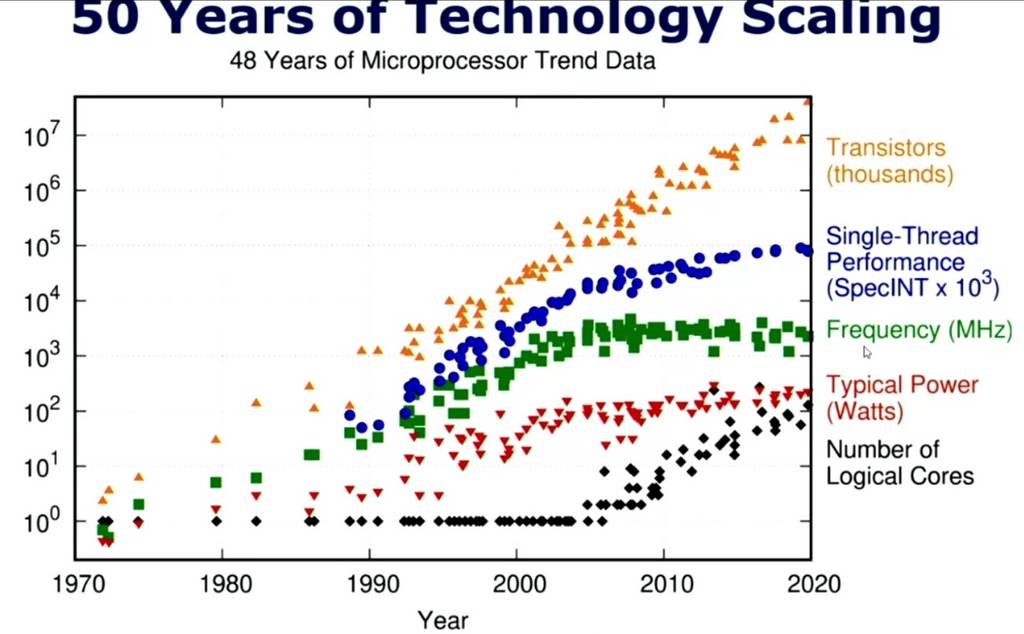
One snapshot of progress

Beyond general admiration for what this industry has accomplished, and the related industries (including, certainly, anything to do with the Internet), I feel a personal affinity. 

  • As a teen in the Sixties, I marveled at the first truly portable personal music device, that wonder of the age: the transistor radio. 
  • In university classes and summer jobs, I studied and experimented with the first, primitive integrated circuits. (Oh, the terror when, on a college summer job, I accidentally fried an op-amp chip costing $50! Much inflation later, op amps cost ... a few pennies each.) 
  • My first job out of university was at Bell Labs, where the transistor was invented. My first assignment there dealt with upgrading telephone switching equipment (specialized, ultra-reliable computers) from magnetic memory to semiconductor (i.e., transistor-based) memory. 
  • In succeeding assignments and at succeeding employers, I moved with industry from mainframes to minis to micros, and to ever more capable microprocessor families.   

Now try to imagine what marvels new versions of the transistor will enable by the device's 100th anniversary. I, for one, can't wait.

Wednesday, March 2, 2022

The Scientists

 I recently finished reading The Scientists: A History of Science Told Through the Lives of Its Greatest Inventors, by John Gribbin. This was, unquestionably, among the most fascinating nonfiction books I've read -- and so thoroughly enjoyed -- in years.

Amazon link
In a nutshell, Gribbin reviews 500 years of scientific history, basically from 1500 to 2000 -- centuries that saw the emergence of astronomy, physics, chemistry, geology, and biology. He covered many familiar people, of course: Copernicus, Kepler, Galileo, Newton, and Einstein. Darwin, Wallace, Mendel, and Crick and Watson. Bohr, Schrodinger, Pauli, Pauling, Dirac, and de Broglie. Lyell and Wegener. Avogadro, Lavoisier, and Mendeleev. Halley, Herschel, and Hubble. And so many more. 

Why start around 1500? Because that was a watershed. The ancient Greeks (as Gribbin points out) had some profound insights. Because they didn't have the scientific method, those insights -- and some glaring misunderstandings -- came of pondering and philosophizing, without confirmation (or invalidation) from experiment or observation. The ancient Romans -- as terrific as they were as engineers -- added little to those earlier musings. The so-called Dark Ages and Middle Ages similarly saw some significant engineering advances, but nothing we'd understand as science.

Tuesday, March 17, 2020

Einstein's Monsters

I ordinarily save up my reading recommendations for a year-end summary, but (a) these aren't ordinary times and (2) the book I finished last night was most noteworthy.

https://amzn.to/2wf3VmN
The book? Einstein's Monsters: The Life and Times of Black Holes (2018), by Brit astronomer and science popularizer Chris Impey. It integrates a wealth of fascinating material about general relativity, black holes large and small, cosmology, assorted multiverse theories, gravitational-wave observatories, and astronomy in general. And if your appetite ends up whetted, the book provides copious pointers to further reading.

So ...  you're in the market for distraction as you shelter in place from COVID-19 -- especially if physics, astronomy, or the Really Big Picture is your cup of tea -- you might want to check out (here's an Amazon link) Einstein's Monsters: The Life and Times of Black Holes. 

Tuesday, July 16, 2019

Always be skeptical of first reports ...

Carl Sagan had it right: "extraordinary claims require extraordinary evidence." 

More dark than light
In that spirit, see: Astronomers Just Solved The Bizarre Mystery of a Galaxy With No Dark Matter

Monday, July 1, 2019

New Horizons, metaphorical and literal

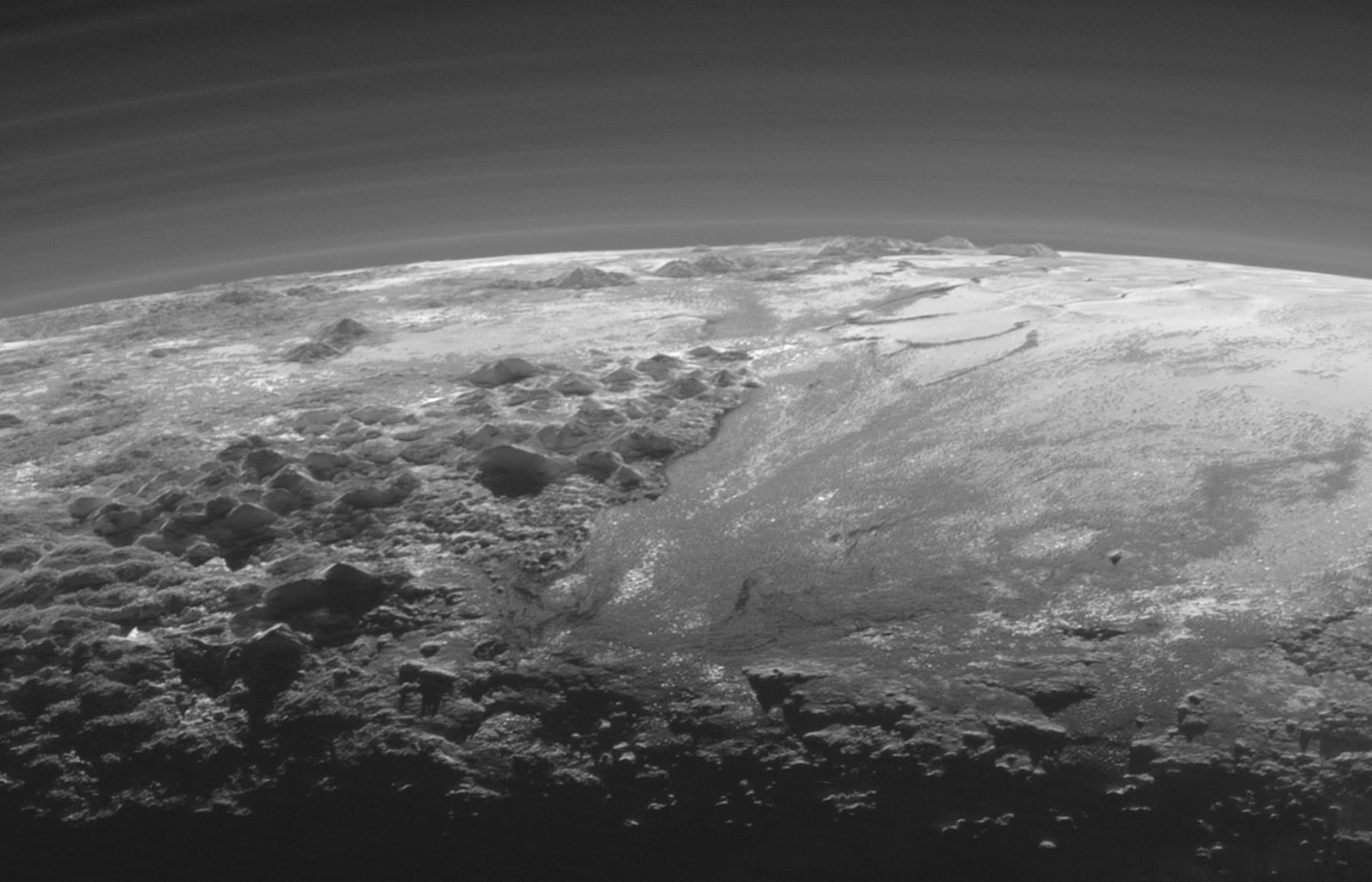
Did you savor the Pluto closeups returned by NASA's New Horizons probe in July 2015? Of course you did -- it's the kind of thing that appeals to the kind of folk who visit SF and Nonsense.

Fascinating!
The saga of New Horizons itself is every bit as fascinating, written (to be precise, coauthored) by the man who first dreamed of the mission and eventually became its principal investigator. The book covers the guerilla struggle to interest NASA in the mission concept, the funding wars, the mad dash (once funding was finally approved) to complete the probe while Jupiter and Pluto still had the proper alignment (celestial mechanics is a harsh mistress), the long flight, and the hectic close encounter with Pluto.

In short, I highly recommend Chasing New Horizons: Inside the Epic First Mission to Pluto, by (the aforementioned PI) Alan Stern and fellow scientist/author David Grinspoon.

Tuesday, April 23, 2019

Really dark

Black holes, that is. It's long been inferred that a monster black hole lurked at the center of our galaxy. The evidence is now better than ever. See "Confirmed: a monster black hole at the heart of the Milky Way." A key quote:

New observations by the European Space Observatory (ESO) show clumps of gas swirling around at about 30% of the speed of light on a circular orbit just outside what astronomers conclude is the black hole’s event horizon. 

It’s the first time material has been seen orbiting close to the point of no return – and “a resounding confirmation of the massive black hole paradigm", according to study leader Reinhard Genzel, of the Max Planck Institute for Extraterrestrial Physics (MPE) in Germany.

And then there's this: "Has LIGO Seen Galaxy-Warped Gravitational Waves? Nobel laureate George Smoot claims LIGO has observed amplified signals of black hole mergers from the very distant universe, but LIGO scientists disagree."

(And just as an aside, LIGO has gotten really good. As in, "LIGO upgrade to allow ‘almost daily’ detection of gravitational waves." And that's germane to this post because short of black-hole and/or neutron-star-into-a-black-hole mergers, there aren't a lot of gravitational waves.)

Literally awesome
Of course the coolest black-hole-in-the-news story relates to imaging the super-massive black hole at the heart of the (relatively) nearby Messier 87 galaxy. Doubtless by now you've seen the nearby image many times. But have you read about the young computer scientist who (among many, of course) is chiefly responsible for this feat? See "Katie Bouman: The woman behind the first black hole image."

And now I must disappear into the metaphorical black hole of proofreading ...

Monday, April 1, 2019

Starry-eyed

You guessed it: a post replete with astronomy news. (Wherein "news" is a relative term. My file of fascinating articles seems to expand faster than I can comment, and some of today's items first came to my attention toward the end of last year. Bear with me. These are all worth a read.)

Today's emphasis: how much remains to be understood about matters astronomical. And how much we continue to discover!

By Jove, that's hot!
Case in point: details of how how solar systems -- star(s), planets, and lesser bodies -- form. For example, it always seemed impossible that gas giants (i.e., planets like Jupiter) could originate close to a star -- but jovians *are* seen with close-in orbits. The inference drawn has been that such "hot Jupiters" formed farther out, and that the dynamics of interplanetary gravitational interactions on occasion caused planets to spiral inward. For all we know, that is sometimes the case -- but apparently not always. See "Giant planets around young star raise questions about how planets form."

And recent estimates of the number of potentially habitable exoplanets may be due for a downward revision. Determinations of which exoplanets orbit within habitable zones (basically, the range around their respective stars in which water will remain liquid) depend on estimates of the absolute brightness (energy output) of the parent stars. There are several ways to mis-estimate a star's absolute brightness, and if you get it wrong, your estimate of the habitable zone will be off. Planets you thought orbited in the Goldlilocks zone might instead be too hot or too cold. See "Number of Habitable Exoplanets Found by NASA's Kepler May Not Be So High After All."

Tuesday, January 29, 2019

Already a wacky year

A potpourri sort of post (say that quickly five times) ...

Video games meet cryptocurrency. What could possibly go wrong? "Organized crime is laundering money through Fortnite's in-game currency." As in:
Criminals are using stolen credit cards to buy Fortnite V-bucks, then selling the in-game currency for bitcoin at a discount on the dark web as a way to launder money.
How about a non-crypto crisis in the making? Consider "The world is running out of phosphorus." And any such shortage would matter because:
... phosphorus is biologically vital. The average human body contains about 0.5kg of phosphorus, most of it in the form of phosphate to make bones and teeth strong. Phosphorus also crucially holds together DNA and RNA molecules – the backbone of these long chain-like structures contains two phosphate groups per pair of nucleic bases. Without phosphorus, it is hard to imagine any kind of life at all.
Some things we homo saps can do right
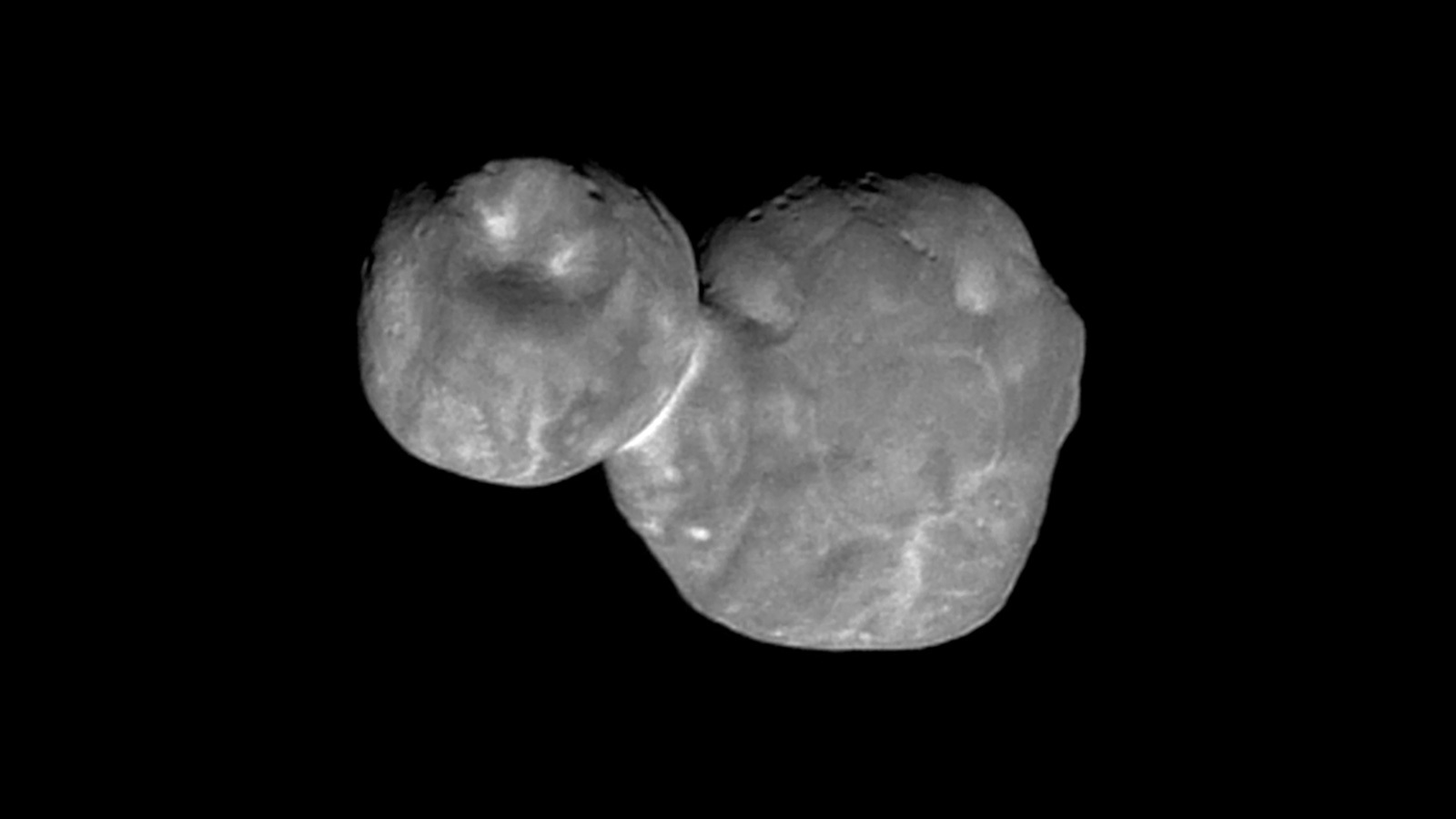
But on the positive (and seriously cool) side, we  have data streaming home -- from about four billion miles away -- of the New Horizons probe's New Year's Day flyby of Ultima Thule. The data only get better and better.  See "Craters, bulgy mounds and a collar." If nothing else, you gotta see the latest image.

To close, let's look ahead at some tech (loosely defined) predictions for 2019. Some forecasts you'll like. Some you won't. (Me? I'm happy to see a prognostication that shared electric scooters are already fizzling. Talk about an accident waiting to happen. Or without waiting ...)

Now I had best turn my attention to the oeuvre(s) in progress, lest my 2019 prove an accident waiting to happen ...

Thursday, January 3, 2019

A week to restore one's faith in humanity

Clearly, I refer to nothing in the political sphere. But think of the milestones (kilometer stones?) science and technology reached this week. From closest to farthest, we've got:

"China’s Chang’e-4 spacecraft makes historic landing on far side of the Moon."

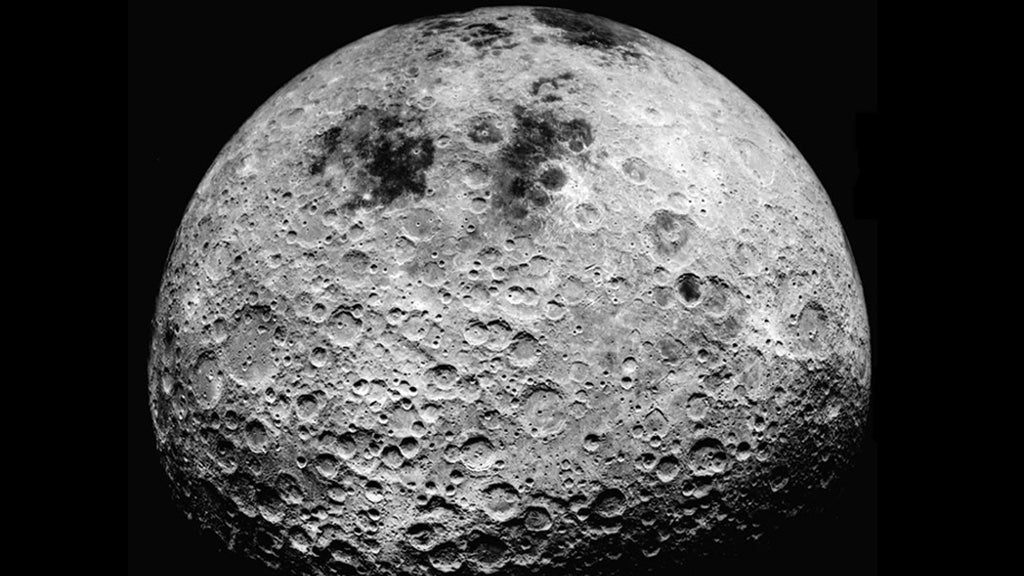
The lunar far side
The Chinese spacecraft Chang’e-4 has landed on the far side of the Moon and has begun relaying data and images back to Earth. It is the first mission to operate on the far side, which is the  hemisphere of the Moon that always faces away from Earth. This half of the Moon has a much more rugged and varied landscape than the hemisphere that is visible from Earth and studying its geology could provide important information about how the Moon and the rest of the solar system formed.

Also, NASA's "OSIRIS-REx probe goes into close orbit around asteroid Bennu and sets a record."

Artist rendering
NASA’s OSIRIS-REx spacecraft today maneuvered into an orbit that takes it within 4,000 feet of the surface of Bennu, a diamond-shaped asteroid that’s 70 million miles from Earth.

The orbit sets a record for interplanetary travel. The quarter-mile-wide asteroid is now the smallest body ever orbited by a spacecraft, and the spacecraft is tracing the closest sustained orbit around a celestial body.
 
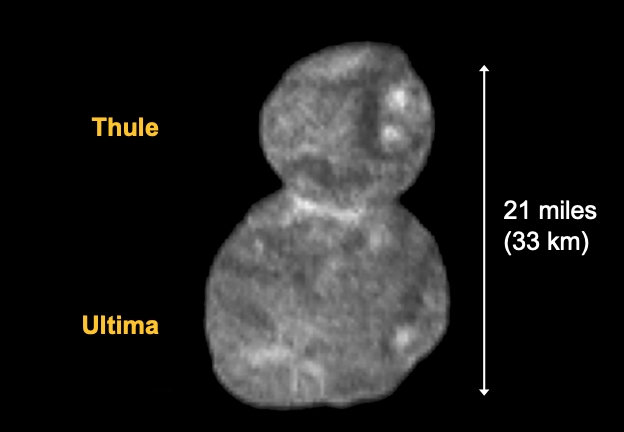
And (IMO, the most awesome of all) in the distant Kuiper Belt, Nasa's New Horizons: 'Snowman' shape of distant Ultima Thule revealed."

4 billion miles away
"[Ultima's] only really the size of something like Washington DC, and it's about as reflective as garden variety dirt, and it's illuminated by a Sun that's 1,900 times fainter than it is outside on a sunny day here on the Earth. We were basically chasing it down in the dark at 32,000mph (51,000km/h) and all that had to happen just right," the SwRI scientist said.

We Homo saps actual can accomplish great things when we cooperate and focus.

Tuesday, September 25, 2018

Of the universe

Today's post is a roundup of recent astronomy news.

First, and closest to home, a look at a neighbor: "Ice Confirmed at the Moon's Poles." Such ice has long been suspected, of course, and indirect evidence of it gleaned -- but this is the most definitive proof yet. Water on the Moon is seriously important to any hopes for a permanent lunar presence.

Lucy (in a few years)
If I may then look ahead to upcoming discoveries, consider "NASA’s Lucy in the sky with Trojans." "Lucy" in this context is a probe to be launched in 2021 to explore (mainly) Jupiter's Trojan asteroids. These asteroids co-orbit with Jupiter, one bunch 60 degrees ahead of the planet, the other 60 degrees behind. (They're called "Trojan" because the first few of these rocks were named for heroes of the mythic war.) And they're darned varied and interesting ...

Tuesday, August 14, 2018

What's up, Doc?

Astronomical news, of course :-)

Neutrinos are amazing particles. They interact so weakly with more familiar matter that it took decades to decide a neutrino had any mass at all. Aim a beam of neutrinos at a light-year thickness of lead, and half the neutrinos will emerge out the far side.

Our neighborhood neutrino factory -- aka, the Sun -- spits out a torrent of these particles. "Theoretical calculations say that about 65 billion neutrinos pass through every square centimeter region of the Earth's surface every second." (*) So how amazing is it that one neutrino recently made big news?
(*) "Nobel neutrinos" 

Blazar saddles?
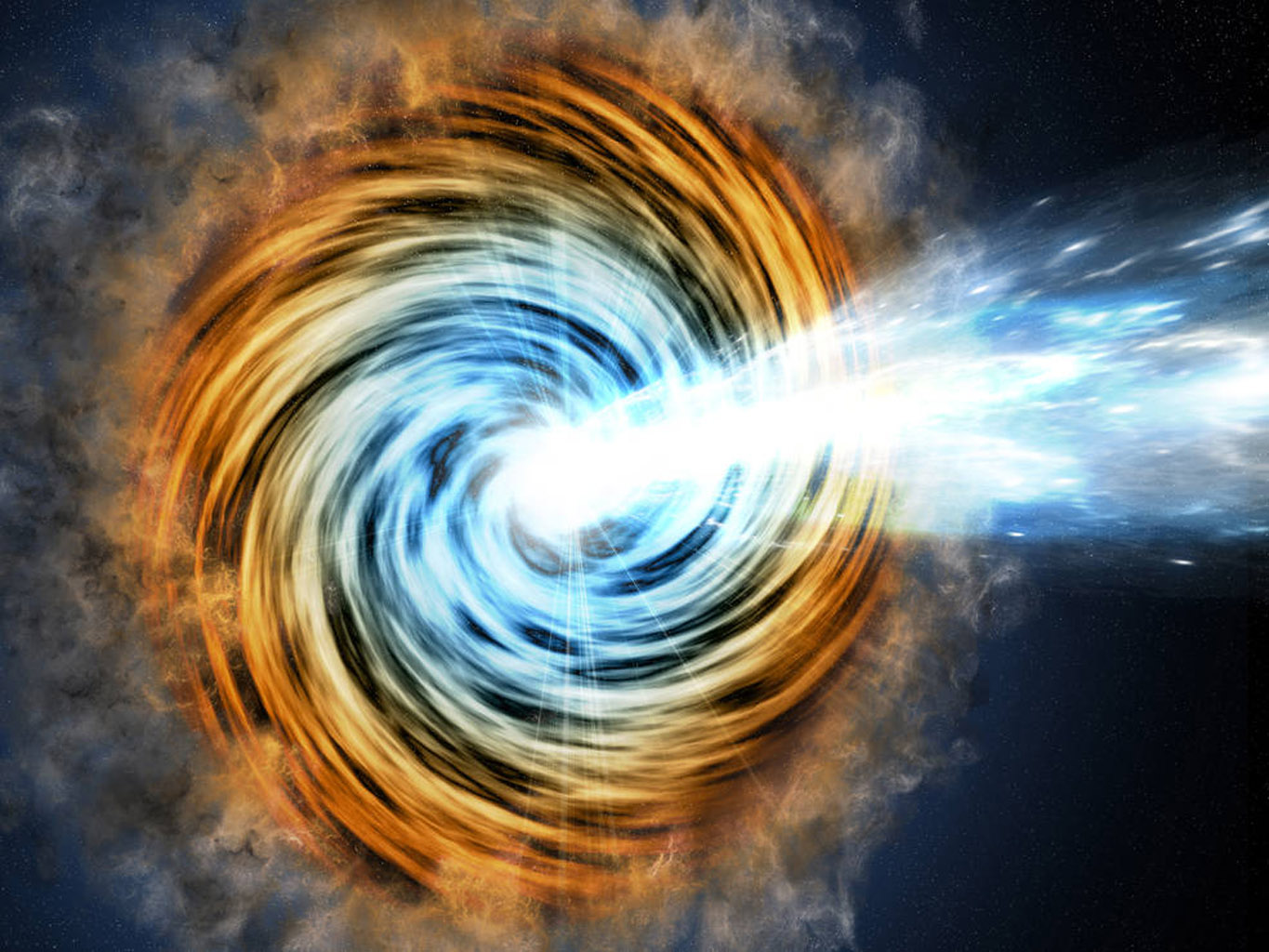
IMO, pretty amazing. Because this extremely high-energy neutrino was correlated to a particular event: a blazar -- aka, an active galactic nucleus -- about four billion light-years (and years) distant. 

This correlation marks the first step toward a third type of observation in the nascent science of multi-modal astronomy. That is, in addition to traditional observations (using, from longest to shortest wavelengths: radio waves, microwaves, infrared, visible light, ultraviolet, X-ray, and/or gamma-ray electromagnetic radiation) and -- for a very few years now -- gravitational-wave observations, we can now foresee combining neutrino observations. In a word: awesome.

For more on this particularly fascinating neutrino detection, see "Why a 4-Billion-Year-Old Particle That Hit Antarctica Is Such a Big Deal."

Tuesday, August 7, 2018

Curioser and curioser

Among the terrific -- and the terrible -- aspects of the web are the many odd articles that one somehow happens upon. Setting aside the disinformation among them, and the ulcer-inducing pieces, and the hoary repetitions, we're left with ... fascinating time sinks. Herewith, several such:

In the beginning?
How did life on Earth begin? There's lots of speculation, and precious little by way of answers. (I'm talking about biology here, not theology.) One theory is that life didn't begin on Earth, but arrived from elsewhere. That's the Panspermia ("all seeds") explanation. What if primitive life drifted to Earth from another star system(s) and, once here, then evolved?  

And almost as speculatively, what if humans could hibernate? What if, to conquer the vastness of the void between stars, humans could be put into -- and revived from -- some kind of suspended animation?

In seeming -- but certainly, incomplete -- support of both these "what ifs," consider: "Siberian Worms Frozen In Permafrost For Up To 42,000 Years Defrosted Back To Life." The ability of any terrestrial life to survive millennia frozen makes both Panspermia and human hibernation seem slightly less impossible.

Monday, July 9, 2018

Life, the universe, and everything ...

And yet, the number 42 isn't involved :-)

The not-so-little observatory that could
Great observatories have (ahem) greatly extended our understanding of the universe. So, first, let us mark an imminent sad passing: "NASA put its famous planet-hunting telescope to sleep because it’s almost out of fuel: The Kepler Space Telescope’s life is finally coming to an end." This fine astronomical instrument detected more than 2K subsequently confirmed exoplanets (with more confirmations likely  yet to come). Quite the legacy.

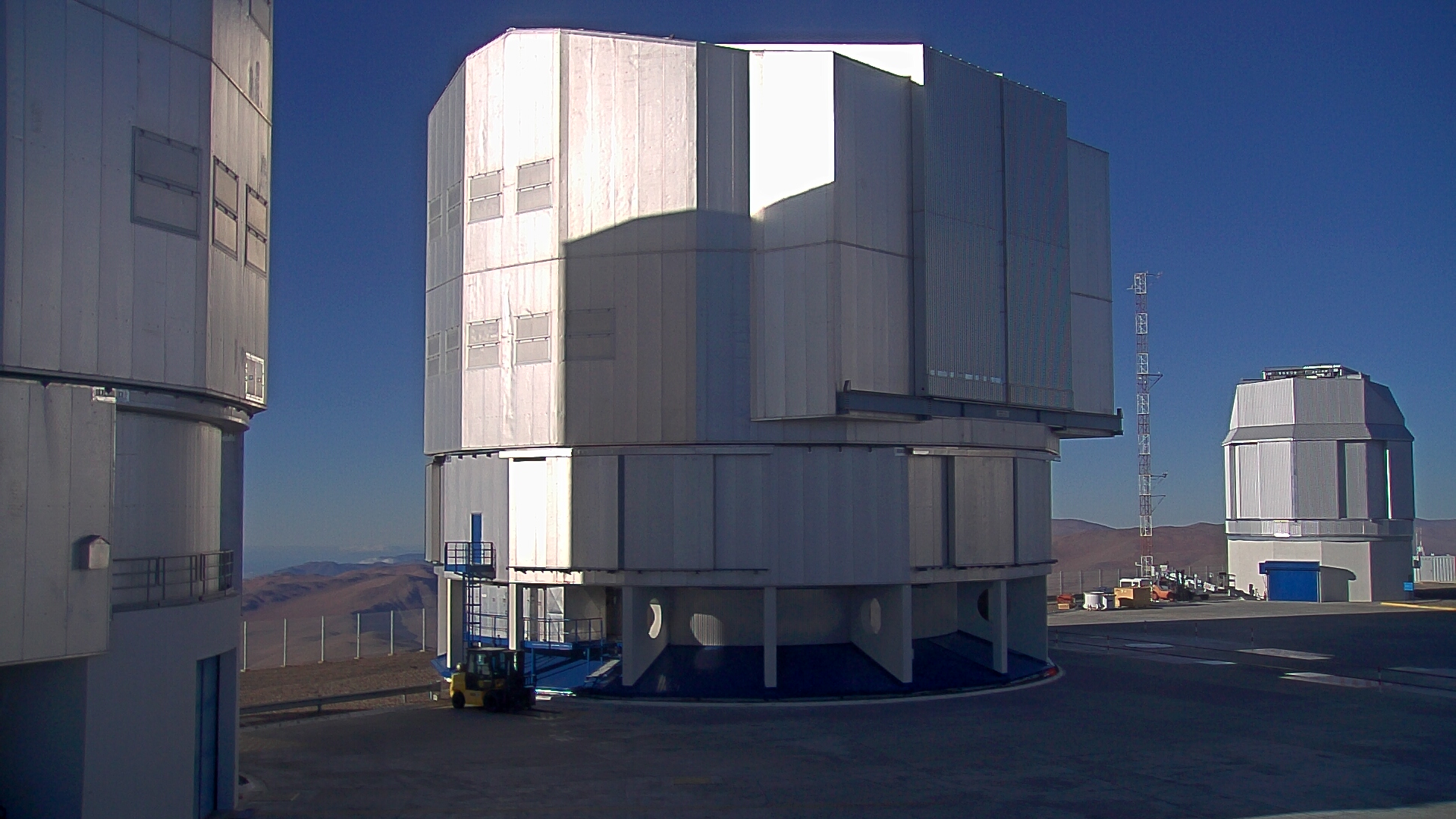
The ESO VLT
Another fine instrument -- this one Earthbound: the European Southern Observatory’s Very Large Telescope -- has, for the first time, caught a planet in the very first stages of formation. See: "First confirmed view of a newborn planet: A planet coalesces from the disc of dust and gas around the dwarf star PDS 70."

The JWST. Much assembly required.
Alas, the it's-been-coming-forever James Webb Space Telescope -- NASA's long-heralded successor mission to the (fortunately still hanging in there) Hubble Space Telescope -- has hit another snag. As in, "NASA Delays Launch of James Webb Space Telescope Again — This Time to 2021."

That's one day's view of (viewing) the universe. As for the life part of the subject line, an over-hyped bit of last week's science news. First, an example of the more breathless reporting: "Large molecules show Enceladus 'clearly is habitable for life' " And here is a more cautiously (IMO, more precisely) worded version: "No, NASA Did Not Find Even 'Hints Of Life' On Enceladus."

And everything? That was everything for today ;-)

Monday, June 18, 2018

Starstruck

Today's post is astronomy-related.

Arguably challenging my subject line -- but "planet" did, originally, mean "wandering star" -- the first of two subtopics herein could be described as planet-struck. The generally accepted theory of solar-system formation involves a great deal of accretion and sweeping up of matter from the ancestral "solar nebula." If I may quote myself: (*)
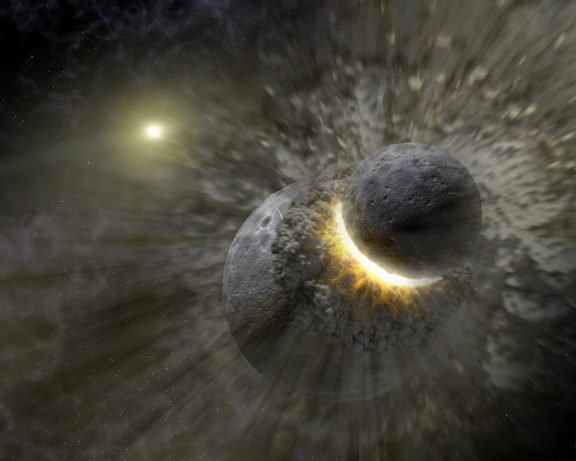
"Aggregating, clumping, sweeping … it all sounds stately and serene. It can happen that way—but usually doesn’t. The heavily cratered surface of the Moon testifies to the violence of the Solar System’s (not thought to be unusual) Late Heavy Bombardment period. The Moon itself, it is believed, coalesced from Earth-orbiting debris after a Mars-sized protoplanet struck the young Earth a glancing blow."
(*) from Trope-ing the Light Fantastic: The Science Behind the Fiction 
The Moon is born?
So. The first of today's spectacular astronomy reports involves the opening of a metaphorical window into that violent process, that ancient era, in the form of apparent fragments discovered of a long-vanished protoplanet. More specifically, asteroid remains have been recovered that: 
 "... could only have formed under incredible pressure — the equivalent of diving 600 kilometers into Earth's interior or attempting to hold up 100,000 tons with your bare hands...
...
"... the meteorite's parent body would have to have been a planet at least as big as Mercury and possibly as large as Mars."
For the full story, see, "These diamonds from space formed inside a long-lost planet, scientists say."

Tuesday, May 22, 2018

That's life

Life has been intruding -- not in a bad way, but it's intrusive nonetheless. What more appropriate way to offer a prospectively interesting post despite those distractions than with a post about ... life.

Onward, then, to some recent items from the life sciences.

Given the number of forecasts, dating back, at the least, to Thomas Malthus, that humanity will breed itself to disaster, it's nice(!) to read a counter-argument. As in: "The Population Bomb Has Been Defused: The Earth and humanity will survive as fertility rates fall almost everywhere." This is, unequivocally, Good News.

After a spate of reports about unreproducible and/or statistically questionable psychology experiments, it's also encouraging to see, "Psychologists Have a Plan to Fix the Broken Science of Psychology." There may be a whole new paradigm emerging for performing psychological research.

Monday, April 30, 2018

Trope-ing the Light Fantastic


Last updated September 2, 2024. Copies are temporarily unavailable. New editions to come.

=====

I am pleased to announce the release today of Trope-ing the Light Fantastic: The Science Behind the Fiction.

Trope-ing? There's a funny word! So what is this book?

In a nutshell: The essential resource for anyone who reads, writes, watches, or studies science fiction.

In a few more words, borrowed from the back cover:
Men have walked on the Moon. Siri and Alexa manage — at least often enough to be helpful — to make sense of the things we say. Biologists have decoded DNA, and doctors have begun to tailor treatments to suit our individual genetic make-ups. In short: science and tech happen.

But faster-than-light travel? Time travel? Telepathy? A six million dollar — as adjusted, of course, for inflation — man? Starfaring aliens? Super-intelligent computers? Those, surely, are mere fodder for storytelling. Or wild extrapolations. Just so many "sci fi" tropes.

Sometimes, yes. But not necessarily.

In Trope-ing the Light Fantastic, physicist, computer engineer, science popularizer, and award-winning science-fiction author Edward M. Lerner entertainingly examines these and many other SF tropes. The science behind the fiction.

Each chapter, along with its eminently accessible scientific discussion, surveys science fiction — foundational and modern, in short and long written form, on TV and the big screen — that illustrates a particular trope. The good, the bad, and occasionally the cringe-worthy. All imparted with wit (and ample references to learn more).

So forget what the Wizard of Oz advised. Let's pull back the curtain ....
And what's the early buzz? I'm happy you asked.

Monday, April 23, 2018

The clock is Trope-ing (er, ticking)

One short week from today, the fine folk at Phoenix Pick will release Trope-ing the Light Fantastic: The Science Behind the Fiction.* As in:

The essential resource for anyone who reads, writes, watches, or studies science fiction.

(I've blogged more than once(!) about Trope-ing, but if you're new here -- welcome! -- here's the back story: "From mighty oak trees, little acorns grow.")

To order on Amazon
To order from Amazon
Being this near to publication of my first nonfiction book is exciting in its own right ... but isn't the ticking metaphor (whether it brings to mind time bombs or Neverland alligators) a tad overwrought? Nope. Not if you're a Kindle person. The pre-order discount for the Kindle edition disappears when, well, it's too late to pre-order. One week from today.

If you might be interested -- and given that you're visiting SF and Nonsense, how can you not? -- check out Trope-ing the Light Fantastic for Kindle. Because there's nothing wrong with a bargain :-)

(*) More specifically, the hardback and ebook editions will be released April 30, with the trade paperback edition to follow.

Tuesday, April 17, 2018

Look! Up in the sky! ...

It's astronomy news!

And surely real news of astronomy beats an imaginary guy in tights and a cape.

The Mountains of Madness (er, Pluto)
Case 1: the mind-blowingly mobile mountains of Pluto. (Say that quickly ten times.) See "Pluto’s mountains may have slid along a kilometre a day."  That rate of motion isn't something you'd expect to see of a glacier on Earth, much less of ice mountains in the outer Solar System deep freeze. But facts are stubborn things ...

Monday, March 19, 2018

Of space ... and spaciness

Updated March 24, 2018 (at the end of this post)

The Moon remains the the high-water mark of in-person human exploration. (That may someday change -- thank you, Elon Musk -- but for now, it is what it is.)

Mmmm. Dough ... nut.
One of the things I find most fascinating about that too-long-since-visited neighbor is how little we know about it. The debate continues about how the Moon first came to be. While I find the prevailing Theia/Giant-Impact Hypothesis qualitatively plausible -- it's not like I've done the math -- that theory has its share of loose ends and doubters. So I was fascinated to read this recent speculation: "Freaky Theory Offers Totally New Explanation of the Moon’s Origin." (Perhaps it has something to do with my love of doughnuts. Really.)

Tuesday, March 13, 2018

Not *exactly* random ...

While the writing biz has kept me unusually busy of late, a rather eclectic bunch of stuff  -- all somehow germane to SF and Nonsense -- has  been catching my eye. A few highlights from among those are the basis of today's post.

My writing appears often in Analog magazine: in fiction, science articles, and even guest editorials. Because my preferred sub-genre is (I hate the term, but love the concept) hard SF, Analog is my favorite among the zines. And so, I was happy to make this discovery -- Analog now has an active FB presence.

High-tech tulip bulbs?
Admittedly, the upcoming item wasn't an especially recent encounter -- but the topic remains as timely as when I bookmarked the related article in December.

As clever and useful as I find blockchain technology (in essence, a robust and distributed form of computerized record-keeping), I remain more than a little skeptical about using that tech to underpin a non-governmental currency. Bitcoin, of course, is the poster child for blockchain-based "currency" (aka, cryptocurrency). This three-month-old article remains one of the best pieces I've found on the topic: "Five myths about bitcoin: No, the currency isn’t beyond the reach of the law, and it won’t replace cash."

So what else is timely(er) and eclectic?