Showing posts with label robotics. Show all posts

Thursday, January 3, 2019

A week to restore one's faith in humanity

Clearly, I refer to nothing in the political sphere. But think of the milestones (kilometer stones?) science and technology reached this week. From closest to farthest, we've got:

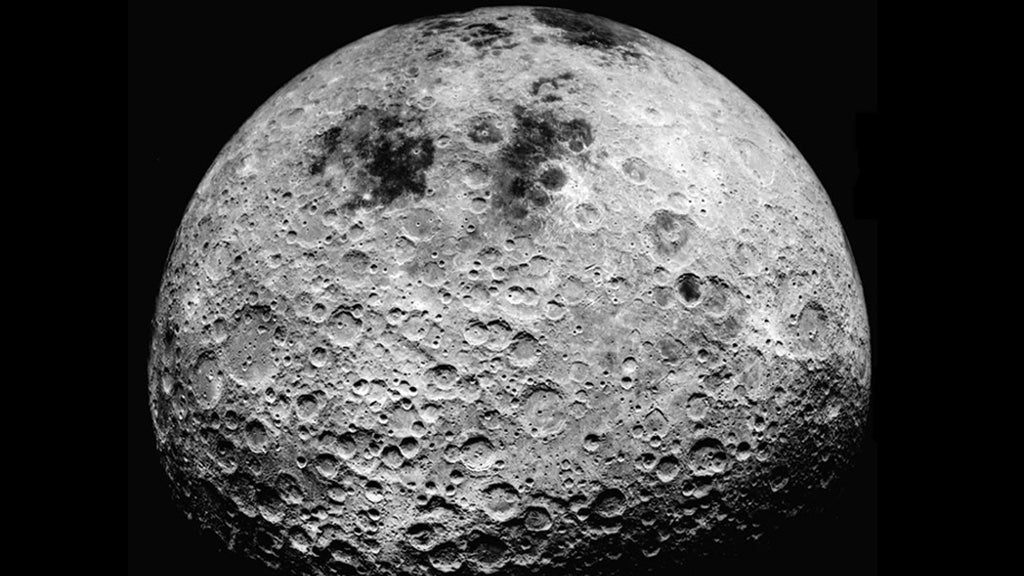
"China’s Chang’e-4 spacecraft makes historic landing on far side of the Moon."

The lunar far side
The Chinese spacecraft Chang’e-4 has landed on the far side of the Moon and has begun relaying data and images back to Earth. It is the first mission to operate on the far side, which is the  hemisphere of the Moon that always faces away from Earth. This half of the Moon has a much more rugged and varied landscape than the hemisphere that is visible from Earth and studying its geology could provide important information about how the Moon and the rest of the solar system formed.

Also, NASA's "OSIRIS-REx probe goes into close orbit around asteroid Bennu and sets a record."

Artist rendering
NASA’s OSIRIS-REx spacecraft today maneuvered into an orbit that takes it within 4,000 feet of the surface of Bennu, a diamond-shaped asteroid that’s 70 million miles from Earth.

The orbit sets a record for interplanetary travel. The quarter-mile-wide asteroid is now the smallest body ever orbited by a spacecraft, and the spacecraft is tracing the closest sustained orbit around a celestial body.
 
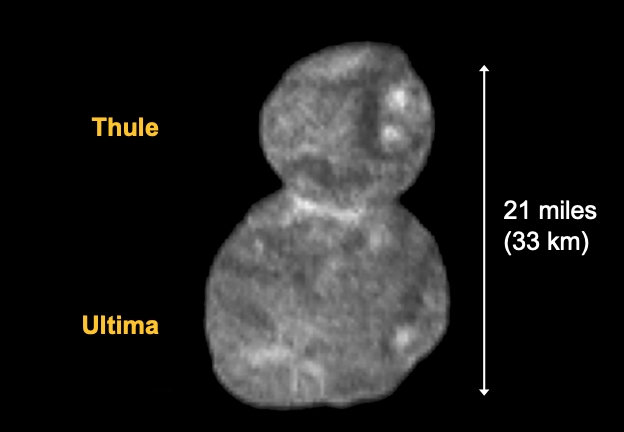
And (IMO, the most awesome of all) in the distant Kuiper Belt, Nasa's New Horizons: 'Snowman' shape of distant Ultima Thule revealed."

4 billion miles away
"[Ultima's] only really the size of something like Washington DC, and it's about as reflective as garden variety dirt, and it's illuminated by a Sun that's 1,900 times fainter than it is outside on a sunny day here on the Earth. We were basically chasing it down in the dark at 32,000mph (51,000km/h) and all that had to happen just right," the SwRI scientist said.

We Homo saps actual can accomplish great things when we cooperate and focus.

Monday, September 25, 2017

Astronomy, old and new

We're accustomed to news of exciting celestial discoveries made by American (meaning here: of the USA -- a useful clarification because of other topics to come) observatories and astronomers. It turns out, and I was surprised to read this, that American interest in astronomy goes way back.  

JQ Adams: astronomy geek
The Atlantic had a recent fascinating piece about that history. To wit -- archaic wording chosen with malice aforethought ;-)  -- "The Surprising Space Ambitions in Colonial America: Long before NASA, private individuals and communities banded together for the pursuit of geopolitical power and scientific discovery." The article starts in colonial times, but doesn't stop there. Who knew, for example, that John Quincy Adams was an advocate for astronomy? Good stuff. 

Speaking of NASA, they recently went far afield to study the Kuiper Belt Object next up on the itinerary for the amazing New Horizons probe. And the journey was worth it. The agency reports: "NASA’s New Horizons Team Strikes Gold in Argentina." The (metaphorical) gold? That the KBO toward which New Horizons is hurtling seems, in fact, to be two objects, in tight orbit around their common center of mass.

Monday, June 12, 2017

While I get accustomed to bionic eyes ...

Following cataract surgeries and implanted lens, I'm without eyeglasses for the first time in ... sixty years. Yowza. But while I'm copacetic for distance, I still need to figure out what's best for close-up/reading. Ditto for the mid-range (as in: the computer screen across the desk even as I type). I suspect those won't settle out till my eyes settle in and another visit to the ophthalmologist.

The immediate upshot? I'm doing less reading, and less computer work, than has long been my norm. (And most of the time today that I felt okay to spend at the computer? Those hours went to my final polishing of a novella and sending it off.) Hence, today's post will be briefer than my usual. That's not to say, or so I shall flatter myself, this post will be any less interesting ...

Does not compute ... or does it?
NBC News offers, "Sex Robots Are Coming, and They're Not as Skeevy as You Think: Sex doll manufacturers and independent roboticists are designing and building the first humanlike robots that people can have sex with."

Just asking for trouble ...
And from Motherboard, by hacker, security researcher and human-rights activist Claudio Guarnieri, we have the earnest admonition, "Online Voting Is a Terrible Idea." A sentiment with which I wholeheartedly agree. IMO, this short passage from the article sums up the issue perfectly:

... electronic voting attempts to solve a problem that just doesn't exist. With the predominant system of paper ballots, we normally get a preliminary count of the votes in a matter of hours already. The benefits provided by a more automatized counting process are not only questionable, but they simply do not outweigh the gravity of the risks involved.

Plenty of food here for thought. Now I'm off to rest my eyes for a bit.

Tuesday, November 17, 2015

Robots and Descartes and Shakespeare, oh my! What's not to like?

Call it a poem. Call it flash fiction. Either way, the illustrated version of it is awesome. And trust me: that (hopefully evocative) subject line fits it perfectly.

And what, you ask, is it? "I Clink, Therefore I Am." Surely a copy of this poster belongs on the wall of every English lit student -- and teacher/professor -- you know. Ditto every student and teacher/professor of robotics. They just don't (yet) know they need it.

Just a hint ...

(Hmm. I might also, with the slightest of tweaks, have added a detail to the setting and subtitled this "The Merchant of Venus." But I digress.)

As you will by now have inferred, I have dipped a toe -- by proxy, through the auspices of Sci Phi Journal -- into merchandising. The words are mine, and the meter Shakespeare's. The art is by the massively talented Cat Leonard.

It can't hurt to look. Right? Check out the poster (or T-shirt, or travel mug, or iPad case, or ...) at Red Bubble.

Tuesday, October 22, 2013

And in the larger scheme of things ...

Given what passes these days for American government -- kicking the budgetary can down the road (again) for just a few months -- maybe you'll enjoy the distraction of news items in which actual change can be discerned.

Hysteria, anyone?
Time after time, GMO (genetically modified organisms) have passed safety trials. Europeans, nonetheless, have strenuously opposed foods derived from GMO, to the point where they've forced many African nations -- in dire need of higher-yield crops -- to abstain lest they never again sell agricultural goods in European markets. American consumers are just slightly less hysterical about GMO products. So, it's refreshing to read (from EurActiv.com) that "Chief EU scientist backs damning report urging GMO ‘rethink.’"

The report from EASAC, published in June, warns of the “grave scientific, economic and social consequences of current European Union policy towards GM crops”, saying European countries should “rethink” their widespread rejection of the technology.

(EASAC is the European Academies Science Advisory Council.)

Tuesday, September 10, 2013

Craziness

They say fact is stranger than fiction. (They also say don't go on Wolverton Mountain if you're looking for a wife. But I digress.)

So what's new, strange, and relates (somehow) to science, technology, or SF? I'm glad you asked.

Making an ash of oneself
Let's begin, from ABC News, with "Doctors Investigate Indian Baby for Spontaneous Combustion." That's spontaneous human combustion -- shades of Bleak House. Or if you prefer, what the dickens?

I've been fascinated with the potential for human-computer interfaces back to my 2002 novella "Presence of Mind," which grew into the 2008 novel Fools' Experiments (a technothriller that takes place about now). How's this, from USA Today, for a bit of amazing neuroscience tech? "Researcher remotely controls colleague's body with brain."

As in: "Brain researchers say that for the first time one person has remotely triggered another person's movement, a flicking finger, through a signal sent to him by thought ... In effect, Rao's thought was transferred across the campus, via the Internet, to trigger the motion in Stocco, who described it as feeling like an involuntary twitch, according to the announcement."

Tuesday, May 7, 2013

The road to hell ...

You can complete that adage, right?

On occasion, that road might be literal. See "Pluto's Gate Uncovered in Turkey." In the Latin, Plutonium. Considering the element plutonium -- highly radioactive, maker of big booms, and chemically toxic -- that's a very apt name even today.

Is the Internet your world? Here are some key finding of the Spamhaus attack that for a short while brought down much of said world. See, "Massive cyberattack: Here's what happened (Q & A)." (How big a deal was this? "At the peak of the attack, it was generating 300 gigabits per second of traffic."

Maybe your idea of the apocalypse involves rogue robots. 

Tuesday, August 14, 2012

Curiosity ... an endangered commodity

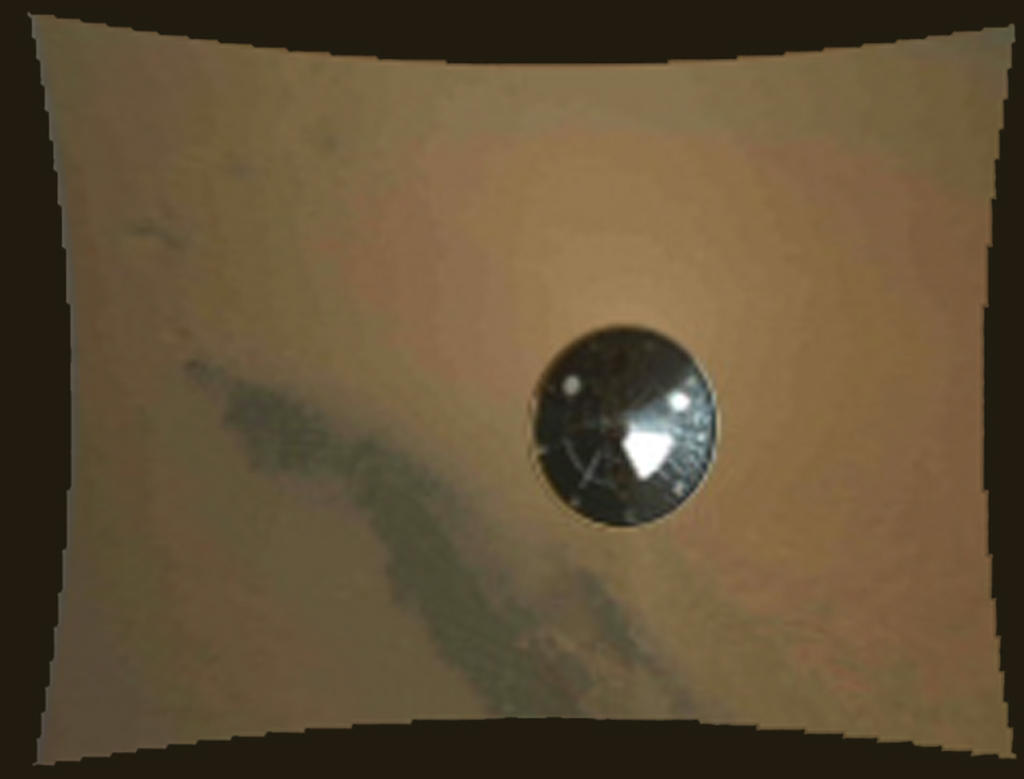
First things first: kudos to the NASA/JPL team -- including Boeing, Lockheed-Martin, and other contributing contractors -- for pulling off the recent successful landing of the Mars Science Laboratory, aka the Curiosity rover. The flawless flight and landing mark a great technological achievement. The MSL seems poised to discover many interesting things about Mars.

Curiosity about to land
But Curiosity arose from a NASA solicitation in 2004: during the George W. Bush era. Where does curiosity, lower case, fit in the current administration's agenda? Nowhere, as far as I can see. Even as NASA takes its victory lap, the US has recently pulled out of the ExoMars program. So much for the Mars Exploration Joint Initiative signed between NASA and ESA in July 2009. During this administration.

Tuesday, June 12, 2012

Of strangenesses great, small, and virtual

There's lots of news this post from the realms of physics, technology, and SF.

(But first ... a few days ago this blog added a syndication outlet, through my authorial page at the massively popular book-review site Goodreads. If you're a newcomer to SF and Nonsense: welcome! [And an FYI: for unknown reasons, formatting and layout suffer a bit in the syndication. Posts are easier to read if you click through the link "View more on Edward M. Lerner's website."])

A Higgs going to pieces?
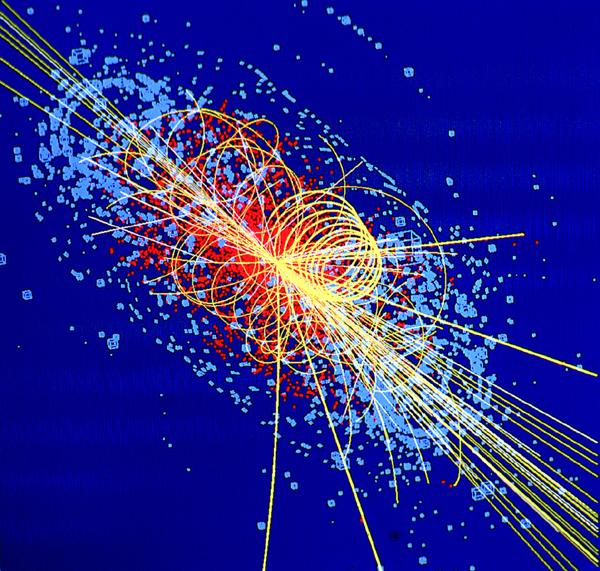
Is the Higgs boson coming out of hiding? If yes -- which would mean particle physics is finally going to have a basis for believing it understands the notion of mass -- will the long-reigning Standard Model of particle physics be collateral damage? From Ars Technica a few weeks ago, see: "Hiding in the Higgs data: hints of physics beyond the standard model."

Proof that the Higgs exists would be huge.  Even a hint that it had been found was a major story. But the biggest physics news in 2011 was the evidence for faster-than-light neutrinos. Hardly anyone believed the FTL measurement -- least of all the researchers reporting it -- but that's what the preliminary data seemed to say.

And so, there were crosschecks, retests, and independent experiments. That's how science is (or should be) done -- even when  the results aren't surprising. And the outcome? In March, "2nd neutrino team refutes faster-than-light find." In April, the "Leader of Controversial 'Faster-Than-Light' Physics Experiments Resigns" amid growing controversy over the flawed experiments. And just days ago, from "Final Nail? Faster-Than-Light Neutrinos Aren't, Scientists Conclude"): 
The same lab that first reported the shocking results last September, which could have upended much of modern physics, has now reported that the subatomic particles called neutrinos "respect the cosmic speed limit. 
Bottom-lining it, Einstein once again has his laurels intact. That's a big part of what makes the is-it-or-isn't-it status of the Higgs boson so interesting. The Standard Model is part and parcel of quantum mechanics, and the quantum-mechanical view of the universe is inherently discontinuous. (Hence those quirky quanta. Say that quickly ten times.) Relativity has an inherently continuous view of the universe. For more than a century, physicists have tried to reconcile these two great -- and very different -- models of The Way Nature Works.

As physicist John Wheeler brilliantly summarized Einsteinian general relativity, "Matter tells space-time how to curve, and space-time tells matter how to move." Imagine that the Higgs boson shows up tomorrow to validate the particle physicist's understanding of matter's attribute of mass. We'll still need an explanation for how space-time gets curved.

But that's enough (heh heh) heavy stuff for one post. Let's lighten things up. 
Tuesday, February 28, 2012

Of wrong turns great and small

No mere fashion statement
As though legions of people walking around apparently talking to themselves -- immersed in remote conversation via their Bluetooth headsets -- isn't off-putting enough, Google plans to bring us voice-recognition computer-interface eyeglasses ... hideous prototype in the nearby picture. See "Head-Mounted Android: Google Reportedly Preps Connected Glasses."

In Small Miracles, I put computer-interface eyeglasses on the main character. Those glasses tracked where Brent was looking -- within the software-displayed image projected by the lenses -- by monitoring IR beams reflecting off the back of the eye. Input was entered via (trained) blinks made looking at menu items and virtual-keyboard keys. All any friend, relative, or colleague saw was his mirrored lenses. Eerily silent and quite antisocial -- but that was the point. Brent was no longer himself, exactly, and I wanted to show him losing touch with humanity.

That people may really go around online like this? I find that scary! And that Android will be the underlying software is all too ironic.

Tuesday, September 20, 2011

Everything's spinning out of control!

Okay, that's not a statistical finding -- maybe things are no more out of control than usual. Regardless, my files are bursting with craziness. Such as:

Seismologists in Italy are on trial for manslaughter for failing to warn of a serious earthquake. Who believes seismologists can predict earthquakes? It's madness!

As is, IMO, the growing popularity of burning food (aka, biofuels). From a recent WSJ interview with Peter Brabeck-Letmathe, the chairman of Nestle:
"The U.S. Department of Agriculture's most recent estimate predicts that this year, for the first time, American farmers will harvest more corn for ethanol than for feed. In Europe some 50% of the rapeseed crop is going into biofuel production, according to Mr. Brabeck-Letmathe, while 'world-wide about 18% of sugar is being used for biofuel today.'"
Despite burning such big portions of the food supply, food prices spike. How can such things happen? If only the world made sense!

Maybe it does. Read the full article ... Peter Brabeck-Letmathe has much to say about the intersection of policies affecting energy, food, and water. Very interesting stuff.)

Monday, June 13, 2011

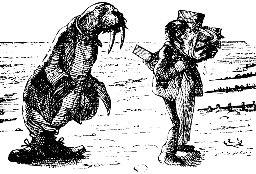
The time has come, the walrus said ...

... To talk of many things.

For shoes and ships and sealing wax, continue here.  For more recent arcana to have caught this SF author's eye, read on ...

"Criminal Minds Are Different From Yours, Brain Scans Reveal." (I like to think that my visitors do not have criminal minds.) I read with interest that:

Tuesday, May 10, 2011

Caught in our own web

As a writer, I consider hacking and awkwardly timed system crashes grossly overdone as plot devices. As a netizen, I find both all too common. (For a recent discussion, see "It's a mad, mad, interconnected, discombobulated world.")

And wherever one looks, there is another (or a continuing) problem:

Tuesday, February 8, 2011

Techno-copia

Several items of likely interest to the SF (and just S) readers of this blog ...

What if robots could share what they learn?  Is that a step toward Skynet or just towards less dumb robots?  Check out RoboEarth: a Worldwide Web for Robots. 

(Robots interacting with the real world is a hard problem. My grad-school days are long passed, but back then I shared an office with a guy whose doctoral dissertation involved programming a robotic arm to ... stack blocks.)

Tuesday, September 21, 2010

When robots collide

Today's topic: some interesting articles I've accumulated from the world(s) of computer science.

Like progress toward self-driving vehicles. See how the University of Parma’s Artificial Vision and Intelligent Systems Laboratory drove a robotic car from Italy to China. (It wasn't always quite autonomous, or always entirely trusted, but this was an impressive feat nonetheless. See article for exceptions. )

Tuesday, August 3, 2010

Real nanotech. Real medicine. And zombies.

Small Miracles is my near-future medical nanotechnology thriller -- and as of today, it's been reissued in mass-market paperback.

For the paperback edition, the cover background has been made lighter and brighter. That's a welcome change: you no longer have to take my word for it that those nanobots are swimming in blood :-)

Curious? Here's my October 2009 announcement of the hardback edition. For a sample from the novel, click through to Amazon. And here are a few recent reviews: 

Monday, May 31, 2010

A tale of two sticking points

Nanotech is, IMO, seriously neat stuff,  Seriously counter-intuitive, too.

Simply scaling down familiar designs ceases to work below a certain size. If you want (as I have, in fiction) to put nanobots into a living cell, you must contend with random molecular jostling: Brownian motion.

Scale down a bit smaller still, and weird, wacky quantum-mechanical effects make matters yet more challenging. Things don't get much wackier than real forces manifesting because of the ephemeral appearance and disappearance of virtual particles from the quantum foam.

Thursday, August 13, 2009

Potpouri (the sequel)

I'm immersed in writing this week, so this post is going to be mostly a set of pointers -- with less commentary than usual -- to interesting stuff. (Well, I find it interesting. Your mileage may differ.)

August's Year of Science theme is Celebrate Weather and Climate. Important topics, to be sure. Much interesting stuff to be reviewed, and well-deserved credit for the increasing accuracy of weather forecasts. I'm less enamored of the superficial treatment of climate change.

Here's more news about the (in)security of RFIDs, in this case the cloning of proposed "unforgeable" UK identification cards.

Here's a recent fascinating extrasolar planet find: a world that orbits backward.

And a really humanoid robot.

Sorry to be so terse, but the muse is with me. Gotta write.

Tuesday, June 23, 2009

Robots (first musings)

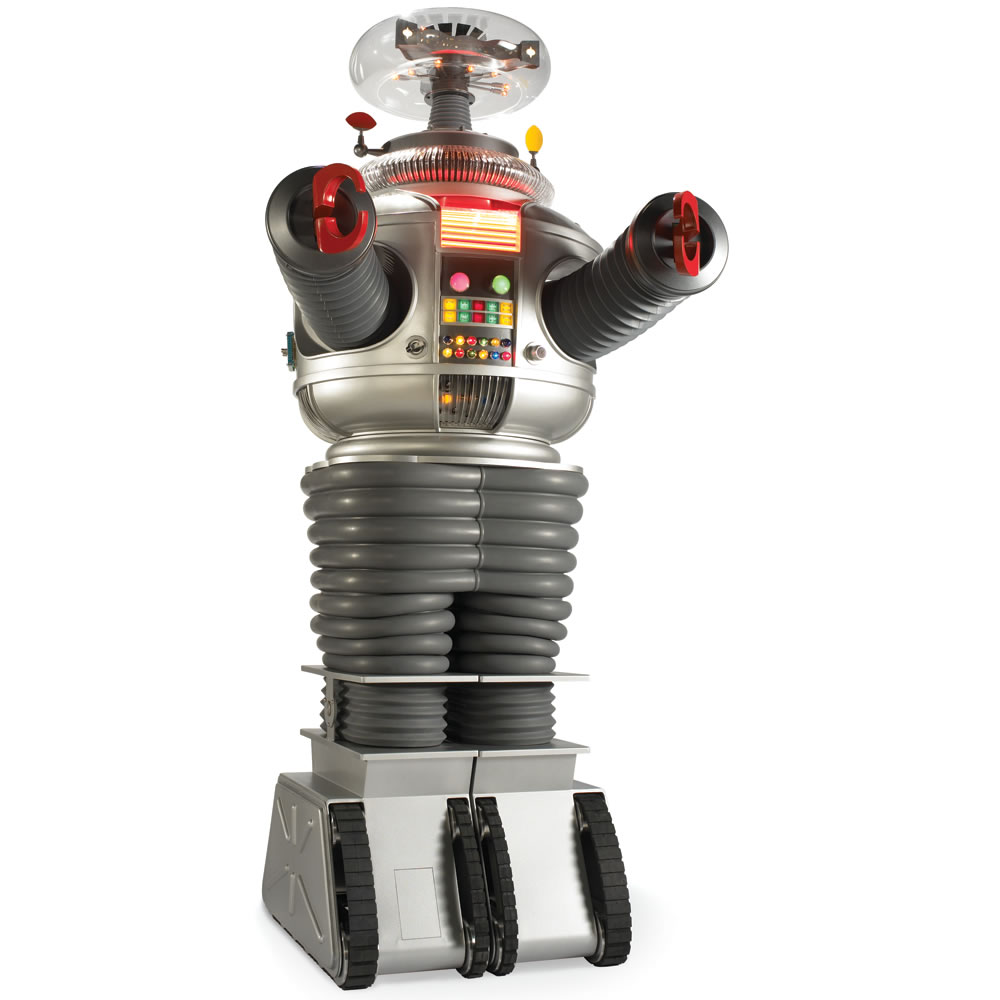
So when will we have robot servants (like Rosie the maid on the Jetsons)? Probably not this year, but clearly we are getting closer.

Already we can get autonomous robotic vacuums and robotic pets. The military, of course, uses teleoperated robots to spy from the sky and to find landmines. Robots -- albeit very specialized -- have long been at work in our factories.

Eons ago, when I started work on my computer science MS, to make a robot that could recognize and react properly to its environment was a huge problem -- PhD dissertation material. I shared an office with a guy whose PhD thesis involved a robot able to stack blocks. Not only was his robot physically huge, its questionable ability to model the real world necessitated that it move at a snail's pace for safety.

Now undergrads do robotics projects far more sophisticated than anything dreamed of by my office mate. See this article and its YouTube video, in which many of the robots are undergraduate projects. Watch the bots sense and react to their environments.

(I can't go without commenting on Robotuna. What a great name! "Sorry, Charlie. DARPA doesn't want tunas that taste good ...")

The maze-following robot in the video struck a chord with me. The artificial life in my novel Fools' Experiments was purposefully evolved by solving ever more elaborate mazes, involving progressively more dimensions and complex geometries.

Alas, my robot won't be here soon enough to spare me unloading the dishwasher.