From this morning's Washington Post:
"It’s the middle of the night. Do you know who your iPhone is talking to? Apple says, 'What happens on your iPhone stays on your iPhone.' Our privacy experiment showed 5,400 hidden app trackers guzzled our data — in a single week."
(And before Android users breathe a sigh of relief and move on ... the article eventually makes clear that Android is no different.)
In a word ... scary.
Showing posts with label current events. Show all posts
Showing posts with label current events. Show all posts
Tuesday, May 28, 2019


Wednesday, May 1, 2019
Ugh.
From the WaPo ...
"The Census is vulnerable to digital attack. But Congress may be dropping the ball."
A key, horrifying snippet:
If vulnerabilities in census systems aren’t dealt with, there’s a
risk that hackers could compromise Americans’ data — such as birth
dates, marital status and telephone numbers — on a mass scale. And that
data could be used to help file phony tax returns, apply for credit
cards or for other nefarious purposes.
More troubling, if hackers manipulated information collected by the bureau, that could compromise all manner of government tasks, including drawing congressional districts and allocating federal grants.
As though the hack a few years back of the federal Office of Personnel Management (OPM), compromising many years of security-clearance applications, shouldn't have been an object lesson.
And later in the same WaPo article:
Members of the House Appropriations panel, however, didn’t ask a single question about the cybersecurity weaknesses during the two-hour hearing ...
That "didn't ask a single question" tell us that neither party's committee members inquired. This is bipartisan blindness/negligence.
O. M. G.
"The Census is vulnerable to digital attack. But Congress may be dropping the ball."
A key, horrifying snippet:
More troubling, if hackers manipulated information collected by the bureau, that could compromise all manner of government tasks, including drawing congressional districts and allocating federal grants.
As though the hack a few years back of the federal Office of Personnel Management (OPM), compromising many years of security-clearance applications, shouldn't have been an object lesson.
And later in the same WaPo article:
Members of the House Appropriations panel, however, didn’t ask a single question about the cybersecurity weaknesses during the two-hour hearing ...
That "didn't ask a single question" tell us that neither party's committee members inquired. This is bipartisan blindness/negligence.
O. M. G.
Tuesday, January 22, 2019
Counting on ten left thumbs?
Software is incredibly important. It's essential to everything from managing power and communication networks, to the routine operation of vehicles and industrial processes, to the record-keeping that underlies pretty much all modern finance, to enabling blogs like this one. Which is why bad and/or over-hyped software is so problematical.
I've commented (vented? harangued? ranted?) often enough about privacy violations and security breaches in major software-based systems. Think: the OPM hack, or the compromise of every user account at Yahoo!, or the Starwood Hotel data breach. But today's post deals with other ways for software get us into trouble ....
Are you one of the millions (billions?) who depends on Windows for at least part of the day? Have you noticed that not until January did we read "Windows 10 October 2018 Update is at last being pushed automatically." So what's been the delay? Try this: "Worst Windows 10 version ever? Microsoft's terrible, horrible, no good, very bad October." Which concludes with the bone-chilling prediction:
... come next April, when the 19H1 version is approaching public release, a lot of people will be holding their breath.
I've commented (vented? harangued? ranted?) often enough about privacy violations and security breaches in major software-based systems. Think: the OPM hack, or the compromise of every user account at Yahoo!, or the Starwood Hotel data breach. But today's post deals with other ways for software get us into trouble ....
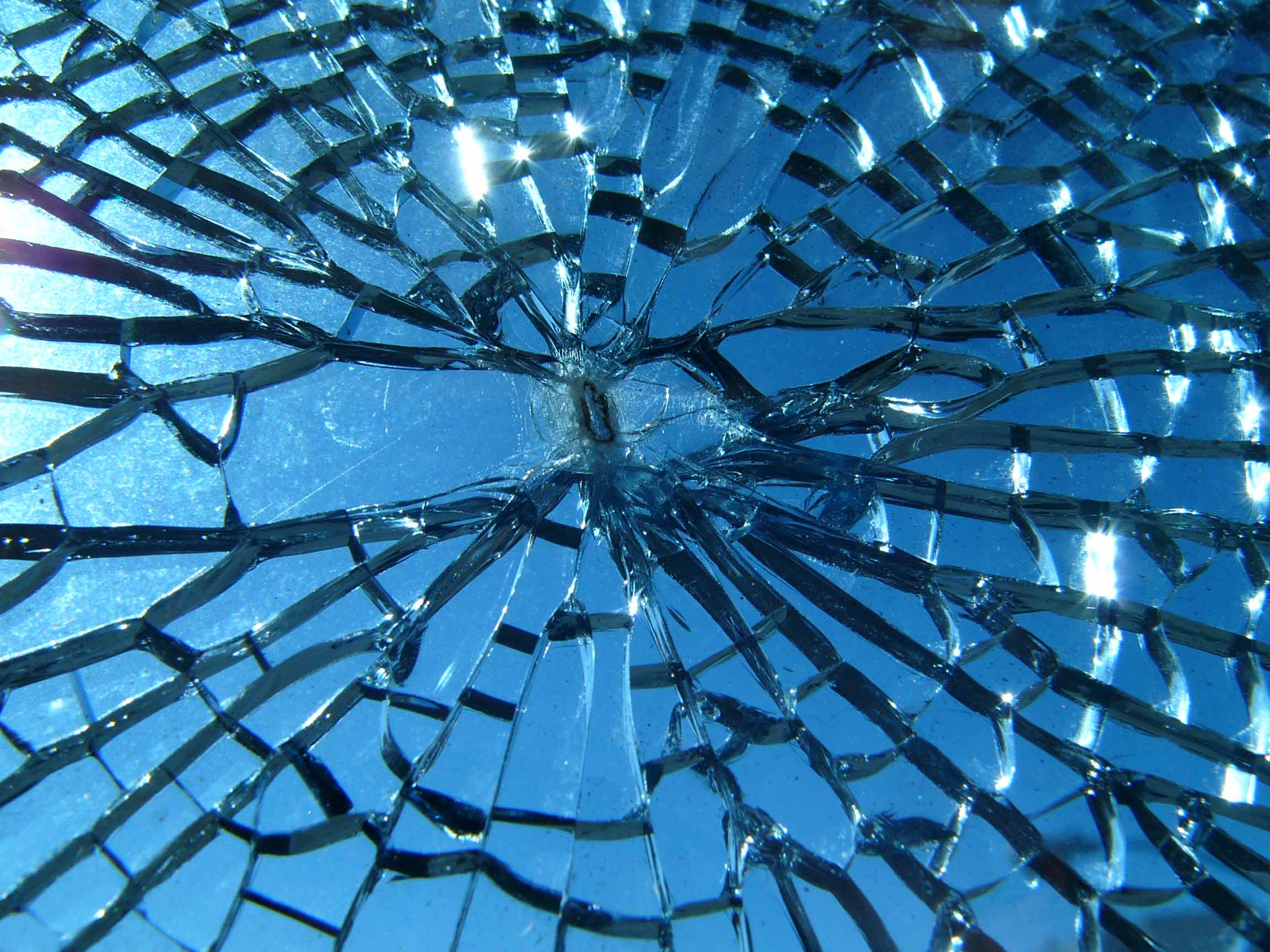 |
| It's too often like this. Right? |
... come next April, when the 19H1 version is approaching public release, a lot of people will be holding their breath.
Tuesday, October 30, 2018
This isn't the time
I occasionally post here that I don't have the time, or choose not to spare the time, to blog, such as that I'm in the throes of writing.
This week I'm not posting for a quite different reason. SF and Nonsense is neither a political nor a cultural venue -- far from it. That won't change. But in contemplation of last week's horrific events in the US, topics that are germane to this blog seem just too superficial to post about.
Maybe next week ...
This week I'm not posting for a quite different reason. SF and Nonsense is neither a political nor a cultural venue -- far from it. That won't change. But in contemplation of last week's horrific events in the US, topics that are germane to this blog seem just too superficial to post about.
Maybe next week ...
Tuesday, May 29, 2018
Does not compute
I've begun streaming the Netflix remake of Lost in Space. That may be why today's subject line occurred to me. But not the only reason. Consider:
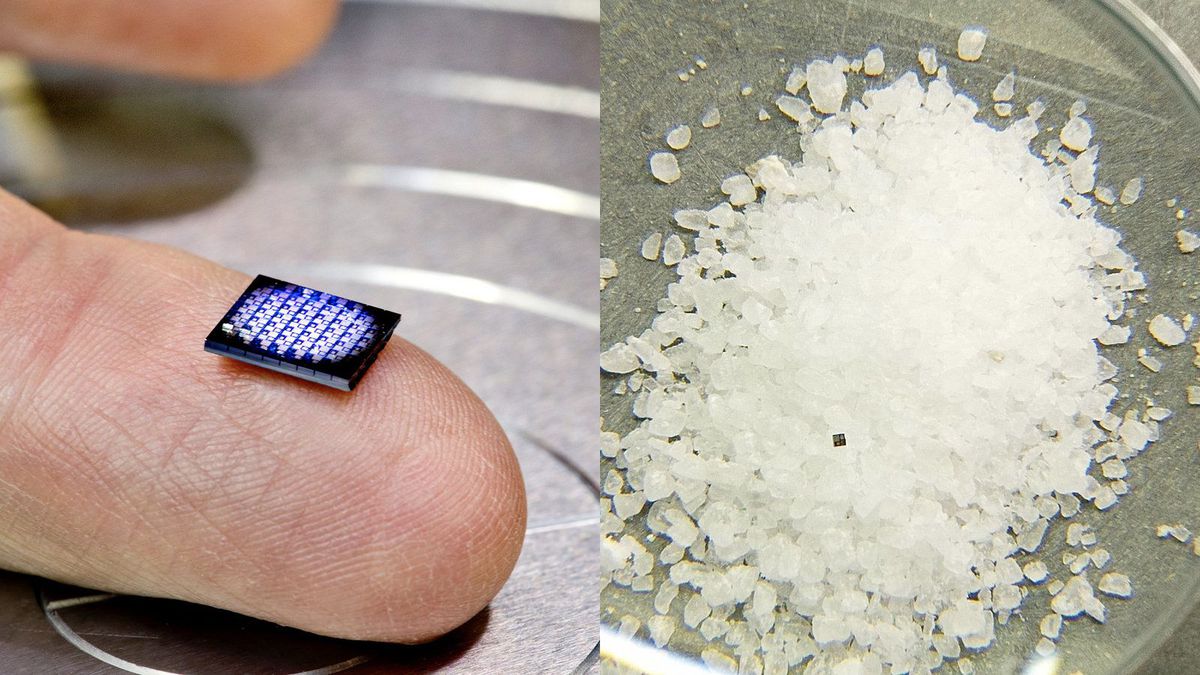 "IBM's tiniest computer is smaller than a grain of rock salt." Actually, the amazing fact is that something so small does compute. "IBM has unveiled a computer that's smaller than a grain of rock salt. It has the power of an x86 chip from 1990 ... The publication says that the machine will cost under $0.10 to
manufacture, which gives credence to IBM's prediction that these types
of computers will be embedded everywhere within the next five years."
"IBM's tiniest computer is smaller than a grain of rock salt." Actually, the amazing fact is that something so small does compute. "IBM has unveiled a computer that's smaller than a grain of rock salt. It has the power of an x86 chip from 1990 ... The publication says that the machine will cost under $0.10 to
manufacture, which gives credence to IBM's prediction that these types
of computers will be embedded everywhere within the next five years."
But what surely doesn't compute is the mess Facebook has made of elections and (un)civil discourse. See -- if you can bear to revisit it -- " ‘A grand illusion’: seven days that shattered Facebook’s facade."
I have my doubts this omelet can be reassembled into eggs, but if you are (or want to be) more optimistic, consider, "How the Government Could Fix Facebook."
But what surely doesn't compute is the mess Facebook has made of elections and (un)civil discourse. See -- if you can bear to revisit it -- " ‘A grand illusion’: seven days that shattered Facebook’s facade."
I have my doubts this omelet can be reassembled into eggs, but if you are (or want to be) more optimistic, consider, "How the Government Could Fix Facebook."
Wednesday, February 7, 2018
That's heavy, man!
After yesterday's awesome launch -- and two-thirds recovery -- of the Falcon Heavy, what more is there for a technologist and SF author to comment upon? Read on.
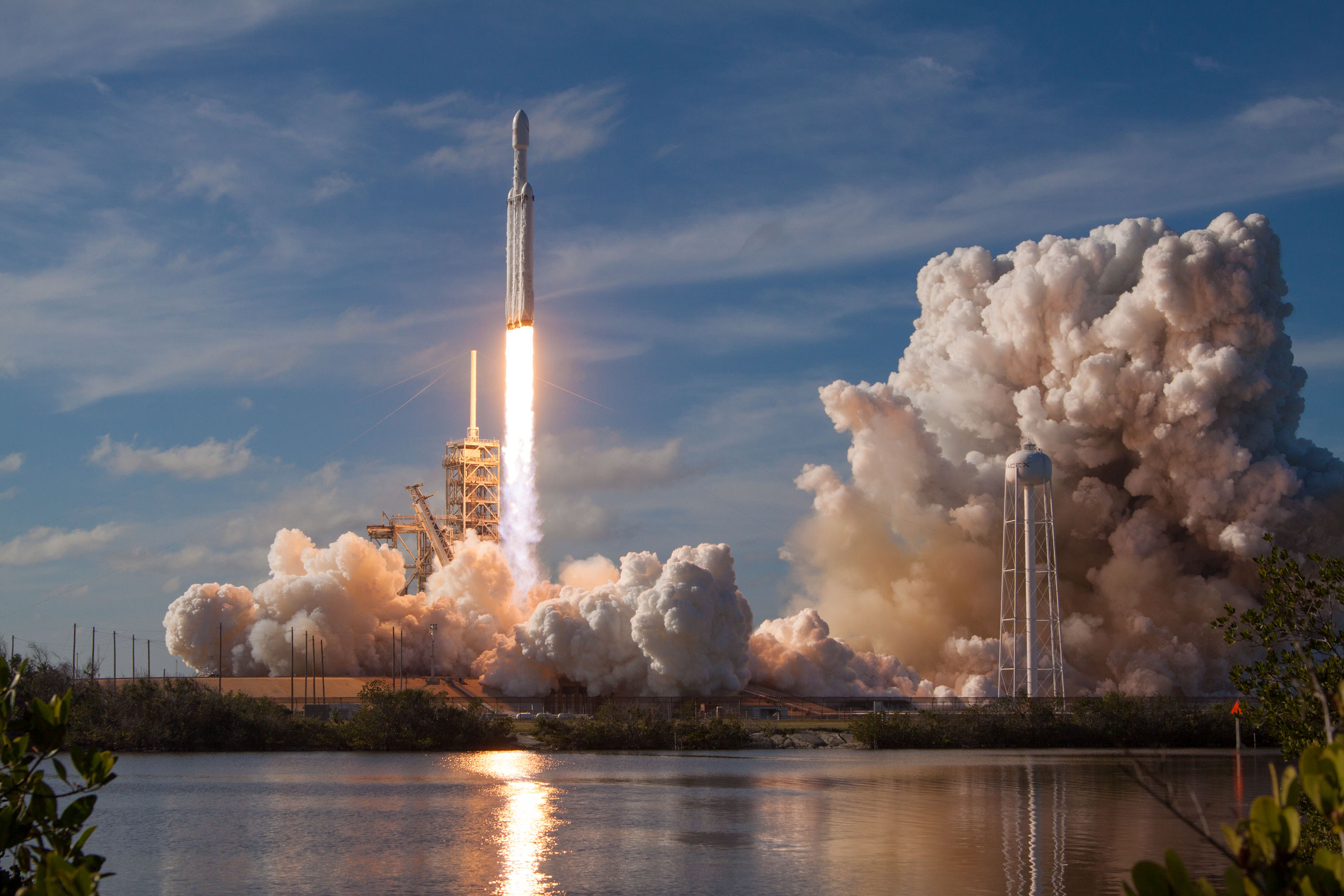 If you haven't yet had OD-ed on the coverage, check out "The best photos and videos of SpaceX’s Falcon Heavy launch."
SpaceX founder Elon Musk is highly motivated to make humanity a multi-planetary species by colonizing Mars. (Yesterday's mission seems to have gone a bit off course: "Elon Musk’s Tesla overshot Mars’ orbit and is headed to the asteroid belt.") To which end (once these little navigational glitches are worked out), this recent news is very encouraging: " 'A fantastic find': Mars hides thick sheets of ice just below the surface."
How much ice? Check the photo at left.
And equally awesome, IMO, is this item that has been overshadowed by the aforementioned stories: "LISA Pathfinder, the gravitational wave space mission, declared a success: European Space Agency reports final results of proof-of-concept mission, ahead the most ambitious science experiment ever attempted."
LISA stands for the Laser Interferometer Space Antenna. I've several times posted enthusiastically about the wonderful LIGO (Laser Interferometer Gravitational-Wave Observatory), its 2015 discovery of gravitational waves, and a few of its event detections. LIGO is an L-shaped instrument about four kilometers on a side. LISA Pathfinder was the proof-of-concept mission for an eventual L-shaped instrument 2.5 million kilometers on a side. LISA will offer sensitivity, and visibility into astronomical phenomena, far beyond anything LIGO -- or any Earth-based instrument -- can approach.
Part of what spoke to me about the progress toward LISA is this quote: "... once the triangle of satellites is eventually up and
running, it will be able to detect very early signs of a black hole
merger, weeks before the eventual collision." In my 2016 novel Dark Secret, the (fictional) space-based Einstein Gravitational Wave Observatory kicks off the story by detecting the signs of an imminent neutron-star merger. That detection forewarns of a gamma-ray burst that will obliterate life in our solar system. (Post-wise, here's a second coincidence: Dark Secret opens on recently colonized Mars.)
 Alas, we won't see LISA until, at the earliest, 2034. That's okay. LIGO was decades in coming, too (see Black Hole Blues and Other Songs from Outer Space).
SpaceX founder Elon Musk is highly motivated to make humanity a multi-planetary species by colonizing Mars. (Yesterday's mission seems to have gone a bit off course: "Elon Musk’s Tesla overshot Mars’ orbit and is headed to the asteroid belt.") To which end (once these little navigational glitches are worked out), this recent news is very encouraging: " 'A fantastic find': Mars hides thick sheets of ice just below the surface."
 |
| Color-enhanced: blue = ice. |
And equally awesome, IMO, is this item that has been overshadowed by the aforementioned stories: "LISA Pathfinder, the gravitational wave space mission, declared a success: European Space Agency reports final results of proof-of-concept mission, ahead the most ambitious science experiment ever attempted."
LISA stands for the Laser Interferometer Space Antenna. I've several times posted enthusiastically about the wonderful LIGO (Laser Interferometer Gravitational-Wave Observatory), its 2015 discovery of gravitational waves, and a few of its event detections. LIGO is an L-shaped instrument about four kilometers on a side. LISA Pathfinder was the proof-of-concept mission for an eventual L-shaped instrument 2.5 million kilometers on a side. LISA will offer sensitivity, and visibility into astronomical phenomena, far beyond anything LIGO -- or any Earth-based instrument -- can approach.
 |
| Life imitates art |
Tuesday, November 7, 2017
Telling (copy)right from wrong ...
Two troubling tidbits from the wild wild world of the creative arts ...
 What part of the creative content of a CGI character resides in a movie's script? How much is attributable to the software that shaped the CGI character? If a copyright-able element of a character can reside in a programming tool, does that mean Microsoft has a copyright interest in stories and novels composed using Word? That Adobe has a stake in anything ever Photoshopped?
It turns out those issues are being litigated. See "Hollywood Confronts a Copyright Argument With Potential for Mass Disruption." At stake: who has what rights to use CGI characters in sequels. (And without sequels, it sometimes seems half of Hollywood would be idle.) With super-heroic (and ironic?) restraint and understatement, I can only say ... interesting.
 Con artists can also be creative -- and some prey upon aspiring authors. In a scam that was new to me (and abusive of a venerable, well-respected publication), I recently read "Fraudsters Targeting Freelancers With Fake Job Offers." Quoting a key snippet from the Writer Beware post:
Fraudsters are reportedly conducting a phishing scheme aimed at freelance writers.
Individuals using the names of editors and senior management for The Atlantic magazine have sent out numerous fake job and interview offers, using multiple email addresses and made-up domain names. The goal is to obtain personal information, including Social Security numbers, addresses, and other sensitive data. More than 50 writers have reported being targeted by the scheme.
And with that -- all the while imagining my own creative endeavors will somehow avoid entanglement in uncertainty and criminal intent -- I'm off to apply my skills to the novel in progress ...
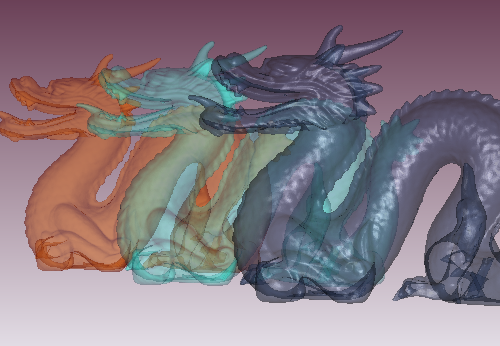
It turns out those issues are being litigated. See "Hollywood Confronts a Copyright Argument With Potential for Mass Disruption." At stake: who has what rights to use CGI characters in sequels. (And without sequels, it sometimes seems half of Hollywood would be idle.) With super-heroic (and ironic?) restraint and understatement, I can only say ... interesting.
Fraudsters are reportedly conducting a phishing scheme aimed at freelance writers.
Individuals using the names of editors and senior management for The Atlantic magazine have sent out numerous fake job and interview offers, using multiple email addresses and made-up domain names. The goal is to obtain personal information, including Social Security numbers, addresses, and other sensitive data. More than 50 writers have reported being targeted by the scheme.
And with that -- all the while imagining my own creative endeavors will somehow avoid entanglement in uncertainty and criminal intent -- I'm off to apply my skills to the novel in progress ...
Monday, October 23, 2017
Stranger than fiction?
Some situations are so implausible that it takes a Charles Dickens to dare put them into a novel.(*) Certainly, I try not to pull rabbits (or rodents of any sort) out of my authorial hat.
(*) That's not only my opinion: "Dickens particularly resented the fact that his early novels were criticised for relying too heavily on coincidence. This criticism was certainly merited: In his first novel, Oliver Twist, the young Oliver is saved from the streets by pure chance and taken in as a charity case by a wealthy family who just happen to be his actual relatives who have spent ten fruitless years searching the country for their lost boy!"
Still, there is no denying that oddities and coincidences do occur. Today, I'm happy to relate two unlikely instances of the Right Thing happening. And involving the publishing industry, no less ...
First, a district court in New York issued a ruling sure to warm the cockles of any writer's heart. (And, incidentally, that brings us to a semantic oddity. Cockles can be bivalve molluscs. Also, hard candies. I wonder: in which sense does a heart have cockles? And why in that locale do they relate to deep feelings?) The key point (for the full story, see "Court Rules Copyright is Not a 'Use It or Lose It' Right"):
 In the case of Penguin Random House v. Colting, the Court ruled that the failure of a copyright owner to enter a
segment of the market for an expressive work, here, the children’s
market, did not entitle an unlicensed interloper to enter that market
under the doctrine of fair use.
In the case of Penguin Random House v. Colting, the Court ruled that the failure of a copyright owner to enter a
segment of the market for an expressive work, here, the children’s
market, did not entitle an unlicensed interloper to enter that market
under the doctrine of fair use.
(The significance of the ruling doesn't require any direct SFnal tie-in, but there is one. To wit: among the infringed titles was 2001: A Space Odyssey by Arthur C. Clarke.)
 |
| Free Kindle edition |
(*) That's not only my opinion: "Dickens particularly resented the fact that his early novels were criticised for relying too heavily on coincidence. This criticism was certainly merited: In his first novel, Oliver Twist, the young Oliver is saved from the streets by pure chance and taken in as a charity case by a wealthy family who just happen to be his actual relatives who have spent ten fruitless years searching the country for their lost boy!"
Still, there is no denying that oddities and coincidences do occur. Today, I'm happy to relate two unlikely instances of the Right Thing happening. And involving the publishing industry, no less ...
First, a district court in New York issued a ruling sure to warm the cockles of any writer's heart. (And, incidentally, that brings us to a semantic oddity. Cockles can be bivalve molluscs. Also, hard candies. I wonder: in which sense does a heart have cockles? And why in that locale do they relate to deep feelings?) The key point (for the full story, see "Court Rules Copyright is Not a 'Use It or Lose It' Right"):
(The significance of the ruling doesn't require any direct SFnal tie-in, but there is one. To wit: among the infringed titles was 2001: A Space Odyssey by Arthur C. Clarke.)
Monday, October 2, 2017
The coming software apocalypse
I have railed on occasion in this blog about crappy software. The software I most often use, whether on my phone, my PC, or even in the cloud, is not life critical. The sometimes buggy, sometimes horribly designed, apps may frustrate me -- but they don't endanger me.
But what if mission- and life-critical apps are as buggy and as poorly designed as the stuff we use every day? The truth of the matter is: most apps are. We're talking about apps with millions of lines of code, too complex for any individual to fully understand. Apps that now (or soon) drive cars. Control power plants. Diagnose cancers. Fly planes. (What? You think that even today pilots fly planes? Often not. Pilots interact with computerized controls to specify intentions. Networked computers do the actual flying.)
 |
| Down the rabbit hole |
Leading me to an excellent and thought-provoking -- and, be forewarned, lengthy -- recent essay in The Atlantic: "The Coming Software Apocalypse: A small group of programmers wants to change how we code -- before catastrophe strikes."
(Before offering a select few observations from this article, allow me to reminisce that I didn't always write SF for a living. I spent 30 years in information technology, at such marquee companies as Bell Labs, Honeywell, Hughes Aircraft, and Northrop Grumman. I designed and built software [and also sometimes hardware], led projects, and managed development teams of up to 300 engineers and scientists. Many of the systems I worked on were mission-critical. Most had to operate in real time, be fault-tolerant, accommodate many concurrent users, withstand hacking, or be widely distributed geographically -- or even do all those things at once. In short: I like to believe I know something about development of complex software. And yes -- the conventional practice of software development needs improvement.)
Now on to a few choice quotes from the essay:
Monday, May 22, 2017
Cats and dogs, sleeping together ...
Okay, maybe not quite that out of the ordinary. But still we have:
"Report: Android overtakes Windows as the internet’s most used operating system." Having heavily used both products for years, I'm not surprised. One wonders if Microsoft is.
"Top Scientists Revamp Standards To Foster Integrity In Research." The sad thing is that the need even arises. Misconduct in scientific research makes me angry. No, furious.
As does bad science reporting. Herewith the debunking of some recent such "journalism" in: "No, we haven’t found signs of life -- alien or otherwise -- in the solar system." (Good article -- but I have a beef with the headline. I'm reasonably confident we've found signs of life on Earth. Which is, after all, within the Solar System to which the article refers. But, indeed, life has not as yet been found elsewhere in the Solar System.)(*)
(*) Pet-peeve alert. The nearby star around which our planet orbits is the Sun, aka (more formally) Sol. Sol and its attendant planets, asteroids, moons, comets, and other objects is the Solar System. Initial upper case, like Earth. And like the Sun. Any other star is a (lower case) sun. Any sun and its retinue is a (lower case) solar system.
 And "Jeff Bezos Is Selling $1 Billion in Amazon Stock Yearly to Fund Blue Origin." That's what I call commitment. I wish him luck on his space endeavors.
To conclude on a personal note, I've been doing battle for the past three or so weeks with a new novelette. Well, it ain't gonna happen -- and in a good way. The story grew into a novella, of which I completed the first draft just last Sunday. (A calendaric coincidence, and no irony intended w.r.t. the foregoing sun/Sun, solar/Solar rant.) Said draft will sit for awhile, till I'm ready for a re-look with fresh eyes. All part of the process ...
"Report: Android overtakes Windows as the internet’s most used operating system." Having heavily used both products for years, I'm not surprised. One wonders if Microsoft is.
"Top Scientists Revamp Standards To Foster Integrity In Research." The sad thing is that the need even arises. Misconduct in scientific research makes me angry. No, furious.
As does bad science reporting. Herewith the debunking of some recent such "journalism" in: "No, we haven’t found signs of life -- alien or otherwise -- in the solar system." (Good article -- but I have a beef with the headline. I'm reasonably confident we've found signs of life on Earth. Which is, after all, within the Solar System to which the article refers. But, indeed, life has not as yet been found elsewhere in the Solar System.)(*)
(*) Pet-peeve alert. The nearby star around which our planet orbits is the Sun, aka (more formally) Sol. Sol and its attendant planets, asteroids, moons, comets, and other objects is the Solar System. Initial upper case, like Earth. And like the Sun. Any other star is a (lower case) sun. Any sun and its retinue is a (lower case) solar system.
To conclude on a personal note, I've been doing battle for the past three or so weeks with a new novelette. Well, it ain't gonna happen -- and in a good way. The story grew into a novella, of which I completed the first draft just last Sunday. (A calendaric coincidence, and no irony intended w.r.t. the foregoing sun/Sun, solar/Solar rant.) Said draft will sit for awhile, till I'm ready for a re-look with fresh eyes. All part of the process ...
Saturday, March 19, 2016
Hacked off: a manifesto
I haven't blogged about computer (in)security for awhile -- but not for any lack of material. Certainly the confrontation between the FBI and Apple about unlocking the iPhone used by one of the San Bernardino shooters has been all over the news. And because that story is all over, there's little point in me adding my two cents worth. I'll wait to comment at least until there's a court decision on the matter to comment upon.
I take it back. I will comment upfront on one aspect of the situation. Apple is to be commended for building a product that's actually secure -- a praiseworthy technical and managerial achievement no matter which side of the legal controversy you happen to be on. Keep reading to get an inkling how rare such achievement is.
Remember how (apparently) the US and Israel once impeded the Iranian uranium-enrichment program with the Stuxnet worm? Remember how the attack on the Iranian centrifuges was deemed so sophisticated that technologically advanced nation-states had to be involved? This next item may not count as progress, but it is news: "An Easy Way for Hackers to Remotely Burn Industrial Motors." To wit:
... Now a researcher has found an easy way for low-skilled hackers to cause physical damage remotely with a single action—and some of the devices his hack targets are readily accessible over the Internet.
and also:
... At least four makers of variable-frequency drives all have the same vulnerability: they have both read and write capability and don’t require authentication to prevent unauthorized parties from easily writing to the devices to re-set the speed of a motor. What’s more, the variable drives announce the top speed at which motors connected to them should safely operate, allowing hackers to determine the necessary frequency to send the device into a danger zone.
Not good design. Flat out, not good.
 |
| If only it were this simple ... |
Remember how (apparently) the US and Israel once impeded the Iranian uranium-enrichment program with the Stuxnet worm? Remember how the attack on the Iranian centrifuges was deemed so sophisticated that technologically advanced nation-states had to be involved? This next item may not count as progress, but it is news: "An Easy Way for Hackers to Remotely Burn Industrial Motors." To wit:
... Now a researcher has found an easy way for low-skilled hackers to cause physical damage remotely with a single action—and some of the devices his hack targets are readily accessible over the Internet.
and also:
... At least four makers of variable-frequency drives all have the same vulnerability: they have both read and write capability and don’t require authentication to prevent unauthorized parties from easily writing to the devices to re-set the speed of a motor. What’s more, the variable drives announce the top speed at which motors connected to them should safely operate, allowing hackers to determine the necessary frequency to send the device into a danger zone.
Not good design. Flat out, not good.
Thursday, February 11, 2016
Leggo my LIGO
Mind-blowingly awesome.
I can't get over my excitement at today's announcement by the LIGO (Laser Interferometer Gravitational Observatory) team. If, somehow, you've missed it: a century after gravitational waves were first predicted as a consequence of Einstein's Theory of General Relativity, gravitational waves have been detected. Adding to the wondrousness of the announcement is that this particular detection also provides the first-ever direct confirmation that black holes -- another implication of General Relativity -- also exist.
A paradigm-shifting theory a century young. An experimental quest begun way back in 1972. The sensitivity to detect ripples in space-time, each passing ripple momentarily changing an aspect of the measurement instrument by less than the width of a proton.
And let's not forget the source of those tiny ripples: a cataclysmic event that happened 1.3 billion light-years from us! Two colliding black holes that, in a trice, converted into energy the mass of three suns!
I can't get over my excitement at today's announcement by the LIGO (Laser Interferometer Gravitational Observatory) team. If, somehow, you've missed it: a century after gravitational waves were first predicted as a consequence of Einstein's Theory of General Relativity, gravitational waves have been detected. Adding to the wondrousness of the announcement is that this particular detection also provides the first-ever direct confirmation that black holes -- another implication of General Relativity -- also exist.
 |
| Making waves |
And let's not forget the source of those tiny ripples: a cataclysmic event that happened 1.3 billion light-years from us! Two colliding black holes that, in a trice, converted into energy the mass of three suns!
Tuesday, November 24, 2015
Spread the meme: Buy-a-Book Saturday!
 Regularly since 2010, at about this time of year, I've posted about Buy-a-Book Saturday. That's my personal variation on Small Business Saturday: a day (specifically, the second day after Thanksgiving, and one day after retail's infamous Black Friday) on which holiday shoppers are especially encouraged to consider patronizing small businesses. The big-box stores and Internet giants will do fine this holiday season. But will your neighborhood stores?
Why the buy-a-book variant? Because what business is smaller than the author toiling away by him- or herself? Because, as I (and many others) post from time to time, the publishing business is becoming tougher and tougher -- especially for the authors. Because more than likely you're a reader, or else you wouldn't be frequenting this blog.
So: I'm suggesting you give serious consideration to books -- whether print, electronic, or audio -- for some of your holiday gifting. Friends, relatives, coworkers, your kids' teachers, the local library you support ... surely there's a book that's right for each of them. And for yourself, of course :-)
Tuesday, October 27, 2015
Today (only?): more science; less nonsense
I'm seldom an advocate for more regulation, but there are exceptions. The proliferation of drones, and the lack of enforcement for the few drone-centric regulations that do exist, brings me to exception territory. Drones free to interfere with civil aviation -- intentionally or not -- is a Certified Bad Idea. And so, I was pleased to see that "Federal regulators to require registration of recreational drones."
Consider merely these few excerpts:
 |
| No rules. How scary is that? |
Pilots of passenger planes and other aircraft are reporting more than 100 sightings of or close calls with rogue drones a month, according to the FAA.
Nobody knows exactly how many of the robotic aircraft are already flying around, but most estimates top 1 million.
U.S. hobbyists are projected to buy about 700,000 drones this year, a 63 percent increase from 2014.Here's hoping the FAA succeeds in getting registration in place before holiday gifting. The first step toward enforcing rules is knowing to whom the rules apply -- and those folks knowing it, too.
Tuesday, October 20, 2015
Strange but true
I spent way too long last week configuring a new PC (aka learning -- doing battle with -- Windows 10). That makes today a good day to recover a bit of time by posting from my stockpile of accumulated SF and Nonsense-relevant esoterica.
Is the problem that I haven't been getting enough sleep? In simpler times, before much in the way of artificial lighting, did people evolve to need a lot of sleep? Say, to need the oft-recommended eight hours per night? Well, maybe no one ever got that much sleep. See (from Reuters, via Yahoo News), "What a nightmare: sleep no more plentiful in primitive cultures."
 |
| Too often, how we all feel |
Tuesday, September 29, 2015
Some highs and lows of high tech
Indulging my interest in high tech, let's consider some recent news items on that theme.
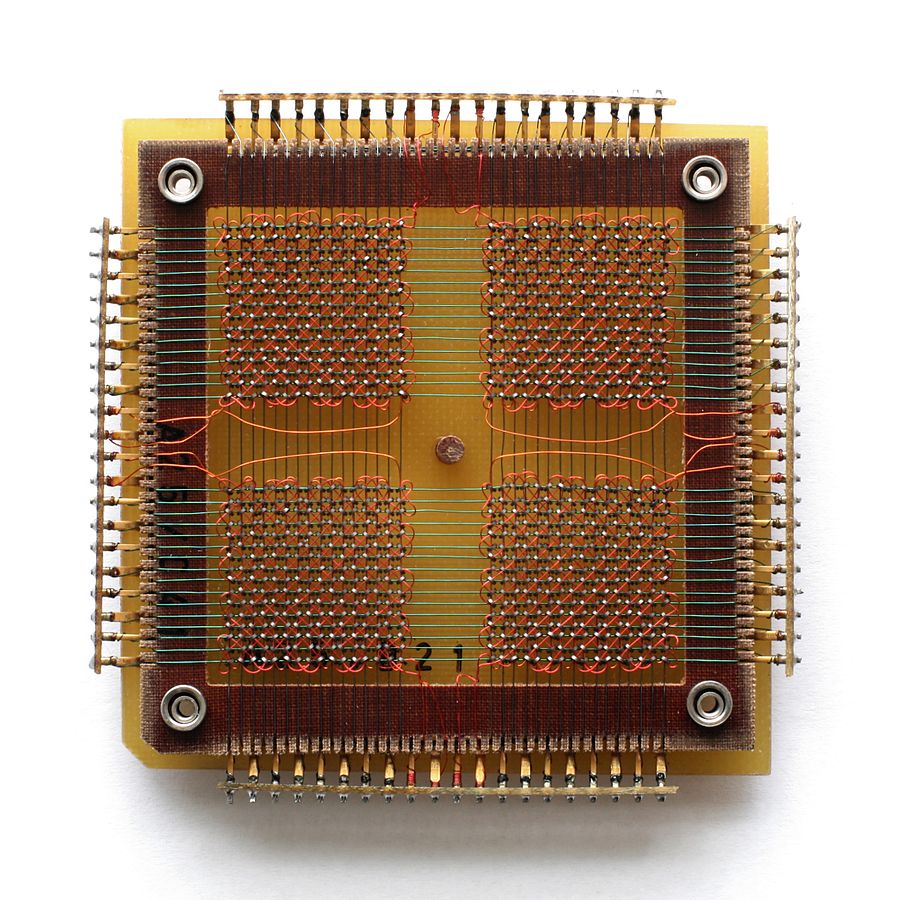
We'll start with the teaser that "Intel and Micron Announce 'Revolutionary' Mystery Memory." Most everything these industry leaders have to say generally merits attention -- but when they talk about "a new form of nonvolatile memory that the companies say is 1000 times speedier than NAND Flash and ten times denser than DRAM," one really should take notice. I look forward to hearing more about the new technology -- and how (assuming it progresses to the product stage) it will impact computer architectures.
From the tiny domain of modern microelectronics, let's turn to the vast realm of space. Regarding the latter, a Canadian firm has proposed a new type of space elevator.
Traditionally (and here I quote myself from "Alien Adventures: Rising to the Challenge," in the October 2015 issue of Analog), a space elevator is "just what it sounds. Rather than rocket into space -- carrying fuel to carry the fuel to carry yet more fuel ... to carry a comparatively tiny payload -- creep up a long cable in an elevator car. The elevator ride will take days, not minutes, but it will be far more economical, and far more environmentally friendly, than rocketry. First proposed in 1895, the space-elevator concept was popularized by Arthur C. Clarke in his 1979 novel, The Fountains of Paradise."
 |
| At the core of the matter :-) |
From the tiny domain of modern microelectronics, let's turn to the vast realm of space. Regarding the latter, a Canadian firm has proposed a new type of space elevator.
 |
| First step is a doozie |
Tuesday, September 22, 2015
Exotica
(Not a typo. What were you thinking?)
As happens from time to time, I'm posting today with eclectic items of interest -- interesting to me, in any event -- that are, despite their esoteric variety, nonetheless germane to this blog.
 First up: the latest progress to be reported by the nascent DC-area Museum of Science Fiction (MOSF). I figure that I should -- before the third quarter ends -- pass along the MOSF's second-quarter report.
And an MOSF preview: I suspect that an item to be reported for the third quarter, when its progress summary becomes available, will be the "MOSF Journal of Science Fiction." In brief: the museum, in partnership with nearby University of Maryland, is setting up an academic journal focused on SF.
And the one commercial update within this stream-of-association post ... For entirely uninteresting reasons, the print edition of my time-travel-themed chapbook, A Time Foreclosed (2013), has been available -- using the modifier ironically -- only with a weeks-long shipping lag. Big surprise: people don't care to wait that long for a book. Today I'm happy to report that, as of a few days ago, Amazon is offering a new ATF print edition -- without that delay, and for a mere $4.99. (ATF remains available as an ebook, of course, for your instant gratification -- for just 99 cents.)
And speaking of said dominant etailer ...
As happens from time to time, I'm posting today with eclectic items of interest -- interesting to me, in any event -- that are, despite their esoteric variety, nonetheless germane to this blog.
And an MOSF preview: I suspect that an item to be reported for the third quarter, when its progress summary becomes available, will be the "MOSF Journal of Science Fiction." In brief: the museum, in partnership with nearby University of Maryland, is setting up an academic journal focused on SF.
 |
| Now meaningfully available |
And speaking of said dominant etailer ...
Tuesday, July 21, 2015
Cool stuff other than Pluto
Let me say upfront that the recent New Horizons flyby of Pluto was awesome. But NASA's images speak for themselves; you don't need my two-cents worth on the topic.
Instead, today I'll write mostly about some interesting computer (in)security topics. (You also don't need me to tell you how awful the recent OPM hack was, or the ho-hum non-response from the executive branch, so I'll cover less prominent security topics.)
 |
| When it rains, it pours |
Friday, May 1, 2015
Alien aliens: beyond people in rubber suits
Saturday, May 2nd -- as I type, that's tomorrow -- I'll be leading an SF&F writers workshop at WriterHouse in beautiful Charlottesville, VA. (Charlottesville lies nestled in the Blue Ridge. This is an old colonial town, home to the University of Virginia and Monticello, both designed by the uber-talented Thomas Jefferson. C'ville is one of my favorite places in Virginia.)

The workshop's topic: Aliens and Their Societies.

 The last I heard, the workshop still had a few openings. If this event is of prospective interest, you can get more info at:
The workshop's topic: Aliens and Their Societies.
Want your aliens to seem alien? Your elves, orcs, and zombies to stand out from the rest? In this advanced science fiction and fantasy seminar, we’ll look at physically believable “others” and how they fit their environment, behavior (alien drives and psychology), culture (drawing upon the wealth of human history), and language and communications. As our final group exercise, we’ll tackle a group-selected cultural issue, such as religion, warfare, gender roles, or the alien city.
The last I heard, the workshop still had a few openings. If this event is of prospective interest, you can get more info at:
434.296.1922
writers@writerhouse.org
Monday, March 16, 2015
Catching up
From the Department of Miscellaneous and Sundry (and saved for a rainy, er snowy day when a blog topic didn't jump out at me) ...
Geologists, biologists, and others divide Earth's long history -- about 4.5 billion years -- into ages, epochs, and periods. Each marks a major shift in the nature of the planet. We humans, despite our grand airs ("homo sapiens sapiens ... twice wise? really?) are newcomers. Still, we are remodeling the place. And so, some scientists wonder: "Are we there yet? Scientists prepare for change of epoch."
What do you think? Has the Anthropocene epoch begun?
In a related vein, "Nation’s Historians Warn The Past Is Expanding At Alarming Rate."
 |
| Home, cluttered home |
What do you think? Has the Anthropocene epoch begun?
In a related vein, "Nation’s Historians Warn The Past Is Expanding At Alarming Rate."
Subscribe to:
Posts (Atom)








 Posts
Posts


