Showing posts with label technothriller. Show all posts

Tuesday, January 29, 2019

Already a wacky year

A potpourri sort of post (say that quickly five times) ...

Video games meet cryptocurrency. What could possibly go wrong? "Organized crime is laundering money through Fortnite's in-game currency." As in:
Criminals are using stolen credit cards to buy Fortnite V-bucks, then selling the in-game currency for bitcoin at a discount on the dark web as a way to launder money.
How about a non-crypto crisis in the making? Consider "The world is running out of phosphorus." And any such shortage would matter because:
... phosphorus is biologically vital. The average human body contains about 0.5kg of phosphorus, most of it in the form of phosphate to make bones and teeth strong. Phosphorus also crucially holds together DNA and RNA molecules – the backbone of these long chain-like structures contains two phosphate groups per pair of nucleic bases. Without phosphorus, it is hard to imagine any kind of life at all.
Some things we homo saps can do right
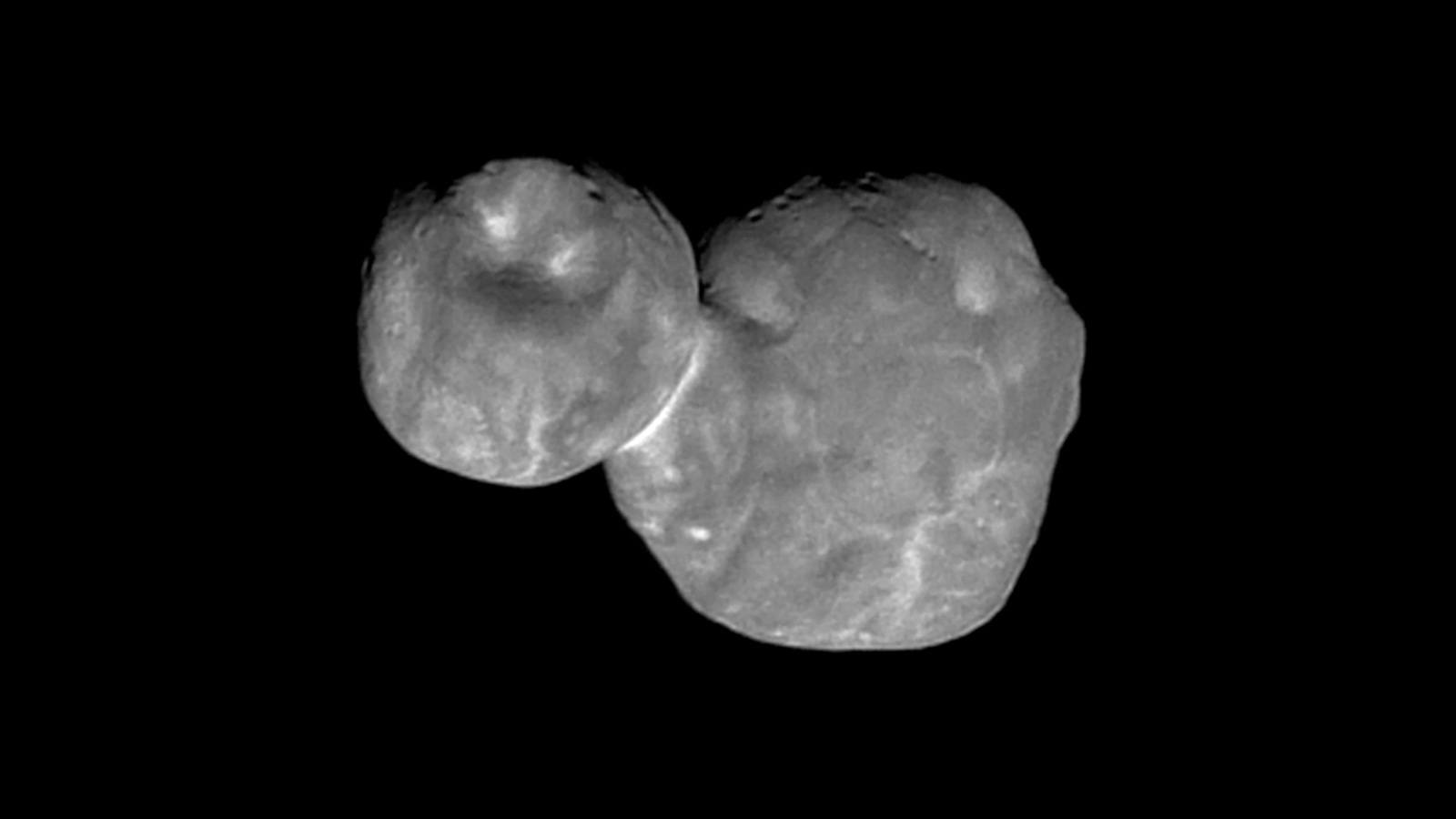
But on the positive (and seriously cool) side, we  have data streaming home -- from about four billion miles away -- of the New Horizons probe's New Year's Day flyby of Ultima Thule. The data only get better and better.  See "Craters, bulgy mounds and a collar." If nothing else, you gotta see the latest image.

To close, let's look ahead at some tech (loosely defined) predictions for 2019. Some forecasts you'll like. Some you won't. (Me? I'm happy to see a prognostication that shared electric scooters are already fizzling. Talk about an accident waiting to happen. Or without waiting ...)

Now I had best turn my attention to the oeuvre(s) in progress, lest my 2019 prove an accident waiting to happen ...

Wednesday, January 10, 2018

I'm ENERGIZED! (Now you can be, too)


I'm delighted to report that my 2012 technothriller Energized is back in print and electrons. (Alone among my older titles, Energized was briefly unavailable in these formats.) It was and is available as an audio book.

Latest cover
Or perhaps I should call this my prescient 2012 technothriller. In the headlines: private space companies, renewable energy, the imminence of asteroid mining -- and, sadly, also nuclear proliferation, chaos across the Middle East, homegrown terrorism, and meddling by an assertive Russia. Energized incorporates all these elements.

Much of the action is set dramatically in Earth orbit: Aboard a zero-gee orbiting hotel/playground for the super-rich. On (and within) a threatening asteroid diverted to become Earth's newest moon. On a two-mile-square orbiting power station, beaming solar energy 24/7 to Earth.

(Have I recently mentioned my seven years as a NASA contractor?) 

Sunday, September 6, 2015

Holiday-weekend reading

I'm playing catch-up -- still -- from twelve days away for Worldcon and an immediately following vacation. But my overflowing to-do list doesn't mean you should go without something of mine to read ...

Phoenix Pick, the publisher (more precisely, the re-publisher) of a couple of my novels, is featuring both books throughout September. Small Miracles, a near-future medical-nanotech thriller, is available all month as an ebook for whatever you choose to pay

Beware miracles with a mind of their own

Meanwhile Fools' Experiments, a near-future novel of artificial intelligence and artificial life, is deeply discounted. Try either. Or try both.

http://www.edwardmlerner.com/sample-page/list-of-books/#fools
We are not alone ... and it’s our own damn fault.

Curious? Of course you are. Check out the Phoenix Pick deals of the month. Or click the cover image of either book to read a bit more about it on my authorial website.

And in any event ... enjoy your holiday weekend and the end of summer.

Tuesday, September 10, 2013

Craziness

They say fact is stranger than fiction. (They also say don't go on Wolverton Mountain if you're looking for a wife. But I digress.)

So what's new, strange, and relates (somehow) to science, technology, or SF? I'm glad you asked.

Making an ash of oneself
Let's begin, from ABC News, with "Doctors Investigate Indian Baby for Spontaneous Combustion." That's spontaneous human combustion -- shades of Bleak House. Or if you prefer, what the dickens?

I've been fascinated with the potential for human-computer interfaces back to my 2002 novella "Presence of Mind," which grew into the 2008 novel Fools' Experiments (a technothriller that takes place about now). How's this, from USA Today, for a bit of amazing neuroscience tech? "Researcher remotely controls colleague's body with brain."

As in: "Brain researchers say that for the first time one person has remotely triggered another person's movement, a flicking finger, through a signal sent to him by thought ... In effect, Rao's thought was transferred across the campus, via the Internet, to trigger the motion in Stocco, who described it as feeling like an involuntary twitch, according to the announcement."

Tuesday, April 23, 2013

From many perspectives

For me, one of the striking things about the Boston Marathon bombings, the pursuit of the perps, and how the world followed these fast-breaking events has been the role of modern tech. Last week's tragedy, compared to other terrorist bombings (and would-be bombings) of recent years, seems immersed in the latest technology. And reminiscient of much near-future fiction ...

With non-jarring apps
The investigators had -- and made brilliant use of -- many thousand cameras. Ten years ago, would people in the crowd have had cameras? Sure. But would people in the crowd have taken nearly as many shots and videos as they did with all their smartphones? Probably not.

Ten years ago, would authorities have as quickly blanketed the Boston area with information? As quickly knocked down the rumors and disinformation? With TV and radio, likely yes -- but only to people near a TV or radio. How many people did the authorities first reach via cells and tablets?

(And on that point, hot off the [virtual] presses, from Michael Chertoff [a former Secretary of Homeland Security] and Dallas Lawrence [a former spokesman for the military coalition in Iraq], see "Investigating Terror in the Age of Twitter.")

Ten years ago, how much harder would it have been to reach family and friends in the Boston area, to check whether they were safe and to offer moral support? The phone systems were overloaded and (reports vary) cell-phone systems were sometimes shut down. (If cell systems were locally unavailable, I'm not criticizing. To stymie remote detonations is a Good Thing.) But email, texting (when and where cell systems were available), Facebook, Twitter ... offered access when all else failed.

So what lies ahead?

Tuesday, July 17, 2012

Energized


Latest update: September 3, 2024. New editions are out in hardback, trade paperback, and ebook formats. Also available in audio formats. Huzzah!

===

Undertaking to write a novel is a major commitment -- of time, effort, and self. It's no wonder that to first see one's novel in print (or publicly available electrons) is a rush. I believe that's true no matter how often one has gone through the process.

As is the case today, with Energized. This is my dozenth novel -- and to see it released is as satisfying as my first time.

Maybe that's because, at least in hindsight, this novel was inevitable. The cover alone tells you this is a book involving near-Earth space. I'm a physicist and computer scientist. Before I graduated to full-time writing, I spent thirty years at high tech companies, seven of those as a NASA contractor. I've flown the space-shuttle simulator (and respect the heck out of anyone who could fly the real thing -- it had the aerodynamic properties of a brick). I've toured the space-station simulator and a comsat factory, and watched a space-shuttle launch. I just wish that, like the hero of Energized, I had had the opportunity to visit -- again, reference the nearby cover -- a solar power satellite on location.

So what is this novel about? I’m glad you asked.

Tuesday, June 5, 2012

The Crudetastrophe cometh ...

An oil-well explosion and blowout in the Gulf of Mexico.

Deepwater Horizon disaster
Chaos, revolution, and oil-supply disruptions across the Middle East. 

Post-tsunami meltdowns of four Japanese nuclear power reactors, leading to the total shutdown of all fifty reactors across the country.

Sanctions and a looming oil embargo to persuade Iran to halt its nuclear program, countered by Iranian threats to blockade others' oil exports through the Gulf of Hormuz.

Those are just recent energy-related crises -- and they don't hold a candle to the Crudetastrophe.

Tuesday, January 24, 2012

Of the Ringworld (and much smaller things)

Lots of Known Space aficionados frequent this blog.

Especially if you're one of them, here's a stunning short video I happened upon, inspired by early portions of -- by my colleague, Larry Niven -- the novel Ringworld Seriously cool. (And if you haven't read Ringworld ... you should. It's won about every SF award there is.)


I hope there will be a Part 2.

Tuesday, September 7, 2010

Juggling chainsaws

Mental chainsaws, anyway. Working too many projects at the same time *is* hazardous to one's mental health. But there's relief in sight. In the past few days I:


Tuesday, August 3, 2010

Real nanotech. Real medicine. And zombies.

Small Miracles is my near-future medical nanotechnology thriller -- and as of today, it's been reissued in mass-market paperback.

For the paperback edition, the cover background has been made lighter and brighter. That's a welcome change: you no longer have to take my word for it that those nanobots are swimming in blood :-)

Curious? Here's my October 2009 announcement of the hardback edition. For a sample from the novel, click through to Amazon. And here are a few recent reviews: 

Friday, July 2, 2010

The great read spot

Nope, not a typo.  An atrocious pun, I'll grant you.  It all has to do with my recent silence -- due, in turn to a lot of reading.

Possibly the most overused cliche of recent years, (the Mother of All Cliches, if you will), is "the perfect storm." And the mother of all storms, in our solar system, at least, is the way-larger-than-Earth-itself Great Red Spot on Jupiter.

There's no way I can write four books in a year.  Two is pushing it.  But not all books make it through the publisher's pipeline on the same time line. And so, in 2010, I'll have four books come out:

Sunday, March 14, 2010

Virginia Festival of the Book

The Commonwealth of Virginia hosts a great literary event every year: the Virginia Festival of the Book. (Great but stealthy -- although I've lived in Virginia for the run of the festival, I managed to be unaware of it for its first fourteen years.)

Charlottesville (charming home of UVa and Monticello -- I had more nice things to say in this post) hosts the festival, in venues around the downtown pedestrian mall and across town. The festival offers five days (March 17-21 this year) of mostly free activities centered on literature. For the past six years running, the festival has drawn 20,000-plus attendees.

And this is of more than academic (groan) interest.

Tuesday, December 1, 2009

Road trip


I'm off soon on a book signing mini-tour promoting Small Miracles. (I did local signings, in the DC area, in October.)

If you're in the neighborhood, consider dropping by. (I'm happy to sign anything I've written, so check your bookshelves.)

Read on for places and times:

Wednesday, November 25, 2009

Life, the universe, and everything (SFnal)

I knew this interview was pending on the popular book-review site Bookloons, but not exactly when the transcript would appear online. Today, as it happens.


We covered a lot of ground. Among the topics:
  • themes in my recent novels (which the interviewer dubs "near-future, near-apocalyptic thrillers")
  • the prospect of societal controls over new technologies
  • how SF portrays artificial intelligences
  • if/how AI might come to be
  • the risks of nanotechnology
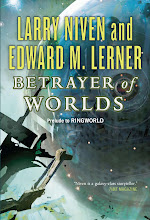
The interview ends with a sneak peek at my next books (probably 2010 releases), one a collaboration with Larry Niven and the second a Lerner solo.


Bookloons also posted its review of the recently released Small Miracles, concluding: "I highly recommend Small Miracles to anyone interested in relatively near future SF, and in the fascinating possibilities of nanotechnology."

Tuesday, October 13, 2009

Small Miracles

Latest update: September 3, 2024. New editions are out in hardback, trade paperback, and ebook formats. The Audible (audio) edition remains available. 

=====

Fair warning: this is a commercial announcement.

My latest near-future thriller -- this time dealing with medical nanotechnology -- was released on October 13. A new book's release is always exciting, but this release is doubly noteworthy. That's because SMALL MIRACLES is this month's "SCI FI Essential" title.

Original (2009) cover
And what is that? "SCI FI has teamed up with Tor Books, the largest publisher of science fiction and fantasy in the world, to spotlight some of the best new science-fiction novels, from both new and established authors.... Each month we select a new book as a SCI FI Essential. That means it deserves to be counted among the finest works of the genre."

To top off that endorsement, here are some early quotes:

Thursday, September 10, 2009

State of the art


A few days after the fact, I have copies of Fools' Experiments -- the mass-market paperback re-release -- in hand.

Liking what Tor Books did with the new cover, I'll let it speak for itself.

Tuesday, September 1, 2009

Fools' Experiments redux

2009MM PB cover
Latest update: September 3, 2024. New editions: hardback, trade paperback, and ebook. Huzzah!

=====

We are not alone, and it's our own damn fault.


This is a commercial announcement ...

Fools' Experiments -- my 2008 novel of artificial life, artificial intelligence, and unintended consequences -- was re-released today as a mass-market paperback. This latest format joins CD and tape options from Recorded Books, an audio download from Audible.com, a book-club edition, and an ebook from Amazon Kindle.

I posted about Fools' Experiments when it was newly released last fall, and my website has a sampling of the rave reviews. Here's one I quite like:

"Lerner’s physics and computer science background serve him well for this pulse-pounding yarn about the creation of the first artificial life form inside cyberspace."

— BookPage Notable Title
But the proof of the book is in the reading, so here, courtesy of the publisher, is an excerpt.

And this being an admittedly commercial announcement, here's the Amazon link for Fools' Experiments.

Thursday, July 30, 2009

Exposed

To succeed, the Launch Pad program must do more than foster correct science in popular culture. The portrayal of that science must also be accessible and interesting. That's why, besides a pure science track, the program also deals with how to include science in stories.

And that led one day to the roomful of authors discussing the dreaded exposition monster.

Exposition? That's conveying important background information to the reader. SF critics and editors pan exposition mercilessly, deriding it as an "infodump." SF authors have become gun-shy about the technique.

Exposition can, to be sure, be done badly. The exemplar / strawman is the "As you know, Bob ..." digression, wherein one character breaks from the story to tell the reader, in the guise of conversation with another character, what both characters already know. Nearly as cliched is the expert/novice pairing. Here, the expert character lectures an uninformed character (such as a reporter, politician, or a charming but clueless love interest) whose main purpose is to be ignorant -- in the interest of eliciting such lectures.

So yes, exposition can be done badly. That doesn't mean it can't be done well, or that readers universally object.

Some Launch Pad authors (I among them) argued that exposition has its place. The alternatives -- dribbling out the information over the course of a story, or assuming knowledge on the part of the reader, or hinting rather than telling -- aren't necessarily better.

And let's not forget, readers often choose a genre because the underlying subject matter interests -- nay, fascinates -- them. (Umm, don't science-fiction readers like science?) In other genres and for many bestselling authors, exposition is merely a tool of the trade. A few cases in point:

James Michener sold more than a few books, and he could start with, for example, the geological processes that formed Hawaii.

Tom Clancy sells fairly well, too, with his share of digressions on the history and operation of (choose your weapon system).

Westerns paint detailed pictures of the West.

Historical novels delve lovingly into their backdrop time and place: its origins, class structure, the implements used in daily life, the influence of geography, the social mores ... .

Technothrillers unashamedly discuss new and upcoming technologies.

So why does the SF literati like to beat itself up about a few paragraphs of exposition here and there? I really don't know.

What do you think?
Monday, March 23, 2009

Busy busy busy

I spent last weekend at the Virginia Festival of the Book, cosponsored by (among others) the National Endowment for the Arts, the Virginia Foundation for the Humanities, and the University of Virginia. The festival is very broad spectrum, covering nonfiction and fiction, small press and large. The festival offered but one panel on science fiction and fantasy -- and I was delighted to be invited.

Turns out I was the sole SF author on the panel. Besides being a lot of fun, the SF&F panel turned out to be a great venue for discussing Fools' Experiments. I was gratified by the interest.

So three days not writing ... with lots more to come. Because last week's mail brought two major projects.

First, copyedits for Destroyer of Worlds. That's the third book in my series of collaborations with Larry Niven. For aficionados of Known Space, Destroyer is a sequel to both Juggler of Worlds and Protector. (I hasten to add, Destroyer is written so you don't have to have read the earlier books. You'll get some aha! moments, though, if you have.) Expect to see Pak protectors, Puppeteers, and -- introduced in Fleet of Worlds -- the starfish-like Gw'oth -- among others.

Second, galleys for Small Miracles. This is a Lerner solo, a near-future technothriller about medical nanotech. Small Miracles is a standalone, not part of a series.

So: that's more than 200,000 words of proofreading I'll be doing over the next couple of weeks. I'm not complaining -- just providing fair warning my blogging may fall off a bit.

I've learned not to offer precise dates for book releases. Best guess, Destroyer of Worlds and Small Miracles will both be released by Tor Books in 4Q09.

Sunday, February 8, 2009

Heavy on the SF, (hopefully) light on the nonsense

If you ever wondered what an SF author's chat session is like ... wonder no more!

The first (of an occasional series?) of SF and Nonsense chats was held January 24th. Topics included tropes in SF, what makes SFnal aliens interesting, genre and subgenre boundaries, and science popularizations. Along the way, we almost certainly took potshots at something you hold dear.

The whole dialogue, from start to finish, is here.