Showing posts with label rant. Show all posts

Wednesday, May 1, 2019

Ugh.

From the WaPo ...

"The Census is vulnerable to digital attack. But Congress may be dropping the ball."

A key, horrifying snippet:

If vulnerabilities in census systems aren’t dealt with, there’s a risk that hackers could compromise Americans’ data — such as birth dates, marital status and telephone numbers — on a mass scale. And that data could be used to help file phony tax returns, apply for credit cards or for other nefarious purposes.

More troubling, if hackers manipulated information collected by the bureau, that could compromise all manner of government tasks, including drawing congressional districts and allocating federal grants.

As though the hack a few years back of the federal Office of Personnel Management (OPM), compromising many years of security-clearance applications, shouldn't have been an object lesson.

And later in the same WaPo article:

Members of the House Appropriations panel, however, didn’t ask a single question about the cybersecurity weaknesses during the two-hour hearing ... 

That "didn't ask a single question" tell us that neither party's committee members inquired. This is bipartisan blindness/negligence.

O. M. G.

Wednesday, March 20, 2019

Mega-peeve

I freely concede: my hearing isn't what it once was. That doesn't, IMO, explain what I'm about to gripe about. To wit:

At least the PICTURE improved
Dialogue on TV and in movies has become challenging to follow. With streaming, it's easy to watch (or re-watch) shows and movies even decades old -- and those, as well as shows and movies just a few years old, I hear without difficulty. (In all cases, I'm listening through a modern audio system, with 5.1 Dolby surround sound. Stereo soundtracks, of course, don't make full use of those 5.1 channels.)

Why has dialogue become difficult to parse in so many recent productions? Is it:
  • sound mixing that prioritizes special effects over dialogue clarity? 
  • directors who can't be bothered to require a clear speech channel?
  • some inherent flaw in the Dolby 5.1 technology (one that doesn't impact old-style, stereo soundtracks)?
  • actors who can't be bothered to enunciate?
  • directors who can't be bothered to require their actors to enunciate?
  • the trend to make all dialogue super-snappy fast (a cynic would say, to squeeze in more commercials)?
  • many -- or all -- of the above?

Assuredly, some of the above are at issue, because -- I repeat -- I can watch older shows and movies with none of the difficulty of the newest ones, using the same AV setup in all cases.

The next time I feel the urge to rant: TV and movie plots dependent on the audience reading in about a nanosecond (often tiny) text messages and caller IDs flashed across a character's phone.

Monday, February 4, 2019

Crypto *what*?

This is supposed to be money? A store of value?

I've commented -- okay, ranted -- about the (IMO) insanity of so-called cryptocurrencies, most recently in the post Already a wacky year. Now, in breaking news, comes this:

"After founder’s sudden death, cryptocurrency exchange can’t access $190 million in holdings." A snippet:

After the founder of Canada’s biggest cryptocurrency exchange, QuadrigaCX, died unexpectedly, about 115,000 clients have been unable to retrieve $190 million in holdings — because the owner was the only one who knew the password to access them, the company said.

The United States has stable currency (about 2% inflation at the moment; Canada's inflation rate is a smidge higher at about 2.5%). I'm happy to continue using dollars. Even if Steve Mnuchin loses his passwords.

Tuesday, January 29, 2019

Already a wacky year

A potpourri sort of post (say that quickly five times) ...

Video games meet cryptocurrency. What could possibly go wrong? "Organized crime is laundering money through Fortnite's in-game currency." As in:
Criminals are using stolen credit cards to buy Fortnite V-bucks, then selling the in-game currency for bitcoin at a discount on the dark web as a way to launder money.
How about a non-crypto crisis in the making? Consider "The world is running out of phosphorus." And any such shortage would matter because:
... phosphorus is biologically vital. The average human body contains about 0.5kg of phosphorus, most of it in the form of phosphate to make bones and teeth strong. Phosphorus also crucially holds together DNA and RNA molecules – the backbone of these long chain-like structures contains two phosphate groups per pair of nucleic bases. Without phosphorus, it is hard to imagine any kind of life at all.
Some things we homo saps can do right
But on the positive (and seriously cool) side, we  have data streaming home -- from about four billion miles away -- of the New Horizons probe's New Year's Day flyby of Ultima Thule. The data only get better and better.  See "Craters, bulgy mounds and a collar." If nothing else, you gotta see the latest image.

To close, let's look ahead at some tech (loosely defined) predictions for 2019. Some forecasts you'll like. Some you won't. (Me? I'm happy to see a prognostication that shared electric scooters are already fizzling. Talk about an accident waiting to happen. Or without waiting ...)

Now I had best turn my attention to the oeuvre(s) in progress, lest my 2019 prove an accident waiting to happen ...

Tuesday, January 22, 2019

Counting on ten left thumbs?

Software is incredibly important. It's essential to everything from managing power and communication networks, to the routine operation of vehicles and industrial processes, to the record-keeping that underlies pretty much all modern finance, to enabling blogs like this one. Which is why bad and/or over-hyped software is so problematical.

I've commented (vented? harangued? ranted?) often enough about privacy violations and security breaches in major software-based systems. Think: the OPM hack, or the compromise of every user account at Yahoo!, or the Starwood Hotel data breach. But today's post deals with other ways for software get us into trouble ....

It's too often like this. Right?
Are you one of the millions (billions?) who depends on Windows for at least part of the day? Have you noticed that not until January did we read "Windows 10 October 2018 Update is at last being pushed automatically." So what's been the delay? Try this: "Worst Windows 10 version ever? Microsoft's terrible, horrible, no good, very bad October." Which concludes with the bone-chilling prediction:

... come next April, when the 19H1 version is approaching public release, a lot of people will be holding their breath.

Tuesday, October 23, 2018

Some days, everything modern is maddening

Cryptocurrency mining isn't something I chose to undertake, but plenty of people do. If that's you, please note: "If you’re mining bitcoin from home, you’re now losing money." (In detail, the truth of that assertion depends on the rate you pay for electricity -- but subject to typical retail rates ....)


Do you use any Apple website? How about Amazon? Maybe you care about the integrity of (private) cloud servers used by the DoD. If any of those apply, you would have been justifiably alarmed by this recent Bloomberg headline: "The Big Hack: How China Used a Tiny Chip to Infiltrate U.S. Companies." Only Apple and Amazon deny the assertion vehemently, and other journalism shops find the claim unsubstantiated, impossible to confirm, and otherwise dubious. See (from the Washington Post), "Your move, Bloomberg."

(Is hardware with hidden trapdoors a threat? You bet your sweet bippie. This peril was the premise of a novel I started way back, circa 1990, and then shelved, when the Cold War -- however fleetingly -- went away.)

Get a lot of spam/scam calls on your cell? And the majority spoofed to look like your area code, and plausibly real? Me, too! And the trends are ever more ominous. See (again from the WaPo), "Nearly half of cellphone calls will be scams by 2019, report says."

Monday, July 2, 2018

Who knows where the time goes?

(Yes, that's a Judy Collins song title and album. A very good -- if retro -- album as it happens. But take it as a point of departure.)

Yeah. That kinda week
I didn't post last week, not even an "I'm too busy to post" post. Trying to reconstruct where that week went, I see:
  • a routine dental exam
  • a routine eye exam (and hours thereafter during which the world was fuzzy)
  • a broken sprinkler system
  • overgrown bushes trimmed so the sprinkler people could get at the water cutoff
  • landscapers contacted because I have way more overgrown bushes than I care to deal with
  • a semi-repaired, aka semi-broken, sprinkler system to diagnose, and the return of the sprinkler people(*)
  • headsets researched; one acquired, installed, and tested for an upcoming authorial interview/podcast (more on that another day)
  • sysadmin duties on my wife's recalcitrant computer
(*) Hmm. "The Return of the Sprinkler People." A title yearning to become a story?

All that coming, of course, on top of life's usual distractions ....

When I managed to eke out time to actually work, I focused on "The Company Mole." This new novella follows my SF-mystery novelettes "The Company Man" and "The Company Dick," which appeared last year in The Grantville Gazette ("Universe Annex" Department).

And herewith the good news! A complete draft of "The Company Mole" is in the hands of my first and favorite reader, aka my wife. (Also, fair compensation for the aforesaid sysadmin services.) I have high hopes of wrapping up and submitting this story ere long.

Wednesday, May 9, 2018

Arrrrgh!

And no, today's post isn't a further complaint about Yahoo Mail.  (In fact, they've actually begun in recent weeks to get a handle on spam.)

Nor much of a post at all.

One of the household PCs was picked (targeted?) this week for the latest Windows 10 "feature" update. The new features, as far as I can tell are:
  • Breaking my non-MS antivirus software
  • Breaking the UI to my non-MS cloud-backup service
  • Changing at least one past authorization in the firewall
  • Failing to support the installer for the only supported iteration of Adobe Reader

Well done, Microsoft! Love these new features!

So: rather than blog this week, I'm doing other things :-(

Thursday, February 15, 2018

What the %^&$#!! NOW?

The incompetence that is Yahoo continues its luge ride to oblivion (an update to last month's frustrated post, "What the &$#!! is wrong with Yahoo?"). A set of new failings:

Why does my Yahoo home page lose the ability, from time to time, to display RSS feeds? Given that the suddenly unavailable sources are as disparate as Fortune magazine, Yahoo's own financial service, and PCworld, I have to believe the problem is Yahoo's.

Why has my Yahoo home page spontaneously switched from its three-column, years-old formatting to two columns? (It's worse than that, but the details of the uninvited formatting changes aren't important to my point.) And why does the "Edit Layout" button no longer operate, so that I can maybe undo the SNAFU?

Why do assorted Yahoo services suddenly decide I'm not logged in, but know better when I refresh the screen? 

Why do my Yahoo email filters only work sporadically?

Why, when I do a Yahoo Calendar edit selecting "this and future events" of a series, does the Save function not update this event?

http://amzn.to/2C0Y6KO
The Kramer
You're doubtless wondering: why continue using Yahoo services at all? A fair question. Inertia, and the effort necessary to switch fully to Google-equivalent services (though I'm partway there, to be sure).

But to change completely? I don't see that happening. It's like the infamous The Kramer painting from Seinfeld (“He is a loathsome, offensive brute. Yet I can’t look away.”) IMO, it is hypnotically compelling to watch just how bad a once great company get become ....

Thursday, January 18, 2018

What the %^&$#!! is wrong with Yahoo?


Yahoo services have been getting worse and worse. What is the worst? It's so hard to choose.
  • In email, spam delivery (to my spam folder, which is a small mitigation) has risen to >100/day. This makes checking for the occasional misdirected real email all but impossible. Why can't Yahoo throw out the OBVIOUS spam (like, ya know, anything sent a dozen times per day!) as it did before Verizon took over? As Gmail does?
  • In email, if I empty my spam or trash folder, Yahoo uses the screen space to start streaming a video ad.
  • Clicking a link in a Yahoo news summary or search page often sends me to a new page with only the opening snippet of the desired story -- and lots of ads. I then have to click another link to get the full story -- and more ads. 
  • Stoopid, unsolicited opinions pop up over many news stories selected from Yahoo summary and search pages as I (try to) read. If I want to see comments, I'll scroll to comments.
  • Calendar reminders that are supposed to send emails as events approach. Some events do. Some don't. All are set up exactly the same. 
  • And if I want to scan the Calendar page to spot any events that didn't send notifications? It often take two or three tries to get the Calendar page to open!
  • And then there is the absurdly slow load time of Yahoo pages. Are the servers hosted on someone's retired 486 box?
Doubtless, I've overlooked for the moment more quality Yahoo "features." 

Is Yahoo TRYING to drive away their remaining users? Years of filed emails and bunches of past customizations make it inconvenient to go cold turkey ... but I use Yahoo less and less often.

Crappy service like this is the way companies die.

Thursday, December 7, 2017

A (non)post

Yeah, I'm overdue to post. Apart from a brief(?) rant, not gonna happen this week. Because of:
  • the wife's Windows 7 PC dying. (At least it died when sales are on.)
  • her new PC (which I picked and ordered, so I'm not blaming her), on which Windows 10 came out of the box looking nothing like Windows 10 on my PC.
  • the vendor hiding the Windows product key, and telling me I'd never need to know it. (Because nothing ever goes wrong with Windows? Or disk drives?) 
  • the absurd length of time Windows Update takes.
  • the fact PCs now ship without manuals, or even a link to where on the vendor's website to find a manual. 
  • the toner cartridge that arrived looking like it had been attacked by wolverines. 
  • the peripheral manufacturers who abandoned hardware support, rather than produce Windows 10 drivers for customers who own their products.
  • the Windows compatibility mode that wouldn't run Windows 7 drivers.
  • the disk-partitioning utility that screwed up permissions. 
  • the LAN software that ... well, that's so hosed, I'm still sorting things out.
  • the crappy excuses for keyboards PC manufacturers ship nowadays. Not everyone wants to use a tablet or touch screen!
  • the apps with opaque or nonexistent guidance on how to migrate libraries (images, audio files, and the like) to a new PC.
I could share more about my recent involuntary sysadmin experience, but I won't. You're welcome. Be back (hopefully) soon.

Wednesday, June 28, 2017

Plus ça change ...

... plus c'est la même merde.

And what merde (pardon my French) do I mean? Software that was perfectly good, but was "improved" anyway -- by deleting longstanding features. Software with an idiotic user interface. Software "standardized" to give the same experience on tiny phone screens and big monitors. Software that ...

I'm not opposed to change. That's kinda frowned upon among SF writers. And I'm fully supportive of updates that add new and useful features, squash bugs, improve security, or improve performance. I'm not complaining (today) about blatant bugs that -- somehow -- made it past QA, but that might -- someday, one hopes -- be fixed.

No, today's post (okay, rant) is about software stupidities by design. As both a user and onetime software developer, I feel entitled. Herewith a sampling (with names omitted not to protect the guilty, but because I don't care to moderate a flood of justification comments from the guilty) of software design stupidities that regularly vex me:
  • On a web portal, the checkbox set by default at logon to stay logged on. So rather than have someone who wants to stay logged on click or tap the box once, I have to uncheck the box daily.
  • On multiple browsers with the feature to change the font size of content, no way to change the tiny type of the browser's own text -- like menu items and bookmark names. (Yes, I know about add-ons. I use one. This one shouldn't be necessary.)
  • On a banking app, the camera feature changed to take check pictures faster than a normal human being could frame the check. (To give credit where it's due, the next update restored a reasonable few seconds for setting up the check image.)

Tuesday, November 12, 2013

It's *not* rocket science

The healthcare.gov start-up debacle -- about which I'll spare you my political thoughts -- has been of late (hah!) a major topic in the mass media.

Said fiasco has also provided fodder for late-night comedians and, not surprisingly, the Onion: "New, Improved Obamacare Program Released On 35 Floppy Disks." And fodder, too, for tech speculation, as in this from IEEE Spectrum: "The Obamacare Rollout: What Really Happened?"

Rather than become the zillionth-plus-first commenter on the botched roll-out, I decided instead to vent re the problems more generally encountered in software. My opinion is, I shall maintain, an informed one. I have an MS in computer engineering. I once programmed for a living. For many years after I stopped coding (other than, on occasion, recreationally) I managed software- and systems-development organizations, both in the private sector and under contract to several federal agencies (most notably, NASA). Several of those systems were Internet-based, very large, distributed -- or all three.

So what about the state of modern software bemuses (but not amuses) me?

Tuesday, June 11, 2013

An open letter to (a few) ebook shoppers

It happens all too often ... an online shopper looks at an ebook at Amazon or bn.com or ... and disagrees with the vendor's price. That's fair.

And proceeds to give that book a one-star review, "justified" with a rant about greed and/or the evils of ebook pricing. That's often quite unfair, and that bit of venting claims the author as collateral damage.

First, the background: opinions differ on ebook pricing. Some shoppers feel that ebooks should be far cheaper than any physical book because an ebook can be replicated for free. Authors, editors, cover artists, distributors, and publishers expect to earn something for their contributions to a book -- and that requires a nonzero price on books, even ebooks. (Especially ebooks, as that format claims more and more of the book market.) Ebook reader vendors, meanwhile, sometimes use ebook content as a loss leader. The device vendor's short-term motivation is to lure/lock customers into a particular content ecosystem.

Publishers and etailers have long tussled over these issues. Even as I type, a major antitrust suit about ebook pricing is at trial between Apple and the Department of Justice -- the big publishing houses having settled out of court.

Do I know the "right" price for an ebook? No (other than nonzero, in the belief readers want authors to continue writing). Do I know how the tussle among publishers, etailers, and the DoJ will come out? Again, no. 

Here's what I do know ...

Wednesday, April 17, 2013

Poisoning, throttling, and otherwise killing the goose

You know the goose I mean -- the one that lays the golden eggs

DVDs (in which category I'll include Blu-Ray discs) are a big market. In 2011, the last year for which I've found data, movies on disc represented an $18 billion business. Lots of after-theater money for movie producers.

A vanishing breed?
But it's a business that's shrinking -- and all too often, the purveyors of DVDs are bringing it upon themselves.

I enjoyed DVDs. I used to buy lots of DVDs. The picture quality is fantastic. I can watch a DVD movie even when my Internet service is interrupted. But in recent months, almost exclusively, I stream video content.

As a consumer, videophile, and technologist, what's gone wrong with DVDs and (especially) Blu-Ray discs? Let me count the ways.

Tuesday, February 12, 2013

Hacked off

Time and again I believe that I've posted for the last time on the topic of Internet insecurity, that there is nothing more to be said on the subject ... only to have events show me otherwise. So what's gone wrong recently?

The hacking of Bush family email accounts at AOL likely didn't entail any great technical skill. What shocked me is how news outlets considered excerpts from the Bush family's email archives to be fair game.

Yes, the family includes two former presidents -- but not everything they do is news. We're not discussing the Pentagon Papers. Does the public deserve access to personal emails in which George W. Bush collects information from his relatives for a eulogy for his ailing father? Isn't the family entitled to any privacy? As the Washington Post comments, "Publication of hacked George W. Bush e-mails raises journalism ethics questions."

Tuesday, January 22, 2013

Techie tesserae

The crafting of believable futures -- a big chunk of my job description -- entails considering the many ways in which a society can change. Any science or technology experiencing a major advance -- and when is just one so fortunate? -- generally has many consequences. Consider the myriad myriads of impacts of ever faster, ever cheaper, ever more efficient electronic chips.

The better to imagine fictional futures, part of my routine involves keeping my finger on the pulse of science and tech (and other changes!) in the real world. Alas, another part of my routine is tearing myself away from all the fascinating stuff and getting back to writing. Not everything interesting can make it into a story. That doesn't mean I can't share.

Let's start with the endlessly proliferating cameras in public spaces. If those cameras are used to identify terrorists, bank robbers, and red-light runners, that's keen. But will cameras in public be used only for such purposes? (Note the wording: cameras in public, not public cameras. In Baltimore alone, one repo company captures 10 million license-plate photos per year.)

And will license-plate snapshots be combined with other databases, such as GPS-tagged cell-phone records? Is the mere fact of driving down a public street sufficient reason to make a permanent record of your travels? From IEEE Spectrum, see, "License Plates, Cameras, and Our Vanishing Privacy."

Tuesday, November 6, 2012

While we wait ...

A very consequential election. The ongoing Superstorm Sandy mess/clean-up in the Northeast (with a nor'easter en route). Though today is my weekly day to post, my mind isn't on blogging -- and I believe that's understandable.

Sharing thought-provoking (or offbeat) science, technology, and SF items from my grab bag won't demand much concentration on my part (kinda essential today) and they may divert you.

Remember last year's tsunami in Japan? It caused shutdowns at, and radiation releases (but, to date, no radiation-related deaths) from, the four Fukushima nuclear power plants. It led several countries to move toward the complete elimination of nuclear power from their national grids. Remember the hyperventilating concern about US nukes in the event of natural disaster?

Almost lost in the coverage of Sandy's impacts is this: "Problems at Five Nuke Plants." What sort of problems? Amid countless storm-related grid disturbances, these nuclear plants responded as designed. One of the five "problems" was a plant dialing down its output to 91 percent of capacity. That seems (IMO) pretty tame compared to "ConEd Explosion During Hurricane Sandy Rocks Manhattan's Lower East Side" and "Outages, floods hit two New Jersey refineries; others restart." Nukes are a robust part of the national energy system. I'd like to see more of them.

Tuesday, August 14, 2012

Curiosity ... an endangered commodity

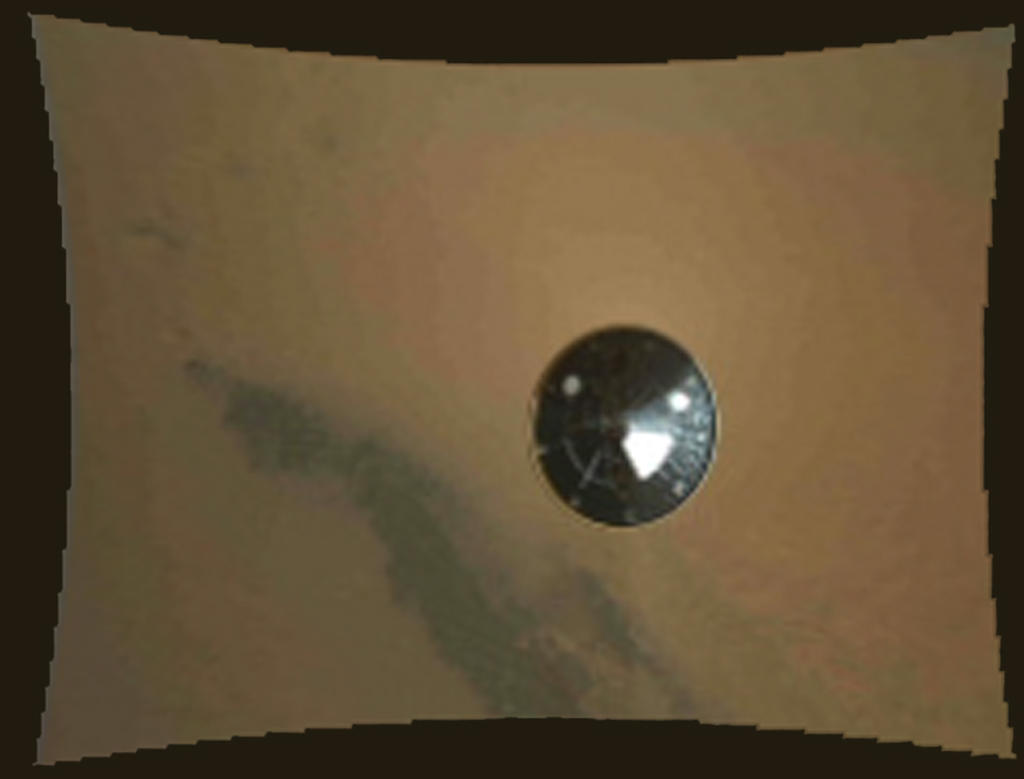
First things first: kudos to the NASA/JPL team -- including Boeing, Lockheed-Martin, and other contributing contractors -- for pulling off the recent successful landing of the Mars Science Laboratory, aka the Curiosity rover. The flawless flight and landing mark a great technological achievement. The MSL seems poised to discover many interesting things about Mars.

Curiosity about to land
But Curiosity arose from a NASA solicitation in 2004: during the George W. Bush era. Where does curiosity, lower case, fit in the current administration's agenda? Nowhere, as far as I can see. Even as NASA takes its victory lap, the US has recently pulled out of the ExoMars program. So much for the Mars Exploration Joint Initiative signed between NASA and ESA in July 2009. During this administration.

Tuesday, July 10, 2012

The Higgs (of course)

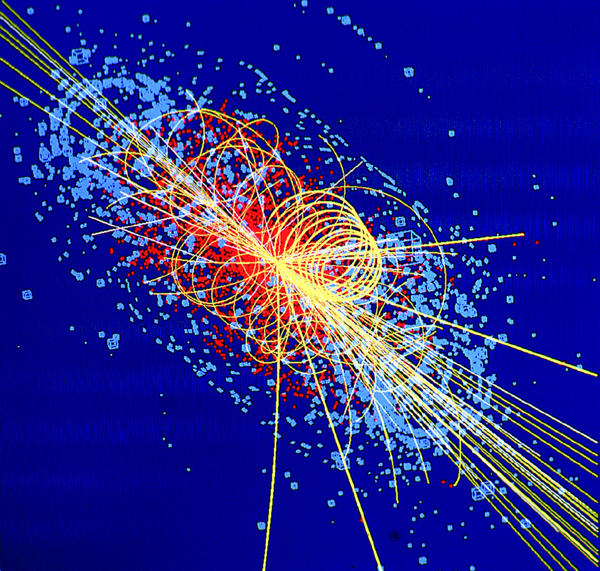
The week's hot news (beyond the literal heat in this part of the world) is the discovery of a "Higgs Boson-like particle" by two research teams at CERN. The Large Hadron Collider (LHC) was built for Higgs hunting more than for any other purpose.

A Higgs (in theory) falls apart
I've mentioned the hunt for the Higgs Boson on many occasions (IIRC, back to "Thanksgiving appetizers" where I put a Higgs discovery on my 2009 holiday wish list).

Most regular readers of this blog will already have read and seen many of the reports. (If you've been at the beach, sans iPad, beating the heat, here are a couple. From Slate, via physicist Lawrence Krauss, "A Quantum Leap: The discovery of the Higgs boson particle puts our understanding of nature on a new firm footing." And from The Wall Street Journal, "How to Be Sure You've Found a Higgs Boson.")

These are two of the more careful, thoughtful pieces I've seen. Krauss is in the minority even to hint at the sad fact this discovery could have come much sooner -- and been a triumph of American science -- if Congress hadn't killed off the Superconducting Super Collider in 1993.