File 770, the acclaimed genre website, this morning posted an extended interview/profile of my writing career. I'll crib their introduction rather than adding yet more words:
Retired professional scientist Edward Lerner talks about a host of hard
science fiction topics, plus his collaboration with Larry Niven, his
participation in SIGMA, and his nonfiction column for Analog.
Check out, if you're curious (and really, given that you're already here, you know you are), Edward M. Lerner: Crafted Science, Convincing Characters.
Showing posts with label nanotech. Show all posts
Showing posts with label nanotech. Show all posts
Monday, May 8, 2017


Monday, June 20, 2016
Of matters strange and (some of them, anyway) wondrous
It's the things you don't anticipate that get you -- as the folks at the LHC learned yet again. See "Weasel Apparently Shuts Down World's Most Powerful Particle Collider." You can consider this an instance of not being dis-CERN-ing. (The weasel couldn't have been too happy about it either.)
It's long been a basic tenet of optics that the resolution limit of a lens or mirror stems from its size relative to the wavelength of incident light. Well, that tenet arose in an era before meta-materials. See "Meta-lens works in the visible spectrum, sees smaller than a wavelength of light." Among other implications, the lenses in future smart phones won't need to be as bulky as today. And, those new lenses may be flat. All in all, cool stuff.
But wait! There's more!
 |
| Optical meta-material |
But wait! There's more!
Sunday, September 6, 2015
Holiday-weekend reading
I'm playing catch-up -- still -- from twelve days away for Worldcon and an immediately following vacation. But my overflowing to-do list doesn't mean you should go without something of mine to read ...
Phoenix Pick, the publisher (more precisely, the re-publisher) of a couple of my novels, is featuring both books throughout September. Small Miracles, a near-future medical-nanotech thriller, is available all month as an ebook for whatever you choose to pay.
Meanwhile Fools' Experiments, a near-future novel of artificial intelligence and artificial life, is deeply discounted. Try either. Or try both.
Curious? Of course you are. Check out the Phoenix Pick deals of the month. Or click the cover image of either book to read a bit more about it on my authorial website.
And in any event ... enjoy your holiday weekend and the end of summer.
Phoenix Pick, the publisher (more precisely, the re-publisher) of a couple of my novels, is featuring both books throughout September. Small Miracles, a near-future medical-nanotech thriller, is available all month as an ebook for whatever you choose to pay.
 |
| Beware miracles with a mind of their own |
Meanwhile Fools' Experiments, a near-future novel of artificial intelligence and artificial life, is deeply discounted. Try either. Or try both.
 |
| We are not alone ... and it’s our own damn fault. |
Curious? Of course you are. Check out the Phoenix Pick deals of the month. Or click the cover image of either book to read a bit more about it on my authorial website.
And in any event ... enjoy your holiday weekend and the end of summer.
Tuesday, March 31, 2015
Physics updates
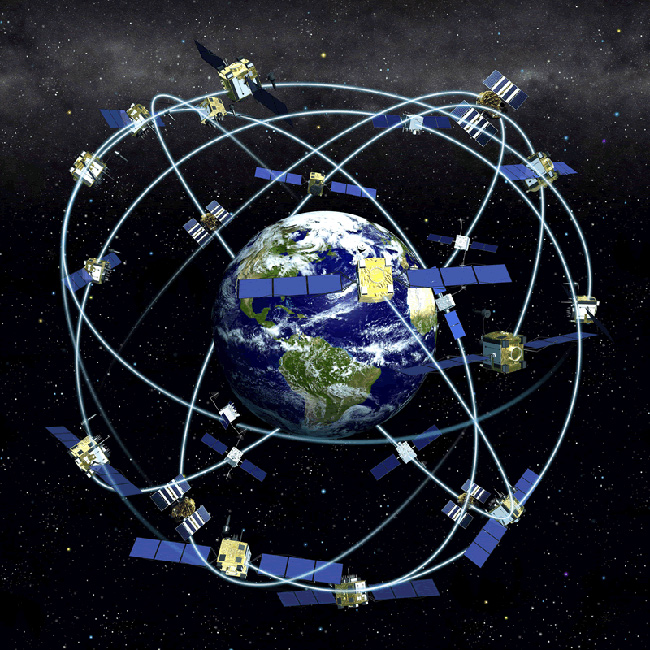
Has your GPS ever failed you? Perhaps it told you to turn in 100 feet or so, but once you were past a corner, on your way to the nearby next cross street, it decided you'd gone too far. Perhaps, at some critical juncture, it just failed to say anything, because reflections from nearby buildings confused it with too many signals. Or perhaps you were indoors, hoping for intra-building guidance, and -- of course -- there was no signal.
Then be of good cheer (especially if you're in Japan)! Read up (from IEEE Spectrum) on "Japan’s Plan for Centimeter-Resolution GPS: A $1.2 billion system of satellites and ground stations would give unprecedented accuracy," then begin to anticipate the same functionality appearing in your neck of the woods. Doing pretty much anything for the first time is the hard part.
(Don't get me wrong ... I'm not down on present-day GPS. It's a wonderful service, and the technology beneath the hood is fascinating. I'm merely in favor of it becoming even better.)
 |
| And it works! |
(Don't get me wrong ... I'm not down on present-day GPS. It's a wonderful service, and the technology beneath the hood is fascinating. I'm merely in favor of it becoming even better.)
Tuesday, January 20, 2015
Say, kids, what time is it?
 |
| They're bot-tastic |
Shifting our attention to robots on a larger scale, consider "Flying Selfie Bots: Tag-Along Video Drones Are Here: Sports enthusiasts are clamoring for aerial robots that can record their best moves." Read the details or watch the video and you'll see that "here" is a tad overstated -- but with more than a million in Kickstarter funding, this is a product category we can expect to see before long.
Tuesday, October 14, 2014
Nanotech and starships and fusion, oh my!
Over a recent twelve-day period I:
- gave a talk at the National Institute of Standards and Technology (NIST), followed by a behind-the-scenes tour of many of their projects involved with nanotech.
- took part in a 100 Year Starship Symposium and, in the process, was a panelist for Science Fiction Stories Night.
- attended a lecture on the state of fusion energy research, cosponsored by the Department of Energy (DOE), the Institute of Electrical and Electronics Engineers (IEEE), and the National Electronics Museum.
So what was all that about?
Tuesday, June 17, 2014
The neural interface you always wanted is (at least, could be) coming
I spent most of last week on Hilton Head Island -- I know: real hardship duty :-) -- but I was working. And having a great time.
 I'm a member of SIGMA (which, despite all those caps, is not an acronym). SIGMAns are authors of hard SF -- but first (and in many cases, still) we were scientists, physicians, or engineers. We consult on matters of futurism, often -- where the public interest is involved -- pro bono. As the logo would have it, SIGMA is The Science Fiction Think Tank.
Bringing me to the just concluded Hilton Head Workshop 2014: A Solid-State Sensors, Actuators and Microsystems Workshop. The event's scope extends to -- though, curiously, the term is omitted from the name -- nanotechnology. Nor was this just any such workshop, but the 30th anniversary edition.

Eventually the big night came for the SIGMAns (and remember my subject line? This is where we get to neural interfaces) ...

Bringing me to the just concluded Hilton Head Workshop 2014: A Solid-State Sensors, Actuators and Microsystems Workshop. The event's scope extends to -- though, curiously, the term is omitted from the name -- nanotechnology. Nor was this just any such workshop, but the 30th anniversary edition.

In addition to many a lookback, such as befits a major milestone anniversary, the conference organizers decided to bring in a few SIGMAns to look thirty years ahead. More than a few of our merrie band tossed their hats into the metaphorical ring. The four of us who went:
- SIGMA founder and onetime White House science fellow Dr. Arlan Andrews.
- Interstellar Woman of Mystery and twenty-year veteran at NASA, Stephanie Osborn.
- Polymath and onetime manager at Aerospace Corporation, Boeing, and other interesting places (and longtime Byte columnist), Jerry Pournelle.
- Your Humble Blogger.
Eventually the big night came for the SIGMAns (and remember my subject line? This is where we get to neural interfaces) ...
Tuesday, August 20, 2013
Forward-looking physics
Physics is our friend.
 We all know that a magnet -- whether a compass needle or the Earth -- has two poles. Cut a magnet in half (an experiment better performed with the compass needle ;-) ) and you end up with two magnets, each with its own north and south pole.
Electric charge (of course) doesn't work like that. We're accustomed to the notion of isolated positive and negative particles (e.g., electrons and protons).
 We all know that a magnet -- whether a compass needle or the Earth -- has two poles. Cut a magnet in half (an experiment better performed with the compass needle ;-) ) and you end up with two magnets, each with its own north and south pole.
Electric charge (of course) doesn't work like that. We're accustomed to the notion of isolated positive and negative particles (e.g., electrons and protons).
Tuesday, August 13, 2013
Of moons, clouds, and the state of the art(s)
 |
| Flexing moons, by Jove! |
That's one more way to search for Jm'ho, the Gw'oth world ;-)
Tuesday, May 14, 2013
Something for everyone
 |
| Is Glass half empty or half full? |
The report said that hackers will also be able to monitor Google Glass' users' activities on their smartphones ...


Tuesday, March 5, 2013
Really small (with big implications)
Today's post deals with news of the really tiny.
 We'll start at nanoscale -- and that's as big as we'll consider today. (One nanometer, 1 billionth of a meter, is the scale of small molecules. Living cells are no larger than microscale, measured in millionths of meters.)
There's been a fair amount of uncertainty about the health implications of nanoparticles. Why? Much of the allure of nanotech has been that materials often act differently in nanoscale particles than in bulk -- and yet for a long while, safety studies (if any) were performed only using bulk quantities.
A few years ago, at a nanotech conference, an insurance-company rep brought up, off the record, fears of a parallel between nanomaterials and asbestos. Asbestos is a useful material whose health implications (asbestosis and mesothelioma) went unrecognized for decades. Related health science was behind the curve and insurers were taken entirely by surprise.
So what are nanoscale particles of zinc oxide in some new sunblocks doing to us? Or the nanoscale silver particles sometimes used as antibacterial agents? Or nanoscale ... whatever in cosmetics?
Although this article has languished in my files for several months, it's encouraging to note (from IEEE Spectrum) that "New Study Indicates Nanoparticles Do Not Pass Through Skin."
Sticking for a bit with nanotech, consider (again from IEEE Spectrum) that "Hybrid Nanomaterial Converts Both Light and Heat to Electricity." Many forms of distributed tech require devices to power themselves by local harvesting of energy. (Remember when that meant self-winding watches?) The article's conclusion:
Now let's consider some really small stuff ...

There's been a fair amount of uncertainty about the health implications of nanoparticles. Why? Much of the allure of nanotech has been that materials often act differently in nanoscale particles than in bulk -- and yet for a long while, safety studies (if any) were performed only using bulk quantities.
A few years ago, at a nanotech conference, an insurance-company rep brought up, off the record, fears of a parallel between nanomaterials and asbestos. Asbestos is a useful material whose health implications (asbestosis and mesothelioma) went unrecognized for decades. Related health science was behind the curve and insurers were taken entirely by surprise.
 |
| Chemotherapy with nanoparticles |
Although this article has languished in my files for several months, it's encouraging to note (from IEEE Spectrum) that "New Study Indicates Nanoparticles Do Not Pass Through Skin."
Sticking for a bit with nanotech, consider (again from IEEE Spectrum) that "Hybrid Nanomaterial Converts Both Light and Heat to Electricity." Many forms of distributed tech require devices to power themselves by local harvesting of energy. (Remember when that meant self-winding watches?) The article's conclusion:
"By increasing the number of the micro-devices on a chip, this technology might offer a new and efficient platform to complement or even replace current solar cell technology."
Tuesday, October 9, 2012
Food, fuel, and funds for thought
Asteroids can be valuable, even when you're smacked by one. See (from Yahoo News): "Russian asteroid crater revealed to be filled with over $1 quadrillion of diamonds." That's a lot, even by Washington standards :-)
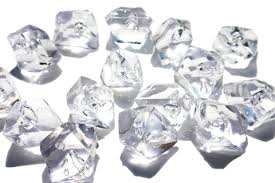 These are "impact diamonds," forged in the shock and pressure of the asteroid striking. Not every form of carbon is as valued as diamond. Here's a thoughtful piece asking whether the US trend away from the use of coal matters as China uses more and more. See (from the WSJ) "Coal Comfort."
Coal produces a lot of electricity -- and a lot of electricity goes to computing. Do you (or does your employer) use a rented computer? Then consider (from the LA Times) that, "Software let rent-to-own companies spy on customers." With: keystroke logging. Screenshot capture. Peeking through webcams.
How could that happen? Some rental companies use add-on software called Detective Mode, ostensibly to keep track of the location of their computers. But that's not all the software has been used for ...
Coal produces a lot of electricity -- and a lot of electricity goes to computing. Do you (or does your employer) use a rented computer? Then consider (from the LA Times) that, "Software let rent-to-own companies spy on customers." With: keystroke logging. Screenshot capture. Peeking through webcams.
How could that happen? Some rental companies use add-on software called Detective Mode, ostensibly to keep track of the location of their computers. But that's not all the software has been used for ...
Tuesday, July 31, 2012
Wild and wacky, redux
Technology is a fascinating thing, as some recent articles remind me.
Case in point: "Bioengineers Make DNA Into a Living Flash Drive." That's handy when you want to provide on-board storage to your biotech products. More than compact memory stands between us and nanobots -- but memory is one of the challenges. Alas, there's a bit of scaling up to be done ... as the prototype encodes only a single bit.
Still in a medical-nanotech vein (yes, pun intended), "Nanoparticle Completely Eradicates Hepatitis C Virus." If a nanoparticle can be designed for that virus, why not others? I'm game for a cure for the common cold.
Still thinking small, "Transistor Made Using a Single Atom May Help Beat Moore’s Law." Like the living flash memory, this was only a proof of concept, alas.
 |
| DNA does the splits |
Still in a medical-nanotech vein (yes, pun intended), "Nanoparticle Completely Eradicates Hepatitis C Virus." If a nanoparticle can be designed for that virus, why not others? I'm game for a cure for the common cold.
Still thinking small, "Transistor Made Using a Single Atom May Help Beat Moore’s Law." Like the living flash memory, this was only a proof of concept, alas.
Tuesday, April 24, 2012
Move 'em on. Head 'em out. Rawhide!
You got it: a round-up post. Three newsworthy (not to mention, eclectic) observations on matters of science and technology ...
Last May I ranted about the slow, lingering death of any American space program (see "Crocodile cheers"). In particular, I admitted, "I've progressed from bemused to troubled to angry at the spate of breathless headlines heralding some 'final' activity of a space shuttle." Last week saw new breathless coverage about the Washington DC flyover bringing the shuttle Discovery to its final resting place at the Smithsonian.
Syndicated columnist Charles Krauthammer gets it. From his essay last week, "Farewell, the New Frontier," here is the opening passage:
And now on to a completely different topic ...
 |
| Circuses (we're out of bread) |
Syndicated columnist Charles Krauthammer gets it. From his essay last week, "Farewell, the New Frontier," here is the opening passage:
As the space shuttle Discovery flew three times around Washington, a final salute before landing at Dulles airport for retirement in a museum, thousands on the ground gazed upward with marvel and pride. Yet what they were witnessing, for all its elegance, was a funeral march.
The shuttle was being carried — its pallbearer, a 747 — because it cannot fly, nor will it ever again. It was being sent for interment. Above ground, to be sure. But just as surely embalmed as Lenin in Red Square.
Is there a better symbol of willed American decline? The pity is not Discovery’s retirement — beautiful as it was, the shuttle proved too expensive and risky to operate — but that it died without a successor ....The full essay is spot-on, eloquent, and well worth the read.
And now on to a completely different topic ...
Tuesday, January 24, 2012
Of the Ringworld (and much smaller things)
Lots of Known Space aficionados frequent this blog.
Especially if you're one of them, here's a stunning short video I happened upon, inspired by early portions of -- by my colleague, Larry Niven -- the novel Ringworld. Seriously cool. (And if you haven't read Ringworld ... you should. It's won about every SF award there is.)
I hope there will be a Part 2.
Especially if you're one of them, here's a stunning short video I happened upon, inspired by early portions of -- by my colleague, Larry Niven -- the novel Ringworld. Seriously cool. (And if you haven't read Ringworld ... you should. It's won about every SF award there is.)
I hope there will be a Part 2.
Tuesday, December 13, 2011
Cul de sac
My life is crazy-busy these days. So: what better time than today to share a few of the more interesting items from my web-clippings file?
Remember the 1993 movie Six Degrees of Separation? Neither do I. Regardless, the Kevin Bacon game proves too easy. See "Facebook Claims 4.74 Degrees of Kevin Bacon."
 As the Eurozone and the EU itself crumple, Brussels bureaucrats took the time to tackle a vital consumer-protection issue. See "Europe's ruling on water preventing dehydration – another 'angels dancing on the head of a pin' moment."
(That topic has a certain Douglas Adams feel about it, does it not? How soon can we expect new workplace protections for telephone mouthpiece sanitizers?)
But truly exciting -- and now I'm not being sarcastic -- is a recent initiative of the Defense Advanced Research Projects Agency. To wit: "Darpa seeks nanotechnology defense against novel pathogens." Consider:
Remember the 1993 movie Six Degrees of Separation? Neither do I. Regardless, the Kevin Bacon game proves too easy. See "Facebook Claims 4.74 Degrees of Kevin Bacon."
(That topic has a certain Douglas Adams feel about it, does it not? How soon can we expect new workplace protections for telephone mouthpiece sanitizers?)
But truly exciting -- and now I'm not being sarcastic -- is a recent initiative of the Defense Advanced Research Projects Agency. To wit: "Darpa seeks nanotechnology defense against novel pathogens." Consider:
Monday, June 27, 2011
You can't make this stuff up ...
 I never expected to encounter a sentence like: "Genetically Engineered Cell Shoots Out First-Ever Biological Laser."
 Do cellular lasers sound trivial? They're not. Consider:
Aside from implying the future possibility of a self-healing laser that requires no battery, this breakthrough could allow doctors and scientists to view the inner workings of individual cells without a microscope.I instantly thought of an application not mentioned in the article: laser-based communications among medical nanobots. Visible light spans the wavelengths from about 380 to 780 nanometers -- while cells (and cell-sized machines, once we have them) are of the scale several thousand nanometers. Had cell-based lasers been thought possible a few years ago, I might well have used them for the nanobots in Small Miracles. (Instead I used chemical signaling -- just as natural cells do.)
The next topic is scary, but the headline is ironic: "LightSquared Network Faces Interference of Its Own Making."
Monday, June 13, 2011
The time has come, the walrus said ...

For shoes and ships and sealing wax, continue here. For more recent arcana to have caught this SF author's eye, read on ...
"Criminal Minds Are Different From Yours, Brain Scans Reveal." (I like to think that my visitors do not have criminal minds.) I read with interest that:
Tuesday, February 8, 2011
Techno-copia
Several items of likely interest to the SF (and just S) readers of this blog ...
 What if robots could share what they learn? Is that a step toward Skynet or just towards less dumb robots? Check out RoboEarth: a Worldwide Web for Robots.
(Robots interacting with the real world is a hard problem. My grad-school days are long passed, but back then I shared an office with a guy whose doctoral dissertation involved programming a robotic arm to ... stack blocks.)

(Robots interacting with the real world is a hard problem. My grad-school days are long passed, but back then I shared an office with a guy whose doctoral dissertation involved programming a robotic arm to ... stack blocks.)
Tuesday, August 3, 2010
Real nanotech. Real medicine. And zombies.

 Small Miracles
 is my near-future medical nanotechnology thriller -- and as of today, it's been reissued in mass-market paperback.
For the paperback edition, the cover background has been made lighter and brighter. That's a welcome change: you no longer have to take my word for it that those nanobots are swimming in blood :-)
Curious? Here's my October 2009 announcement of the hardback edition. For a sample from the novel, click through to Amazon
 . And here are a few recent reviews:
Subscribe to:
Posts (Atom)








 Posts
Posts


