Showing posts with label space exploration. Show all posts

Thursday, July 1, 2021

The Sherlock Chronicles / The Paradise Quartet

Updated July 29, 2023

Back in print (and electrons); updated links below

Subtitle: When publishing worlds collide

Alternate subtitle: The other shoe drops

On average it takes me about a year to write a book. Publishers take anywhere between a few months to two years to turn a delivered manuscript into a finished product. (Don't ask me to explain the range. I can't.) Some years that means I have no new book released, while other years I have two, or even three, books released -- no matter that (as I've said) I don't begin to write this quickly. And to publicize two books close together means short-changing both ....

Hence, today's post is actually Installment Two of my book-release news for May. (If you missed the first installment, see DÉJÀ DOOMED is ... finalement here :-)) Still, I'll argue, today's update was/is worth the wait :-)  


The Sherlock Chronicles

A mile a minute? Nonsense. Even a meat brain knows “mind going a mile a minute” is mere metaphor. For a quantum mind, a light-second per minute would be nearer to apt, if sadly sans alliteration. Ordinarily, I have my metaphorical fingers in hundreds, even thousands, of figurative pies. Any less stimulation than that is boring, and boredom is the bane of a q-mind’s existence.

That events in the “real” world often strike humans as inexplicable is hardly surprising. Meat brains have limits. And so, when an opportunity presented itself, I thought: why not lend a virtual hand? Every moment of diversion was welcome, and this “case,” surely, a harmless amusement.

Thus began my detective phase. Only I couldn’t have been more wrong about harmless ….

And if an AI PI isn’t intriguing enough, there’s also The Paradise Quartet

A triumph of ingenuity and sheer willpower has delivered a dying generation ship to the exoplanet Paradise. Too bad the ingenious biotech the colonists deployed to settle on that planet triggered an inexorable devolutionary cycle.

Thousands of years later, possible rescuers arrive—and are themselves ensnared in the manmade trap that is Paradise. Escape will require new ingenuity and more multi-generational striving ….

Two great adventures in one volume.

As this is a commercial announcement, I'll share the (updated) Amazon links for Sherlock/Paradise in hardcover, in trade paperback, and for the Kindle (different retailers, of course, have other popular ebook formats).

Monday, July 1, 2019

New Horizons, metaphorical and literal

Did you savor the Pluto closeups returned by NASA's New Horizons probe in July 2015? Of course you did -- it's the kind of thing that appeals to the kind of folk who visit SF and Nonsense.

Fascinating!
The saga of New Horizons itself is every bit as fascinating, written (to be precise, coauthored) by the man who first dreamed of the mission and eventually became its principal investigator. The book covers the guerilla struggle to interest NASA in the mission concept, the funding wars, the mad dash (once funding was finally approved) to complete the probe while Jupiter and Pluto still had the proper alignment (celestial mechanics is a harsh mistress), the long flight, and the hectic close encounter with Pluto.

In short, I highly recommend Chasing New Horizons: Inside the Epic First Mission to Pluto, by (the aforementioned PI) Alan Stern and fellow scientist/author David Grinspoon.

Tuesday, February 12, 2019

Fact catching up -- one can hope -- to (my) fiction

"US space technology startup Orion Span has unveiled Aurora Station, a luxury space hotel it says will be hosting tourists in low-Earth orbit by 2022."

Aurora's audacious business plan unavoidably brings to mind The Space Place: the orbital pleasure palace ("playground of petrocrats, kleptocrats, and the other superrich") that plays such a central role in my near-future, near-space technothriller Energized.

The artifact so prominently featured on the nearby book cover (this art is from the original edition -- the newer cover of the recently reissued novel appears below) is a solar-power satellite, not the aforementioned orbital resort. But hey, an SPS -- in this instance being two miles square, massing over two million pounds, and delivering 24/7 a gigawatt of power -- is something to behold!

That said, this post is about space hotels. So: what was "my" realization of the concept? Here's how one of Energized's characters experienced The Space Place on final approach:

Outside his window: a pearl onion (pierced by a white toothpick) with an equatorial bulge. The pearl became a great bubble. The "toothpick" ends were docking stations, one projecting from each pole. The bulge resolved into two concentric doughnuts, the outer one spinning. Sun-tracking solar panels hung far enough from the hotel not to impede guests’ views.

Closer still, more detail emerged. The struts that connected the solar panels to the main body of the hotel. Clinging to the bubble, two arcs of much tinier bubbles: emergency escape pods. Where too-bright sunlight would otherwise have streamed inside, the bubble material had been polarized, and from this angle was opaque. Elsewhere within the bubble, hints of interior structure. 


Scattered specks -- people in spacesuits -- zipped about the hotel. The sphere's diameter was about forty times their height! The people jetted to one pole of the hotel as the shuttle coasted toward the other.

En route to The Space Place
And then there are the zero-gee amenities inside The Space Place. Not to mention the opportunity to join the Thousands Mile High Club ;-)

I guess it's again time to scavenge beneath the sofa cushions for contributions to the space-excursion fund. (From Aurora.com: "Pricing starts at $9.5 million.") You may be doing the same -- but it'd be much more affordable to check out my version of an orbital tourist destination ...

Tuesday, January 29, 2019

Already a wacky year

A potpourri sort of post (say that quickly five times) ...

Video games meet cryptocurrency. What could possibly go wrong? "Organized crime is laundering money through Fortnite's in-game currency." As in:
Criminals are using stolen credit cards to buy Fortnite V-bucks, then selling the in-game currency for bitcoin at a discount on the dark web as a way to launder money.
How about a non-crypto crisis in the making? Consider "The world is running out of phosphorus." And any such shortage would matter because:
... phosphorus is biologically vital. The average human body contains about 0.5kg of phosphorus, most of it in the form of phosphate to make bones and teeth strong. Phosphorus also crucially holds together DNA and RNA molecules – the backbone of these long chain-like structures contains two phosphate groups per pair of nucleic bases. Without phosphorus, it is hard to imagine any kind of life at all.
Some things we homo saps can do right
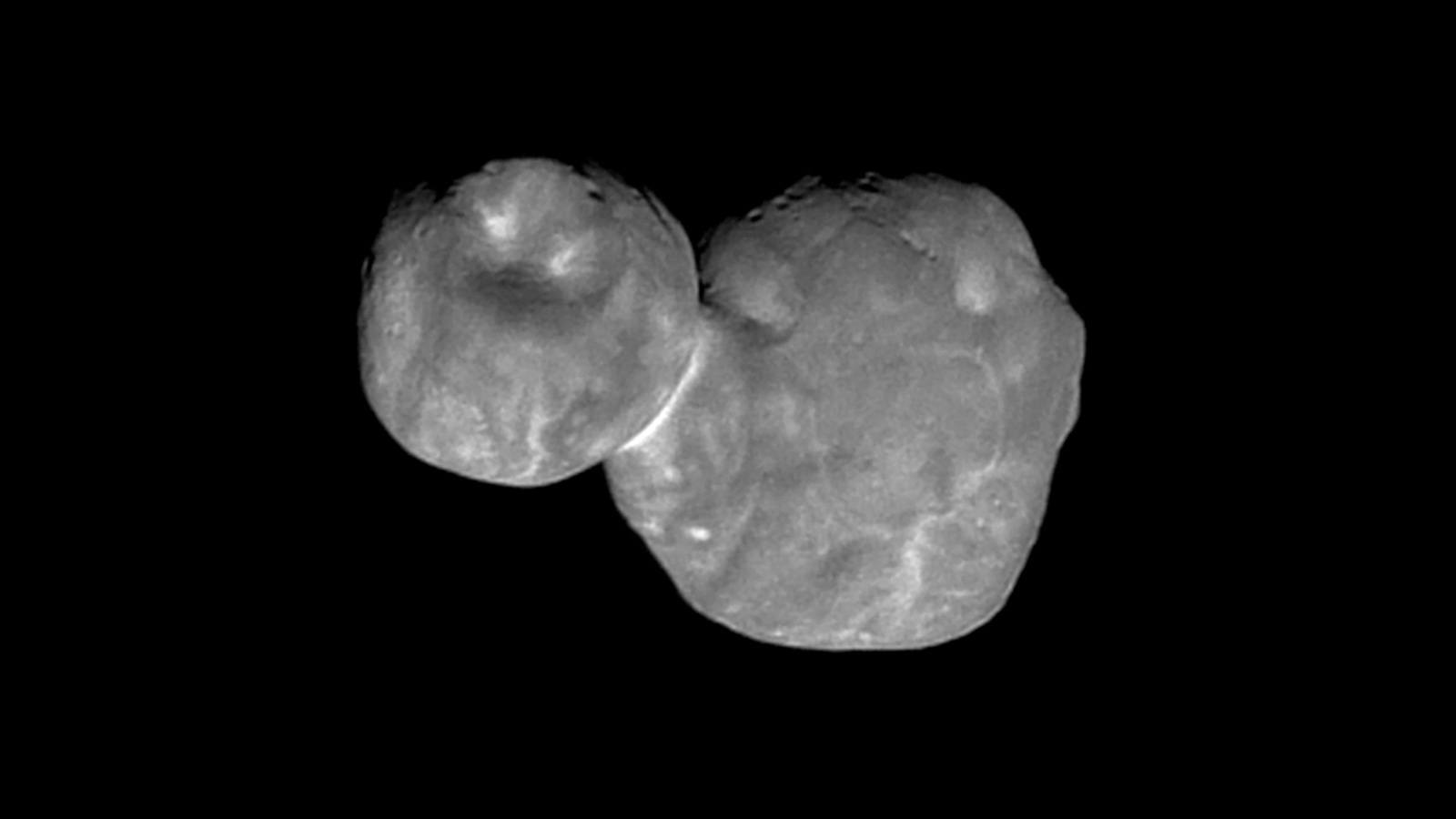
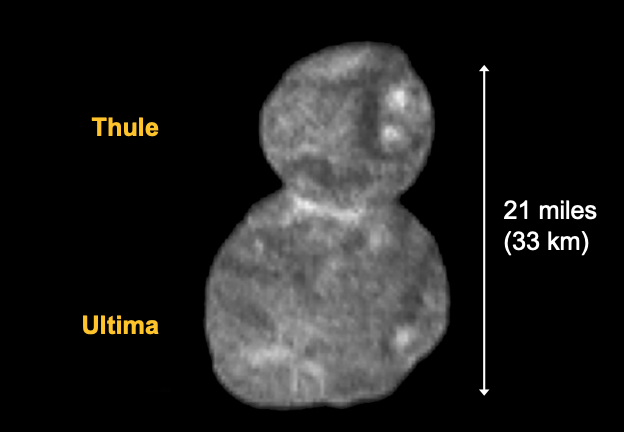
But on the positive (and seriously cool) side, we  have data streaming home -- from about four billion miles away -- of the New Horizons probe's New Year's Day flyby of Ultima Thule. The data only get better and better.  See "Craters, bulgy mounds and a collar." If nothing else, you gotta see the latest image.

To close, let's look ahead at some tech (loosely defined) predictions for 2019. Some forecasts you'll like. Some you won't. (Me? I'm happy to see a prognostication that shared electric scooters are already fizzling. Talk about an accident waiting to happen. Or without waiting ...)

Now I had best turn my attention to the oeuvre(s) in progress, lest my 2019 prove an accident waiting to happen ...

Thursday, January 3, 2019

A week to restore one's faith in humanity

Clearly, I refer to nothing in the political sphere. But think of the milestones (kilometer stones?) science and technology reached this week. From closest to farthest, we've got:

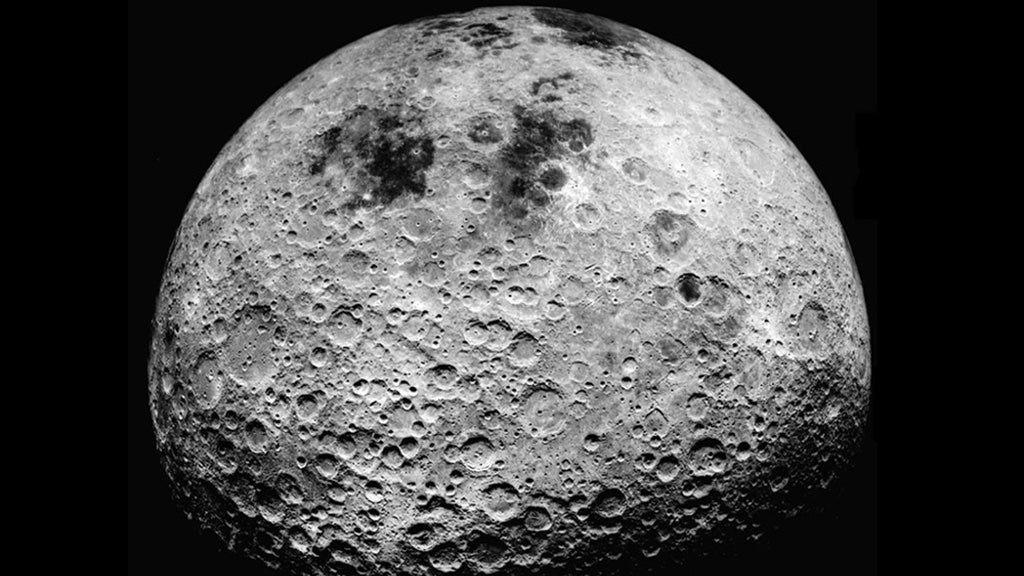
"China’s Chang’e-4 spacecraft makes historic landing on far side of the Moon."

The lunar far side
The Chinese spacecraft Chang’e-4 has landed on the far side of the Moon and has begun relaying data and images back to Earth. It is the first mission to operate on the far side, which is the  hemisphere of the Moon that always faces away from Earth. This half of the Moon has a much more rugged and varied landscape than the hemisphere that is visible from Earth and studying its geology could provide important information about how the Moon and the rest of the solar system formed.

Also, NASA's "OSIRIS-REx probe goes into close orbit around asteroid Bennu and sets a record."

Artist rendering
NASA’s OSIRIS-REx spacecraft today maneuvered into an orbit that takes it within 4,000 feet of the surface of Bennu, a diamond-shaped asteroid that’s 70 million miles from Earth.

The orbit sets a record for interplanetary travel. The quarter-mile-wide asteroid is now the smallest body ever orbited by a spacecraft, and the spacecraft is tracing the closest sustained orbit around a celestial body.
 
And (IMO, the most awesome of all) in the distant Kuiper Belt, Nasa's New Horizons: 'Snowman' shape of distant Ultima Thule revealed."

4 billion miles away
"[Ultima's] only really the size of something like Washington DC, and it's about as reflective as garden variety dirt, and it's illuminated by a Sun that's 1,900 times fainter than it is outside on a sunny day here on the Earth. We were basically chasing it down in the dark at 32,000mph (51,000km/h) and all that had to happen just right," the SwRI scientist said.

We Homo saps actual can accomplish great things when we cooperate and focus.

Tuesday, September 25, 2018

Of the universe

Today's post is a roundup of recent astronomy news.

First, and closest to home, a look at a neighbor: "Ice Confirmed at the Moon's Poles." Such ice has long been suspected, of course, and indirect evidence of it gleaned -- but this is the most definitive proof yet. Water on the Moon is seriously important to any hopes for a permanent lunar presence.

Lucy (in a few years)
If I may then look ahead to upcoming discoveries, consider "NASA’s Lucy in the sky with Trojans." "Lucy" in this context is a probe to be launched in 2021 to explore (mainly) Jupiter's Trojan asteroids. These asteroids co-orbit with Jupiter, one bunch 60 degrees ahead of the planet, the other 60 degrees behind. (They're called "Trojan" because the first few of these rocks were named for heroes of the mythic war.) And they're darned varied and interesting ...

Wednesday, February 7, 2018

That's heavy, man!

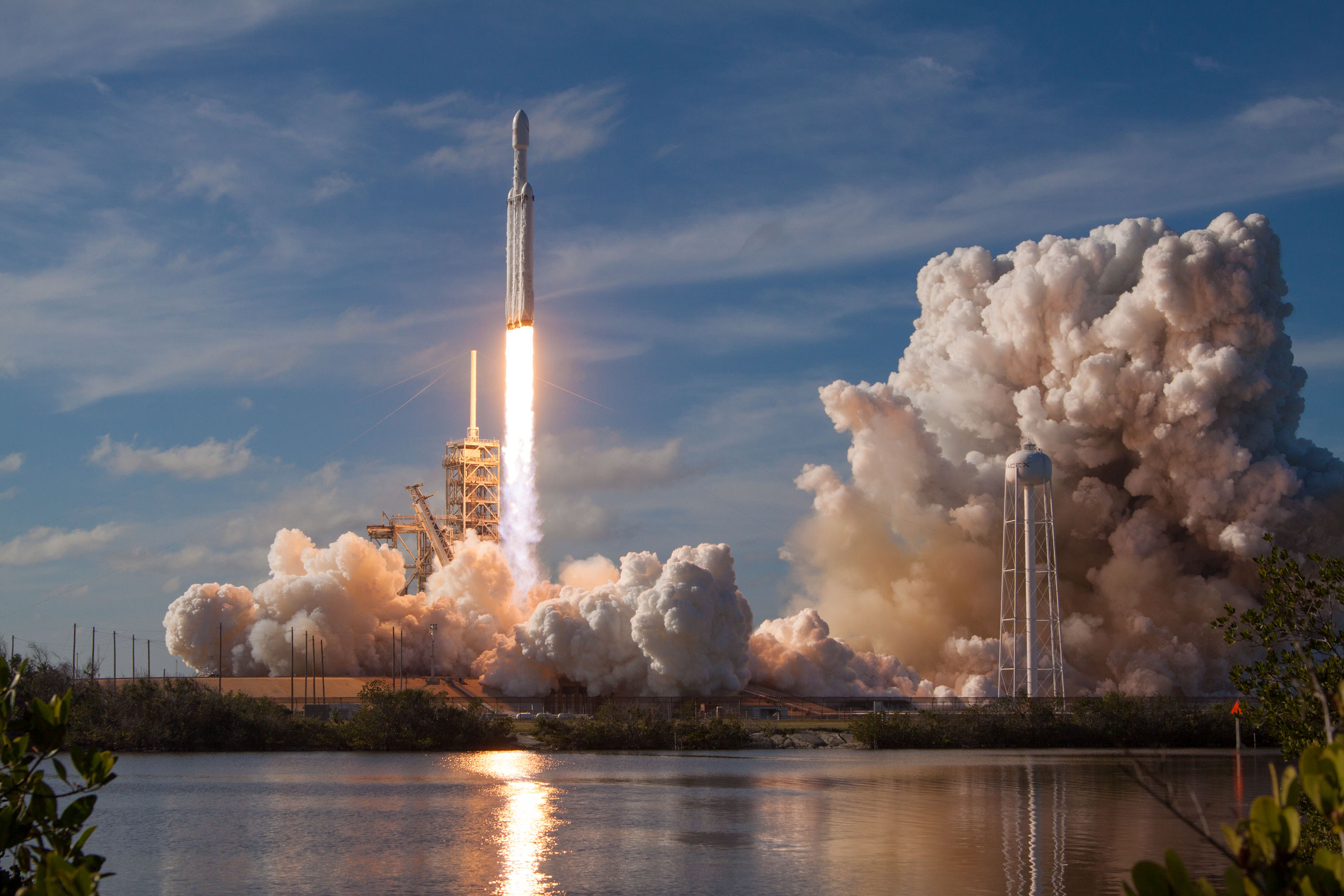
After yesterday's awesome launch -- and two-thirds recovery -- of the Falcon Heavy, what more is there for a technologist and  SF author to comment upon? Read on.

If you haven't yet had OD-ed on the coverage, check out "The best photos and videos of SpaceX’s Falcon Heavy launch."

SpaceX founder Elon Musk is highly motivated to make humanity a multi-planetary species by colonizing Mars. (Yesterday's mission seems to have gone a bit off course: "Elon Musk’s Tesla overshot Mars’ orbit and is headed to the asteroid belt.") To which end (once these little navigational glitches are worked out), this recent news is very encouraging: " 'A fantastic find': Mars hides thick sheets of ice just below the surface."

Color-enhanced: blue = ice.
How much ice? Check the photo at left.

And equally awesome, IMO, is this item that has been overshadowed by the aforementioned stories: "LISA Pathfinder, the gravitational wave space mission, declared a success: European Space Agency reports final results of proof-of-concept mission, ahead the most ambitious science experiment ever attempted."

LISA stands for the Laser Interferometer Space Antenna. I've several times posted enthusiastically about the wonderful LIGO (Laser Interferometer Gravitational-Wave Observatory), its 2015 discovery of gravitational waves, and a few of its event detections. LIGO is an L-shaped instrument about four kilometers on a side. LISA Pathfinder was the proof-of-concept mission for an eventual L-shaped instrument 2.5 million kilometers on a side. LISA will offer sensitivity, and visibility into astronomical phenomena, far beyond anything LIGO -- or any Earth-based instrument -- can approach.

Life imitates art
Part of what spoke to me about the progress toward LISA is this quote: "... once the triangle of satellites is eventually up and running, it will be able to detect very early signs of a black hole merger, weeks before the eventual collision." In my 2016 novel Dark Secret, the (fictional) space-based Einstein Gravitational Wave Observatory kicks off the story by detecting the signs of an imminent neutron-star merger. That detection forewarns of a gamma-ray burst that will obliterate life in our solar system. (Post-wise, here's a second coincidence: Dark Secret opens on recently colonized Mars.)

http://amzn.to/2setLER
Alas, we won't see LISA until, at the earliest, 2034. That's okay. LIGO was decades in coming, too (see Black Hole Blues and Other Songs from Outer Space).

Monday, September 25, 2017

Astronomy, old and new

We're accustomed to news of exciting celestial discoveries made by American (meaning here: of the USA -- a useful clarification because of other topics to come) observatories and astronomers. It turns out, and I was surprised to read this, that American interest in astronomy goes way back.  

JQ Adams: astronomy geek
The Atlantic had a recent fascinating piece about that history. To wit -- archaic wording chosen with malice aforethought ;-)  -- "The Surprising Space Ambitions in Colonial America: Long before NASA, private individuals and communities banded together for the pursuit of geopolitical power and scientific discovery." The article starts in colonial times, but doesn't stop there. Who knew, for example, that John Quincy Adams was an advocate for astronomy? Good stuff. 

Speaking of NASA, they recently went far afield to study the Kuiper Belt Object next up on the itinerary for the amazing New Horizons probe. And the journey was worth it. The agency reports: "NASA’s New Horizons Team Strikes Gold in Argentina." The (metaphorical) gold? That the KBO toward which New Horizons is hurtling seems, in fact, to be two objects, in tight orbit around their common center of mass.

Monday, June 5, 2017

Will wonders never cease?

Nope, I'm not being ironic. Recent astronomical reports are wonderfully amazing. I often marvel at the subtle details -- and mind-blowing implications -- astronomers can glean from their observations. Such as:

"NASA Space Probes Have Detected a Human-Made Barrier Surrounding Earth: We are changing space itself." And as this barrier of very low frequency RF waves is expanding the Van Allen Belts, extending the domain of near-Earth space that's not filled with deadly radiation, it seems like a good thing. If we can expand the protection zone out past geosynch altitudes, that will make travel up a space elevator safe. (If only we could build a space elevator ... but someday [I predict], that too, will happen.)

And speaking of waves ...

Suddenly, I want a pizza
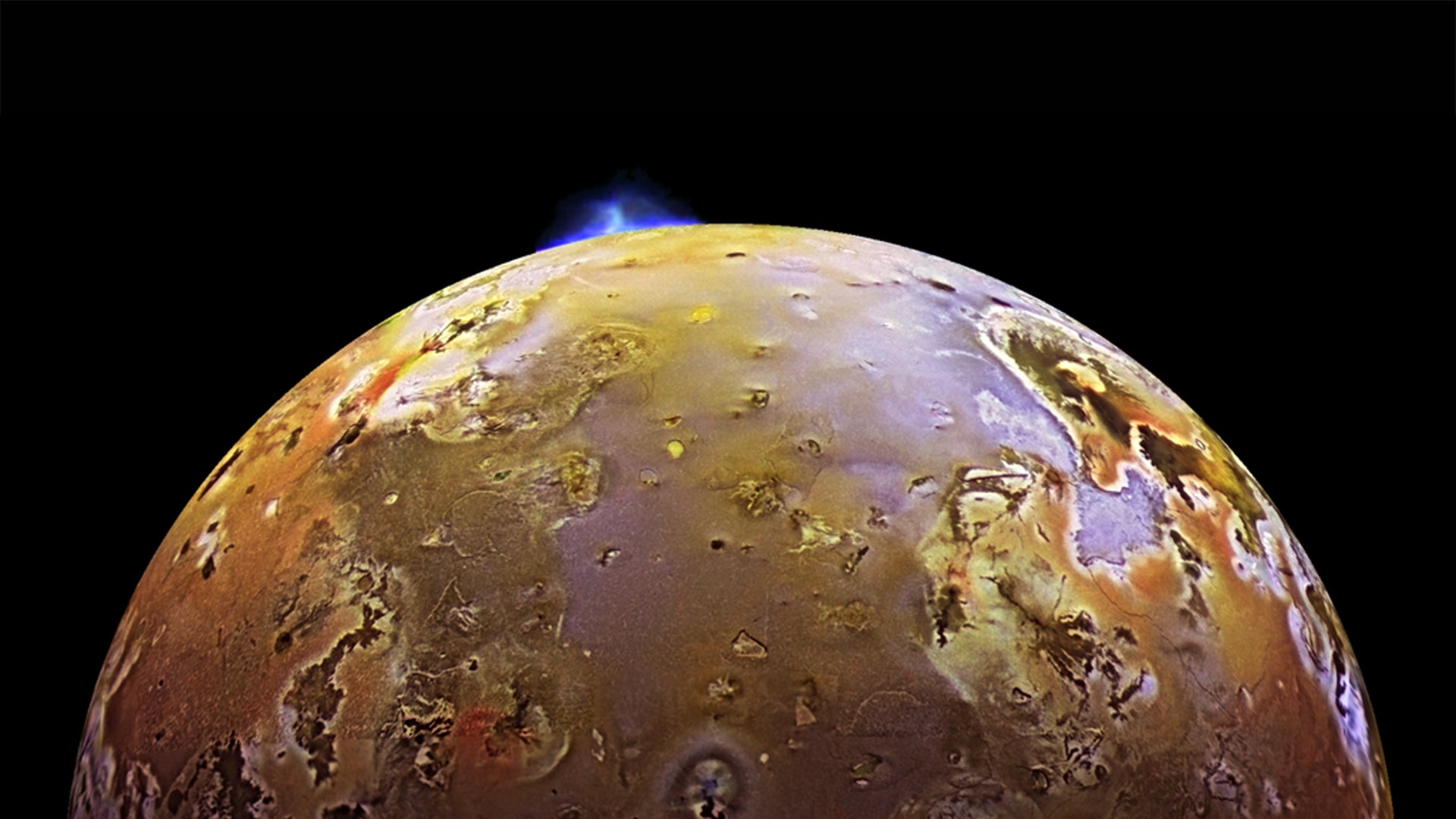
"Massive Lava Waves Detected on Jupiter’s Moon Io." Consider this: Thanks to a rare orbital alignment between Europa and Io, an international team of researchers has identified and tracked a pair of lava waves as they coursed around Loki Patera, which is larger than Lake Ontario, and with a surface area of 8,300 square miles (21,500 square km). How cool (okay, that was ironic) is that?

Now on to a different sort of wave: gravitational.

Monday, May 22, 2017

Cats and dogs, sleeping together ...

Okay, maybe not quite that out of the ordinary. But still we have:

"Report: Android overtakes Windows as the internet’s most used operating system." Having heavily used both products for years, I'm not surprised. One wonders if Microsoft is.

"Top Scientists Revamp Standards To Foster Integrity In Research." The sad thing is that the need even arises. Misconduct in scientific research makes me angry. No, furious.

As does bad science reporting. Herewith the debunking of some recent such "journalism" in: "No, we haven’t found signs of life -- alien or otherwise -- in the solar system." (Good article -- but I have a beef with the headline. I'm reasonably confident we've found signs of life on Earth. Which is, after all, within the Solar System to which the article refers. But, indeed, life has not as yet been found elsewhere in the Solar System.)(*)

(*) Pet-peeve alert. The nearby star around which our planet orbits is the Sun, aka (more formally) Sol. Sol and its attendant planets, asteroids, moons, comets, and other objects is the Solar System. Initial upper case, like Earth. And like the Sun. Any other star is a (lower case) sun. Any sun and its retinue is a (lower case) solar system.

And "Jeff Bezos Is Selling $1 Billion in Amazon Stock Yearly to Fund Blue Origin." That's what I call commitment. I wish him luck on his space endeavors.

To conclude on a personal note, I've been doing battle for the past three or so weeks with a new novelette. Well, it ain't gonna happen -- and in a good way. The story grew into a novella, of which I completed the first draft just last Sunday. (A calendaric coincidence, and no irony intended w.r.t. the foregoing sun/Sun, solar/Solar rant.) Said draft will sit for awhile, till I'm ready for a re-look with fresh eyes. All part of the process ...

Tuesday, April 4, 2017

MORE up in the sky

Just to be different, in this space-centric post we'll start far away and work our way back home.

Black-hole jets
To begin in the distance, consider this truly amazing nursery for stars: "Stars Born Inside Violent Black Hole Jets Spotted for the 1st Time." The takeaway quotes:

"Astronomers have thought for a while that conditions within these outflows could be right for star formation, but no one has seen it actually happening, as it’s a very difficult observation ..."

      and:

"If star formation is really occurring in most galactic outflows, as some theories predict, then this would provide a completely new scenario for our understanding of galaxy evolution ..."

Tuesday, October 11, 2016

Strange doings, from atoms to galaxies to homicidal grandchildren

Still playing catch-up here after last weekend's Capclave. So: for this week's post, I'm sharing -- with the most minimal of introduction -- a potpourri of physical-sciences news that I expect will appeal to regular SF and Nonsense visitors. (And if none of these links/headlines grabs you, well, I'll just have to live with that.)

From Phys.org, about the quantum-mechanical underpinnings of superconductivity: For first time, researchers see individual atoms keep away from each other or bunch up as pairs.

Again from Phys.org, about the ever-growing enigma that is Tabby's Star: Our galaxy's most-mysterious star is even stranger than astronomers thought.

From physicsworld.com, about whether inferred-but-undetected dark matter or a Modification Of Newtonian Dynamics (MOND) best explains observed gravitational anomalies, such as the rotation of galaxies: Correlation between galaxy rotation and visible matter puzzles astronomers.

Again, from physicsworld.com, about the finale to a very successful journey to a comet: Rosetta mission ends with comet crash.

And finally, from Cosmos.com, about paradoxes and time-travel theory: Computer solves a major time travel problem.

Now tell me something in that compilation didn't pique your interest ;-)

Tuesday, September 13, 2016

Things aren't always what they seem

I know, I know ... things usually are what they seem, else the universe would be in chaos. "Things are often what they seem" is among the eponymous rules of my 2003 short story, "By the Rules." But accepting first reports of, well, anything at face value is risky. A few cases in point ...

Suppose the Zika virus endangered "only" pregnant women and the unborn, as we were, for a long while, assured. That would be horrible enough. The situation may be worse than that. Per a more recent study, "Zika infection may affect adult brain cells, suggesting risk may not be limited to pregnant women."

Does it (can it) work?
Perhaps because it feels good to see stuffy adherents of dusty facts and institutions proven wrong, there's a cottage industry of uncritical reporting as to the supposed reactionless (read: contrary to long-established laws of physics) "em drive." Among recent plaudits doled out to the em drive is that an article on the subject -- as yet, unseen -- has been accepted by a peer-reviewed journal. Sorry, that's not enough to write off Newton's laws of motion. See "NASA's Impossible Space Engine, The EMdrive, Passes Peer Review (But That Doesn't Mean It Works)."

Tuesday, July 26, 2016

Wazzup in SF

Exciting news from the wide world(s) of SF ...

The Museum of Science Fiction recently staged a successful Escape Velocity event, featuring folks from NASA, academia, Hollywood, and -- not exclusive of the foregoing -- many fans. Check out "Scenes from Escape Velocity 2016."


A few evenings ago, I rewatched the James Cameron flick Aliens (1986). Great movie! I also loved the original, Ridley Scott franchise starter: Alien (1979). As it happens, Aliens just had its 30th anniversary, a milestone widely covered in the entertainment media. My favorite article on the subject is " 'Aliens' turns 30: Why It's the Best Sci-Fi Sequel Ever."

IMO, the subsequent sequels, Aliens 3 (David Fincher, 1992) and Alien: Resurrection (Jean-Pierre Jeunet, 1997), weren't nearly as good as Aliens. I'm looking forward -- amid experience-born trepidation -- to the 2017 release of Alien: Covenant. Ridley Scott is in the director's chair again.

Tuesday, February 23, 2016

Making space for a space program

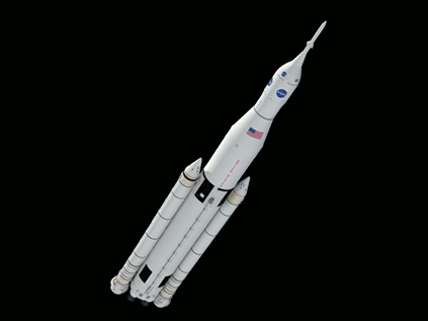
From the Department of the Sadly Obvious: "NASA officials admit Space Launch System is a rocket without a plan." This was, essentially, the content of an all-hands meeting last month at NASA's Kennedy Space Center. SLS, of course, is the heavy launch system being built to replace the cancelled Constellation heavy launch system, which was being built to replace the canceled-without-a-replacement-on-hand space shuttle.

All dressed up with nowhere to go?
Is this NASA's fault? Denying reality for so long is on them, but the reality itself originates in the highest levels of American government. Administrations routinely reset plans (most recently from the Bush 43 plan reliant upon the Constellation program to return to the Moon, to the SLS-centric vagueness [see below] with which the Obama administration replaced it). If there were interest at the top in a meaningful plan, what are the chances Congress would fund it?

Tuesday, December 29, 2015

2015 (almost) gone already? Whoa! Whiplash!

Year's end is, traditionally, a time for reflection, for looking both forward and back. I'll do the same here -- trying not to compile the kind of things you'll find on other sites. No blah-dy blah blah blah "Best of" or "Worst of" lists here!

Cool stuff ;-)
So what will you find? As in the image at left, cool stuff!

Tuesday, November 10, 2015

Look! Up in the sky!

It's a bird. It's a plane. No, it's astronomy, man.

Lots of exciting stuff is being spotted (or is looked for and not spotted, or is wondered about) in the vasty deeps over our heads. Read on ...

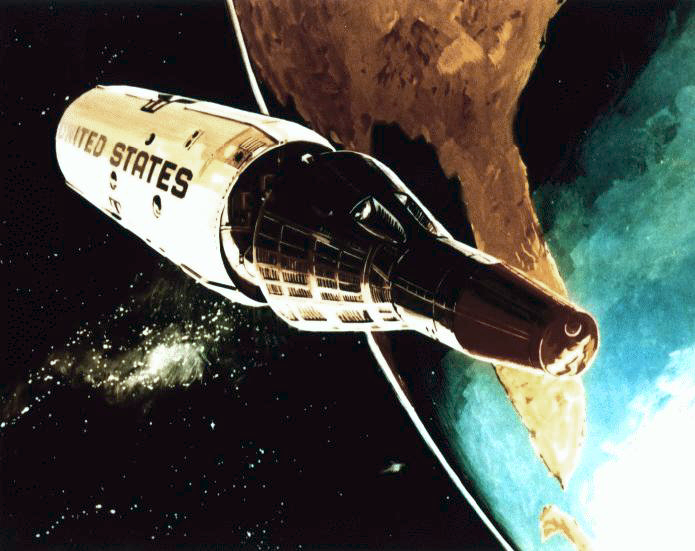
MOL (artist conception)
From time to time over the years, I've encountered short, vague references to a USAF space-station project, the Manned Orbital Laboratory (MOL). This recent article is, by far, the most information I've ever seen: "The Real Story of The Secret Space Station." Like the contemporaneous Apollo program, the motivation was international politics. It turns out that MOL was unaffordable and potentially destabilizing. As to the former point:

By the time President Richard Nixon finally cancelled the MOL in 1969, it had gobbled up more than $1.5 billion—$10 billion in today’s dollars—and was on track to consume 17 percent of the Air Force’s annual research budget for years.

Saturday, October 31, 2015

Whoa! Tachyons!

As in ... I did not see this coming.

A bit over a month ago, I was delighted to discover (see A(n inter)stellar start to the day) that my latest novel, InterstellarNet: Enigma, was a finalist for the inaugural Canopus Award for interstellar-themed fiction. The award aims to recognize "works that contribute to the excitement, knowledge, and understanding of interstellar space exploration and travel."

The awards were, well, awarded Friday evening October 30. I wasn't able to attend, but I prepared a few remarks just in case. And -- mirabile dictu -- I woke up this morning to read that InterstellarNet: Enigma had won!

Here's what I sent to the emcee to read if lightning struck:

Tuesday, September 29, 2015

Some highs and lows of high tech

Indulging my interest in high tech, let's consider some recent news items on that theme.

At the core of the matter :-)
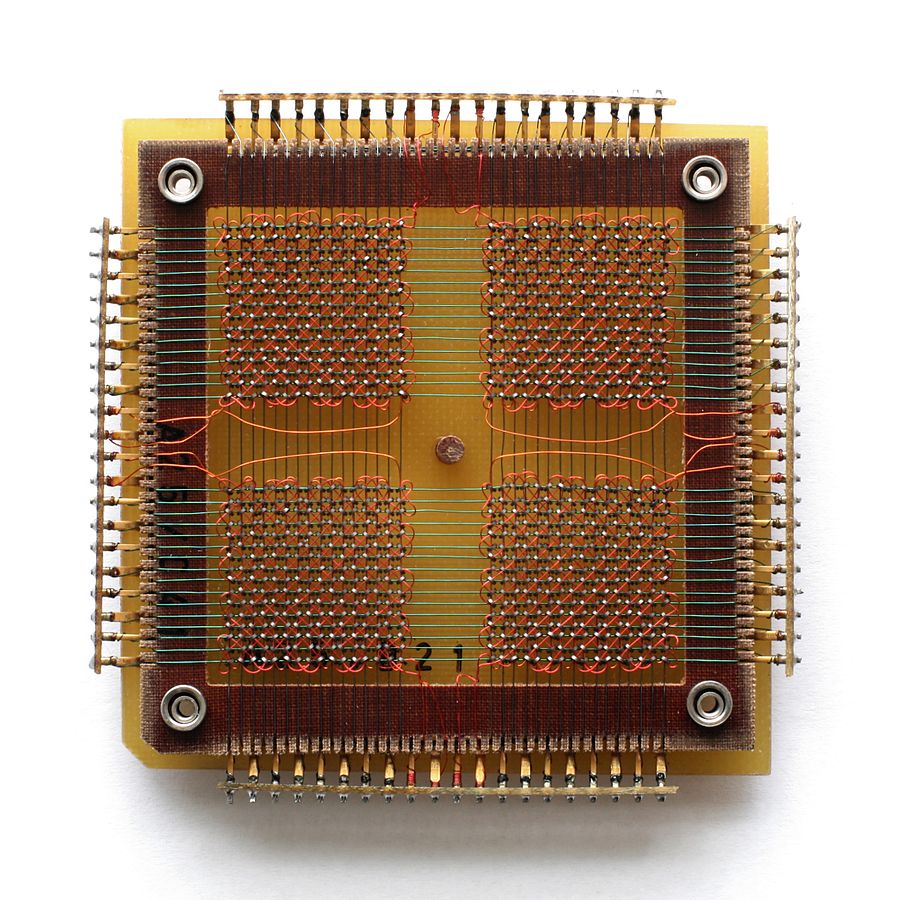
We'll start with the teaser that "Intel and Micron Announce 'Revolutionary' Mystery Memory." Most everything these industry leaders have to say generally merits attention -- but when they talk about "a new form of nonvolatile memory that the companies say is 1000 times speedier than NAND Flash and ten times denser than DRAM," one really should take notice. I look forward to hearing more about the new technology -- and how (assuming it progresses to the product stage) it will impact computer architectures.

From the tiny domain of modern microelectronics, let's turn to the vast realm of space. Regarding the latter, a Canadian firm has proposed a new type of space elevator.

First step is a doozie
Traditionally (and here I quote myself from "Alien Adventures: Rising to the Challenge," in the October 2015 issue of Analog), a space elevator is "just what it sounds. Rather than rocket into space -- carrying fuel to carry the fuel to carry yet more fuel ... to carry a comparatively tiny payload -- creep up a long cable in an elevator car. The elevator ride will take days, not minutes, but it will be far more economical, and far more environmentally friendly, than rocketry. First proposed in 1895, the space-elevator concept was popularized by Arthur C. Clarke in his 1979 novel, The Fountains of Paradise."

Wednesday, September 23, 2015

A(n inter)stellar start to the day

Not to step on my lede, the finalists for the inaugural Canopus Award, given for interstellar-themed SF, were announced today. And in the novel category -- well, that's the (inter)stellar news. I'll come to that.

First, some background ...

It's been nearly a year since I posted about participating in a 100 Year Starship Symposium (as one topic among several in "Nanotech and starships and fusion, oh my!"). 100YSS.org, seeded with NASA and DARPA funding, headed by physician and onetime shuttle astronaut Dr. Mae Jemison, is an awesome organization, its five-year mission: "To boldly go ..." (No, wait. That's another interstellar organization.) 

And the mission of 100YSS?
We exist to make the capability of human travel beyond our solar system a reality within the next 100 years. We unreservedly dedicate ourselves to identifying and pushing the radical leaps in knowledge and technology needed to achieve interstellar flight, while pioneering and transforming breakthrough applications that enhance the quality of life for all on Earth. We actively seek to include the broadest swath of people and human experience in understanding, shaping and implementing this global aspiration.
And why this made my day? Still coming.