An idea whose time has come: "Nobody reads privacy policies. This senator wants lawmakers to stop pretending we do."
Showing posts with label privacy. Show all posts
Showing posts with label privacy. Show all posts
Thursday, June 18, 2020


Tuesday, May 28, 2019
Yikes!
From this morning's Washington Post:
"It’s the middle of the night. Do you know who your iPhone is talking to? Apple says, 'What happens on your iPhone stays on your iPhone.' Our privacy experiment showed 5,400 hidden app trackers guzzled our data — in a single week."
(And before Android users breathe a sigh of relief and move on ... the article eventually makes clear that Android is no different.)
In a word ... scary.
"It’s the middle of the night. Do you know who your iPhone is talking to? Apple says, 'What happens on your iPhone stays on your iPhone.' Our privacy experiment showed 5,400 hidden app trackers guzzled our data — in a single week."
(And before Android users breathe a sigh of relief and move on ... the article eventually makes clear that Android is no different.)
In a word ... scary.
Wednesday, May 1, 2019
Ugh.
From the WaPo ...
"The Census is vulnerable to digital attack. But Congress may be dropping the ball."
A key, horrifying snippet:
If vulnerabilities in census systems aren’t dealt with, there’s a
risk that hackers could compromise Americans’ data — such as birth
dates, marital status and telephone numbers — on a mass scale. And that
data could be used to help file phony tax returns, apply for credit
cards or for other nefarious purposes.
More troubling, if hackers manipulated information collected by the bureau, that could compromise all manner of government tasks, including drawing congressional districts and allocating federal grants.
As though the hack a few years back of the federal Office of Personnel Management (OPM), compromising many years of security-clearance applications, shouldn't have been an object lesson.
And later in the same WaPo article:
Members of the House Appropriations panel, however, didn’t ask a single question about the cybersecurity weaknesses during the two-hour hearing ...
That "didn't ask a single question" tell us that neither party's committee members inquired. This is bipartisan blindness/negligence.
O. M. G.
"The Census is vulnerable to digital attack. But Congress may be dropping the ball."
A key, horrifying snippet:
More troubling, if hackers manipulated information collected by the bureau, that could compromise all manner of government tasks, including drawing congressional districts and allocating federal grants.
As though the hack a few years back of the federal Office of Personnel Management (OPM), compromising many years of security-clearance applications, shouldn't have been an object lesson.
And later in the same WaPo article:
Members of the House Appropriations panel, however, didn’t ask a single question about the cybersecurity weaknesses during the two-hour hearing ...
That "didn't ask a single question" tell us that neither party's committee members inquired. This is bipartisan blindness/negligence.
O. M. G.
Monday, March 25, 2019
Cyber pain
Not -- although the timing might have had you jump from my subject line to a mis-impression -- a comment on Russian Internet trolls, the 2016 election, ballot-infrastructure hacking, and/or the Mueller report. (I don't discuss anything remotely akin to politics in this venue.) Different cyber pain ....
Are you still mystically drawn to the faddish non-money "asset" that is cryptocurrency? Perhaps this will give you pause: "Crypto Mystery: Quadriga's Wallets Are Empty, Putting Fate Of $137 Million In Doubt." (Who's Quadriga? you ask. Until recently, Canada's largest cryptocurrency exchange. Not that I live in Canada, but if I did I'd rather trust my assets to the currency issued by the Canadian finance ministry.) A key article snippet:
 |
| Not, IMO, a currency |
The money was there — it was just locked away. At least that's what the QuadrigaCX cryptocurrency exchange had been saying, before an auditor revealed it had finally accessed digital wallets set up by Quadriga's late CEO Gerald Cotten — and that instead of holding $137 million, the wallets were empty, drained in 2018.
Six "cold wallets" Quadriga used to securely store cryptocurrency offline were expected to hold millions. But they were emptied out in April, months before Cotten's death was reported, "bringing the balances down to nil," audit firm Ernst & Young says.
Tuesday, January 29, 2019
Already a wacky year
A potpourri sort of post (say that quickly five times) ...
 Video games meet cryptocurrency. What could possibly go wrong? "Organized crime is laundering money through Fortnite's in-game currency." As in:
But on the positive (and seriously cool) side, we have data streaming home -- from about four billion miles away -- of the New Horizons probe's New Year's Day flyby of Ultima Thule. The data only get better and better. See "Craters, bulgy mounds and a collar." If nothing else, you gotta see the latest image.
To close, let's look ahead at some tech (loosely defined) predictions for 2019. Some forecasts you'll like. Some you won't. (Me? I'm happy to see a prognostication that shared electric scooters are already fizzling. Talk about an accident waiting to happen. Or without waiting ...)
Now I had best turn my attention to the oeuvre(s) in progress, lest my 2019 prove an accident waiting to happen ...
Criminals are using stolen credit cards to buy Fortnite V-bucks, then selling the in-game currency for bitcoin at a discount on the dark web as a way to launder money.How about a non-crypto crisis in the making? Consider "The world is running out of phosphorus." And any such shortage would matter because:
... phosphorus is biologically vital. The average human body contains about 0.5kg of phosphorus, most of it in the form of phosphate to make bones and teeth strong. Phosphorus also crucially holds together DNA and RNA molecules – the backbone of these long chain-like structures contains two phosphate groups per pair of nucleic bases. Without phosphorus, it is hard to imagine any kind of life at all.
 |
| Some things we homo saps can do right |
To close, let's look ahead at some tech (loosely defined) predictions for 2019. Some forecasts you'll like. Some you won't. (Me? I'm happy to see a prognostication that shared electric scooters are already fizzling. Talk about an accident waiting to happen. Or without waiting ...)
Now I had best turn my attention to the oeuvre(s) in progress, lest my 2019 prove an accident waiting to happen ...
Tuesday, January 22, 2019
Counting on ten left thumbs?
Software is incredibly important. It's essential to everything from managing power and communication networks, to the routine operation of vehicles and industrial processes, to the record-keeping that underlies pretty much all modern finance, to enabling blogs like this one. Which is why bad and/or over-hyped software is so problematical.
I've commented (vented? harangued? ranted?) often enough about privacy violations and security breaches in major software-based systems. Think: the OPM hack, or the compromise of every user account at Yahoo!, or the Starwood Hotel data breach. But today's post deals with other ways for software get us into trouble ....
Are you one of the millions (billions?) who depends on Windows for at least part of the day? Have you noticed that not until January did we read "Windows 10 October 2018 Update is at last being pushed automatically." So what's been the delay? Try this: "Worst Windows 10 version ever? Microsoft's terrible, horrible, no good, very bad October." Which concludes with the bone-chilling prediction:
... come next April, when the 19H1 version is approaching public release, a lot of people will be holding their breath.
I've commented (vented? harangued? ranted?) often enough about privacy violations and security breaches in major software-based systems. Think: the OPM hack, or the compromise of every user account at Yahoo!, or the Starwood Hotel data breach. But today's post deals with other ways for software get us into trouble ....
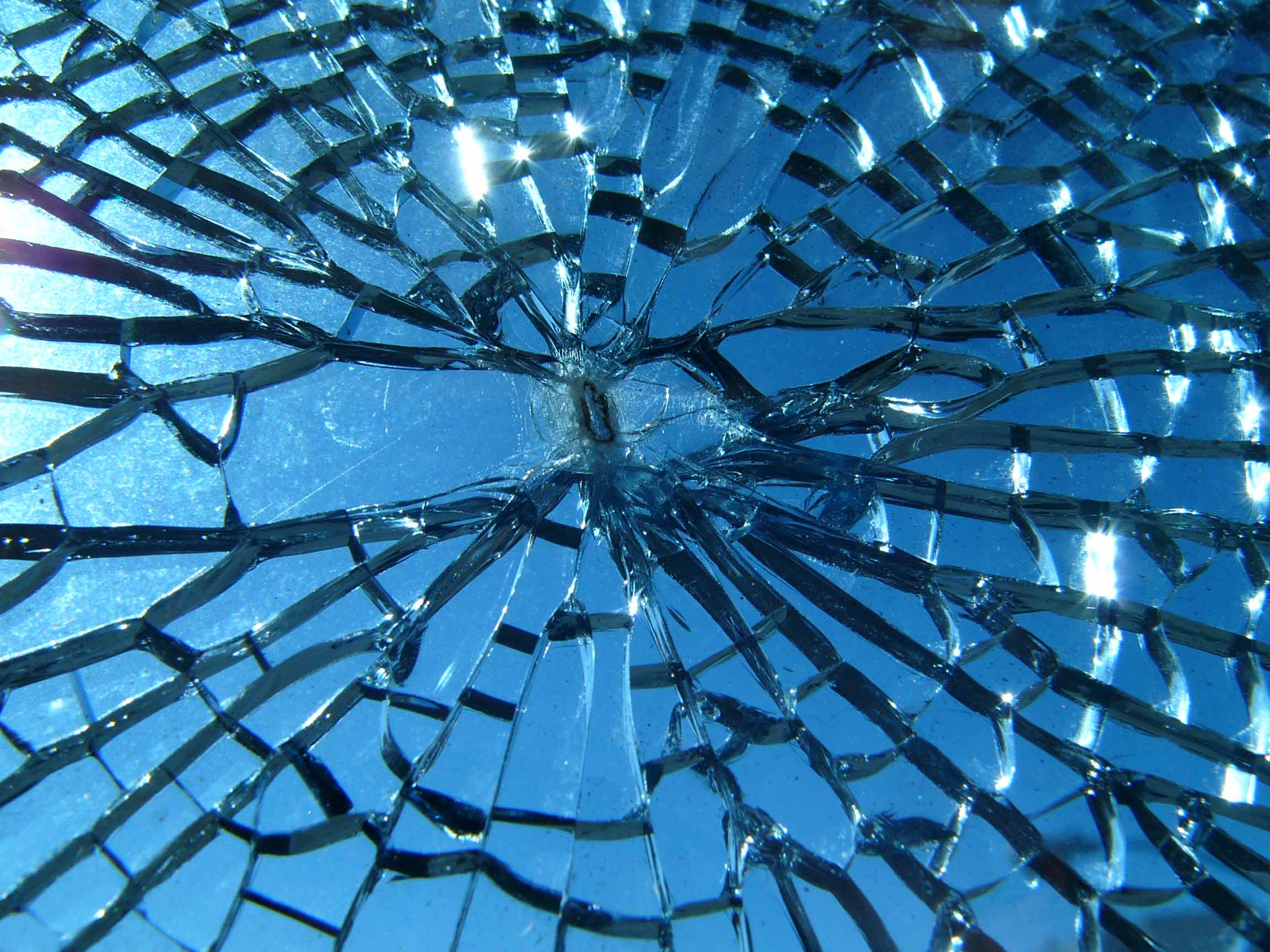 |
| It's too often like this. Right? |
... come next April, when the 19H1 version is approaching public release, a lot of people will be holding their breath.
Tuesday, October 23, 2018
Some days, everything modern is maddening
Cryptocurrency mining isn't something I chose to undertake, but plenty of people do. If that's you, please note: "If you’re mining bitcoin from home, you’re now losing money." (In detail, the truth of that assertion depends on the rate you pay for electricity -- but subject to typical retail rates ....)

Do you use any Apple website? How about Amazon? Maybe you care about the integrity of (private) cloud servers used by the DoD. If any of those apply, you would have been justifiably alarmed by this recent Bloomberg headline: "The Big Hack: How China Used a Tiny Chip to Infiltrate U.S. Companies." Only Apple and Amazon deny the assertion vehemently, and other journalism shops find the claim unsubstantiated, impossible to confirm, and otherwise dubious. See (from the Washington Post), "Your move, Bloomberg."
(Is hardware with hidden trapdoors a threat? You bet your sweet bippie. This peril was the premise of a novel I started way back, circa 1990, and then shelved, when the Cold War -- however fleetingly -- went away.)
Get a lot of spam/scam calls on your cell? And the majority spoofed to look like your area code, and plausibly real? Me, too! And the trends are ever more ominous. See (again from the WaPo), "Nearly half of cellphone calls will be scams by 2019, report says."
Do you use any Apple website? How about Amazon? Maybe you care about the integrity of (private) cloud servers used by the DoD. If any of those apply, you would have been justifiably alarmed by this recent Bloomberg headline: "The Big Hack: How China Used a Tiny Chip to Infiltrate U.S. Companies." Only Apple and Amazon deny the assertion vehemently, and other journalism shops find the claim unsubstantiated, impossible to confirm, and otherwise dubious. See (from the Washington Post), "Your move, Bloomberg."
(Is hardware with hidden trapdoors a threat? You bet your sweet bippie. This peril was the premise of a novel I started way back, circa 1990, and then shelved, when the Cold War -- however fleetingly -- went away.)
Get a lot of spam/scam calls on your cell? And the majority spoofed to look like your area code, and plausibly real? Me, too! And the trends are ever more ominous. See (again from the WaPo), "Nearly half of cellphone calls will be scams by 2019, report says."
Tuesday, May 29, 2018
Does not compute
I've begun streaming the Netflix remake of Lost in Space. That may be why today's subject line occurred to me. But not the only reason. Consider:
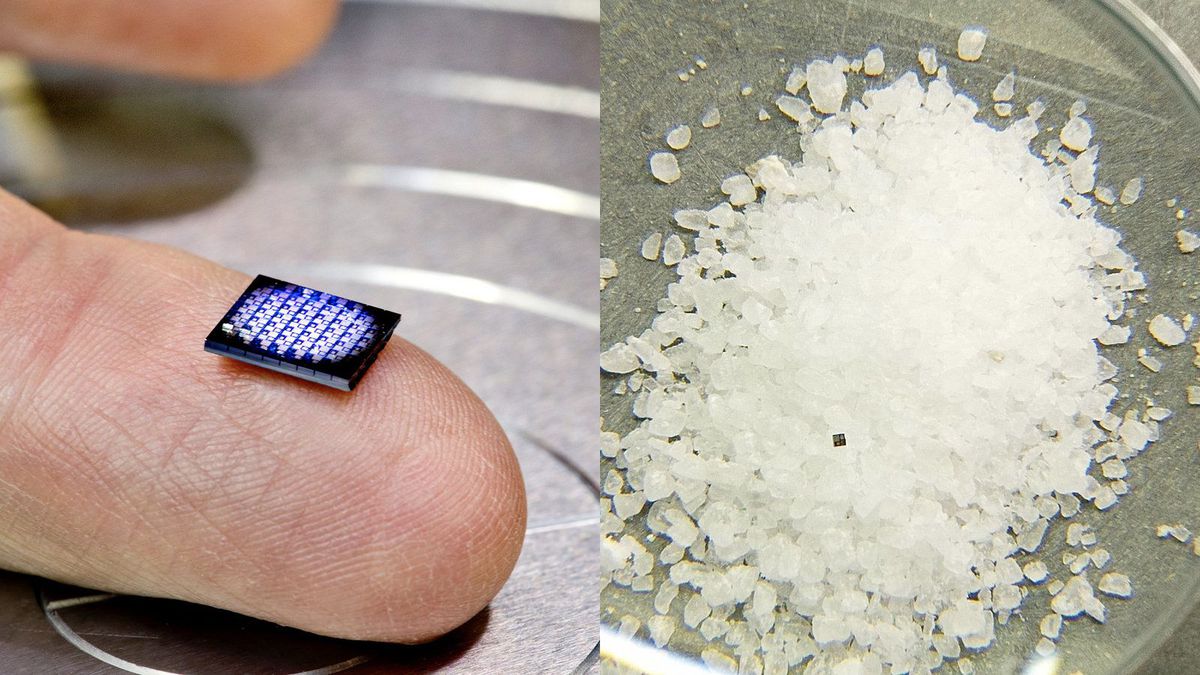 "IBM's tiniest computer is smaller than a grain of rock salt." Actually, the amazing fact is that something so small does compute. "IBM has unveiled a computer that's smaller than a grain of rock salt. It has the power of an x86 chip from 1990 ... The publication says that the machine will cost under $0.10 to
manufacture, which gives credence to IBM's prediction that these types
of computers will be embedded everywhere within the next five years."
"IBM's tiniest computer is smaller than a grain of rock salt." Actually, the amazing fact is that something so small does compute. "IBM has unveiled a computer that's smaller than a grain of rock salt. It has the power of an x86 chip from 1990 ... The publication says that the machine will cost under $0.10 to
manufacture, which gives credence to IBM's prediction that these types
of computers will be embedded everywhere within the next five years."
But what surely doesn't compute is the mess Facebook has made of elections and (un)civil discourse. See -- if you can bear to revisit it -- " ‘A grand illusion’: seven days that shattered Facebook’s facade."
I have my doubts this omelet can be reassembled into eggs, but if you are (or want to be) more optimistic, consider, "How the Government Could Fix Facebook."
But what surely doesn't compute is the mess Facebook has made of elections and (un)civil discourse. See -- if you can bear to revisit it -- " ‘A grand illusion’: seven days that shattered Facebook’s facade."
I have my doubts this omelet can be reassembled into eggs, but if you are (or want to be) more optimistic, consider, "How the Government Could Fix Facebook."
Tuesday, September 19, 2017
Hacked off *still*. You should be, too.
So. The passage of several days has done nothing to alleviate my pique. At what? That the "Equifax security breach leaks personal info of 143 million US consumers: Criminals snagged info including names, social security numbers and more." If anything, as the details emerge, I've gotten angrier.
 What details?
And continuing with today's cyber (in)security story line, had you noticed ...
- That this huge credit-reporting corporation / juicy target appointed a music major as its chief security officer.
- And that after this major security breach, company officers sold $1.8 million worth of their company stock before announcing the incident.
- Likewise, that admin/admin was allowed in-house (in a foreign business unit, anyway) as an employee's user-id/password pair.
- And that known security holes in system software went unpatched for months.
Tuesday, September 12, 2017
Making the world safe for frogs (and other diversions)
Frequent visitors to SF and Nonsense may have inferred my scientific/technological interests lean most often toward physics, astronomy, and space exploration. True enough. That said, other items are sometimes too quirky or too important not to catch my eye. Herewith several such -- and, I'll venture, you'll also find them noteworthy.
After all, who doesn't want to read "Dinosaur Extinction Allowed Frogs to Conquer the Planet."
 The mass extinction that wiped out the dinosaurs paved the way for a totally different type of creature to take over -- frogs.
The slimy amphibians exploded in numbers and diversified in the millions of years after a massive asteroid wiped out the dinosaurs, taking advantage of the huge holes in the ecosystem that extinct creatures left behind, a new study suggests.
Interested in the quest for extraterrestrial life? Here, possibly, is a new criterion for narrowing the search space. "Ultraviolet light may be key to finding alien life."
Ultraviolet light may have played a critical role in the emergence of life on Earth and could be a key to finding life elsewhere in the universe, a study ... at Harvard suggests. The study found that red dwarf stars might not emit enough ultraviolet (UV) light to kick-start the biological processes most familiar to our planet.
After all, who doesn't want to read "Dinosaur Extinction Allowed Frogs to Conquer the Planet."
The slimy amphibians exploded in numbers and diversified in the millions of years after a massive asteroid wiped out the dinosaurs, taking advantage of the huge holes in the ecosystem that extinct creatures left behind, a new study suggests.
Interested in the quest for extraterrestrial life? Here, possibly, is a new criterion for narrowing the search space. "Ultraviolet light may be key to finding alien life."
Ultraviolet light may have played a critical role in the emergence of life on Earth and could be a key to finding life elsewhere in the universe, a study ... at Harvard suggests. The study found that red dwarf stars might not emit enough ultraviolet (UV) light to kick-start the biological processes most familiar to our planet.
Monday, June 12, 2017
While I get accustomed to bionic eyes ...
Following cataract surgeries and implanted lens, I'm without eyeglasses for the first time in ... sixty years. Yowza. But while I'm copacetic for distance, I still need to figure out what's best for close-up/reading. Ditto for the mid-range (as in: the computer screen across the desk even as I type). I suspect those won't settle out till my eyes settle in and another visit to the ophthalmologist.
The immediate upshot? I'm doing less reading, and less computer work, than has long been my norm. (And most of the time today that I felt okay to spend at the computer? Those hours went to my final polishing of a novella and sending it off.) Hence, today's post will be briefer than my usual. That's not to say, or so I shall flatter myself, this post will be any less interesting ...
NBC News offers, "Sex Robots Are Coming, and They're Not as Skeevy as You Think: Sex doll manufacturers and
independent roboticists are designing and building the first humanlike
robots that people can have sex with."
And from Motherboard, by hacker, security researcher and human-rights activist Claudio Guarnieri, we have the earnest admonition, "Online Voting Is a Terrible Idea." A sentiment with which I wholeheartedly agree. IMO, this short passage from the article sums up the issue perfectly:
... electronic voting attempts to solve a problem that just doesn't exist. With the predominant system of paper ballots, we normally get a preliminary count of the votes in a matter of hours already. The benefits provided by a more automatized counting process are not only questionable, but they simply do not outweigh the gravity of the risks involved.
Plenty of food here for thought. Now I'm off to rest my eyes for a bit.
The immediate upshot? I'm doing less reading, and less computer work, than has long been my norm. (And most of the time today that I felt okay to spend at the computer? Those hours went to my final polishing of a novella and sending it off.) Hence, today's post will be briefer than my usual. That's not to say, or so I shall flatter myself, this post will be any less interesting ...
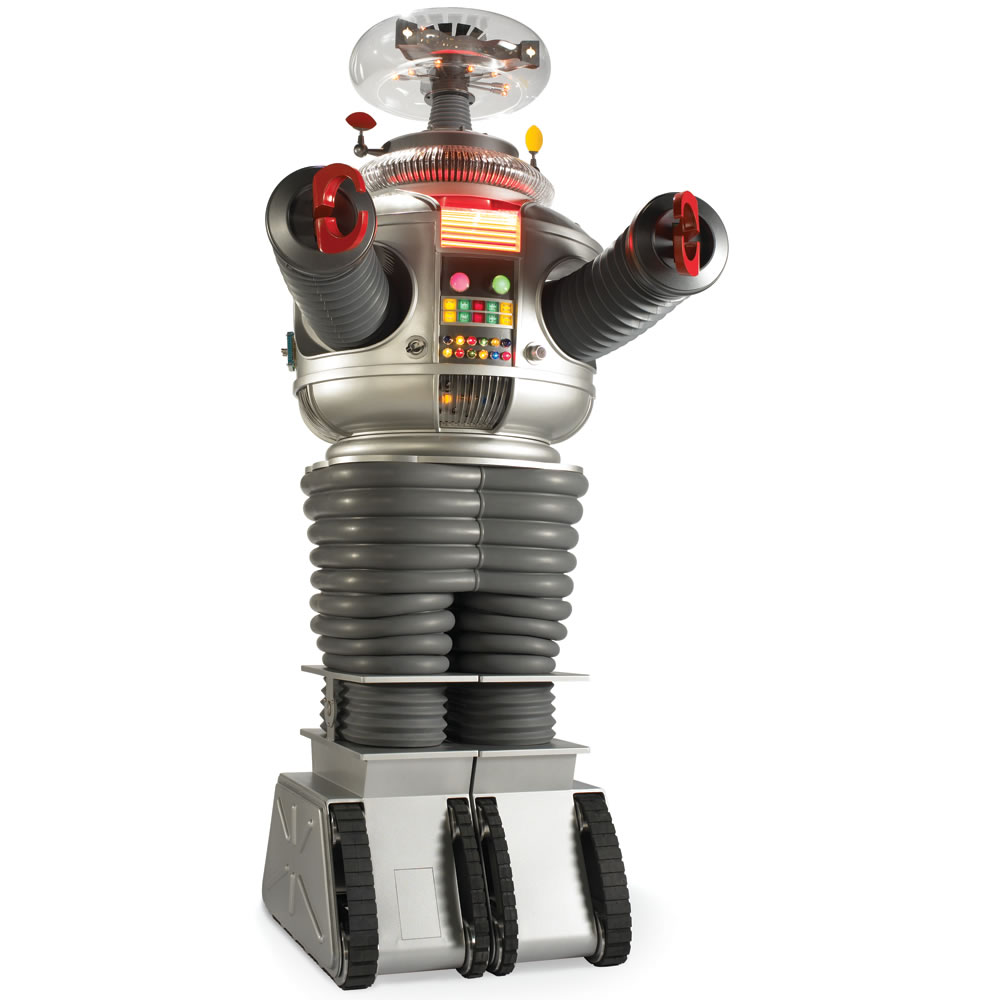 |
| Does not compute ... or does it? |
 |
| Just asking for trouble ... |
... electronic voting attempts to solve a problem that just doesn't exist. With the predominant system of paper ballots, we normally get a preliminary count of the votes in a matter of hours already. The benefits provided by a more automatized counting process are not only questionable, but they simply do not outweigh the gravity of the risks involved.
Plenty of food here for thought. Now I'm off to rest my eyes for a bit.
Tuesday, July 19, 2016
That does not compute (or does it?)
A brief round-up culled from recent computer-centric items ...
Of late, self-driving vehicles are all over the net (not yet, so much, actual roads). Even before a fatal crash in a Tesla car using the spectacularly misnamed "Autopilot" feature (it's more like advanced cruise control), "U.S. consumers buck investors' rush to self-driving cars." A key quote:
The latest University of Michigan survey found 46 percent of respondents preferred no self-driving, followed by partial self-driving (39 percent) and complete self-driving (15 percent).
Nearly 95 percent of respondents said they wanted to have a steering wheel plus gas and brake pedals so they could take control of a self-driving vehicle when desired, the study found.
For a look at the broader implications of that accident, consider, "Tesla Autopilot Crash Exposes Industry Divide." And what is that divide? On the one hand are those, like Tesla, favoring an incremental approach to developing and deploying features that will ultimately aggregate to self-driving capability. On the other side are those, like Google, favoring a direct jump to fully autonomous vehicles.
Many concepts for fully autonomous vehicles anticipate intervehicular and vehicle/roadway communications and coordination. Such concepts immediately bring to mind (or should, anyway), the need for robust anti-malware provisions. And so, while not a vehicle-specific article, this is nonetheless cautionary: "Symantec – the popular computer protector – may actually help hackers, feds warn." (Tooting my own horn [heh] for a moment, malware commandeering a computerized car was a minor but critical plot point in my first/1991 novel, Probe.)
And in yet more computer-related items ...
 |
| Tesla Model S |
The latest University of Michigan survey found 46 percent of respondents preferred no self-driving, followed by partial self-driving (39 percent) and complete self-driving (15 percent).
Nearly 95 percent of respondents said they wanted to have a steering wheel plus gas and brake pedals so they could take control of a self-driving vehicle when desired, the study found.
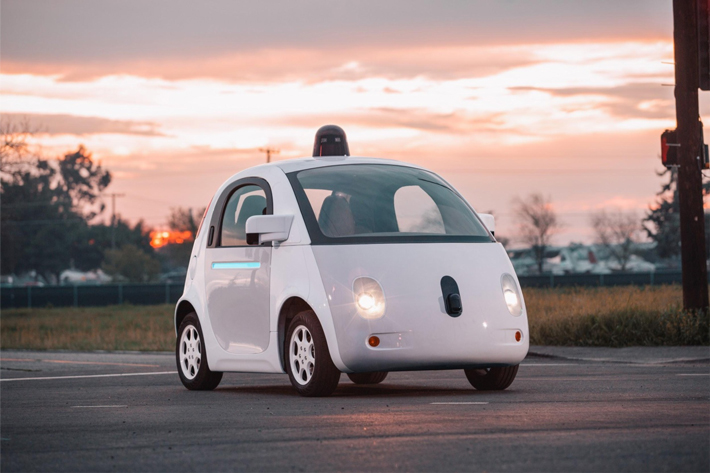 |
| The Google approach |
Many concepts for fully autonomous vehicles anticipate intervehicular and vehicle/roadway communications and coordination. Such concepts immediately bring to mind (or should, anyway), the need for robust anti-malware provisions. And so, while not a vehicle-specific article, this is nonetheless cautionary: "Symantec – the popular computer protector – may actually help hackers, feds warn." (Tooting my own horn [heh] for a moment, malware commandeering a computerized car was a minor but critical plot point in my first/1991 novel, Probe.)
And in yet more computer-related items ...
Tuesday, July 5, 2016
Food for thought, or empty mental calories?
In the quest for eyeballs -- aka, monetizing one's website -- journalistic integrity often suffers. Too often, even legitimate/serious reports online have click-bait titles.
Consider the following recent articles. Which of these quoted headlines are fair? Which are inappropriately sensationalized? (Inquiring minds, as they say, want to know.)
From The Washington Post, we have "This scientist nearly went to jail for making up data." The issue: how egregious and/or self-serving can the fudging of grant applications and research data be before such behavior becomes garden-variety fraud?
Next, Yahoo News offers us "Wireless mice leave billions at risk of computer hack: cyber security firm." The cited study claims an ability to inexpensively hack into unencrypted mouse/computer links (some mice use encrypted links) from a distance of up to 180 meters.
Consider the following recent articles. Which of these quoted headlines are fair? Which are inappropriately sensationalized? (Inquiring minds, as they say, want to know.)
From The Washington Post, we have "This scientist nearly went to jail for making up data." The issue: how egregious and/or self-serving can the fudging of grant applications and research data be before such behavior becomes garden-variety fraud?
 |
| Data, data everywhere (but how much can we trust?) |
Next, Yahoo News offers us "Wireless mice leave billions at risk of computer hack: cyber security firm." The cited study claims an ability to inexpensively hack into unencrypted mouse/computer links (some mice use encrypted links) from a distance of up to 180 meters.
Monday, June 20, 2016
Of matters strange and (some of them, anyway) wondrous
It's the things you don't anticipate that get you -- as the folks at the LHC learned yet again. See "Weasel Apparently Shuts Down World's Most Powerful Particle Collider." You can consider this an instance of not being dis-CERN-ing. (The weasel couldn't have been too happy about it either.)
It's long been a basic tenet of optics that the resolution limit of a lens or mirror stems from its size relative to the wavelength of incident light. Well, that tenet arose in an era before meta-materials. See "Meta-lens works in the visible spectrum, sees smaller than a wavelength of light." Among other implications, the lenses in future smart phones won't need to be as bulky as today. And, those new lenses may be flat. All in all, cool stuff.
But wait! There's more!
 |
| Optical meta-material |
But wait! There's more!
Saturday, March 19, 2016
Hacked off: a manifesto
I haven't blogged about computer (in)security for awhile -- but not for any lack of material. Certainly the confrontation between the FBI and Apple about unlocking the iPhone used by one of the San Bernardino shooters has been all over the news. And because that story is all over, there's little point in me adding my two cents worth. I'll wait to comment at least until there's a court decision on the matter to comment upon.
I take it back. I will comment upfront on one aspect of the situation. Apple is to be commended for building a product that's actually secure -- a praiseworthy technical and managerial achievement no matter which side of the legal controversy you happen to be on. Keep reading to get an inkling how rare such achievement is.
Remember how (apparently) the US and Israel once impeded the Iranian uranium-enrichment program with the Stuxnet worm? Remember how the attack on the Iranian centrifuges was deemed so sophisticated that technologically advanced nation-states had to be involved? This next item may not count as progress, but it is news: "An Easy Way for Hackers to Remotely Burn Industrial Motors." To wit:
... Now a researcher has found an easy way for low-skilled hackers to cause physical damage remotely with a single action—and some of the devices his hack targets are readily accessible over the Internet.
and also:
... At least four makers of variable-frequency drives all have the same vulnerability: they have both read and write capability and don’t require authentication to prevent unauthorized parties from easily writing to the devices to re-set the speed of a motor. What’s more, the variable drives announce the top speed at which motors connected to them should safely operate, allowing hackers to determine the necessary frequency to send the device into a danger zone.
Not good design. Flat out, not good.
 |
| If only it were this simple ... |
Remember how (apparently) the US and Israel once impeded the Iranian uranium-enrichment program with the Stuxnet worm? Remember how the attack on the Iranian centrifuges was deemed so sophisticated that technologically advanced nation-states had to be involved? This next item may not count as progress, but it is news: "An Easy Way for Hackers to Remotely Burn Industrial Motors." To wit:
... Now a researcher has found an easy way for low-skilled hackers to cause physical damage remotely with a single action—and some of the devices his hack targets are readily accessible over the Internet.
and also:
... At least four makers of variable-frequency drives all have the same vulnerability: they have both read and write capability and don’t require authentication to prevent unauthorized parties from easily writing to the devices to re-set the speed of a motor. What’s more, the variable drives announce the top speed at which motors connected to them should safely operate, allowing hackers to determine the necessary frequency to send the device into a danger zone.
Not good design. Flat out, not good.
Tuesday, October 20, 2015
Strange but true
I spent way too long last week configuring a new PC (aka learning -- doing battle with -- Windows 10). That makes today a good day to recover a bit of time by posting from my stockpile of accumulated SF and Nonsense-relevant esoterica.
Is the problem that I haven't been getting enough sleep? In simpler times, before much in the way of artificial lighting, did people evolve to need a lot of sleep? Say, to need the oft-recommended eight hours per night? Well, maybe no one ever got that much sleep. See (from Reuters, via Yahoo News), "What a nightmare: sleep no more plentiful in primitive cultures."
 |
| Too often, how we all feel |
Tuesday, September 29, 2015
Some highs and lows of high tech
Indulging my interest in high tech, let's consider some recent news items on that theme.
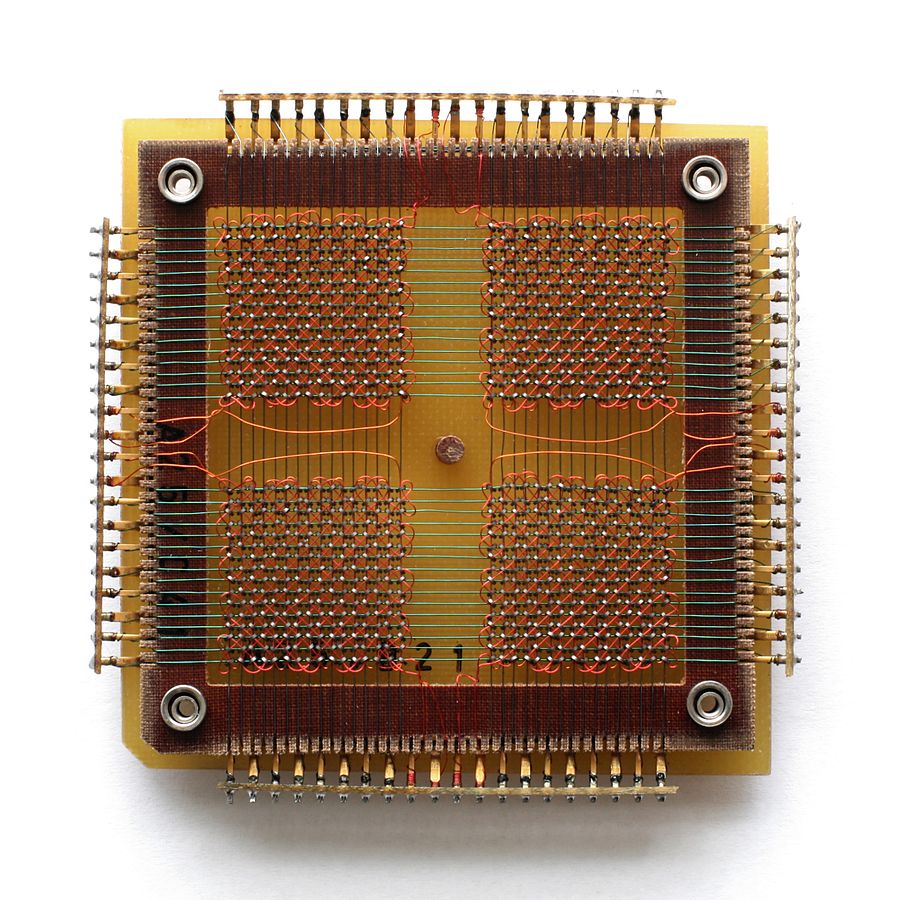
We'll start with the teaser that "Intel and Micron Announce 'Revolutionary' Mystery Memory." Most everything these industry leaders have to say generally merits attention -- but when they talk about "a new form of nonvolatile memory that the companies say is 1000 times speedier than NAND Flash and ten times denser than DRAM," one really should take notice. I look forward to hearing more about the new technology -- and how (assuming it progresses to the product stage) it will impact computer architectures.
From the tiny domain of modern microelectronics, let's turn to the vast realm of space. Regarding the latter, a Canadian firm has proposed a new type of space elevator.
Traditionally (and here I quote myself from "Alien Adventures: Rising to the Challenge," in the October 2015 issue of Analog), a space elevator is "just what it sounds. Rather than rocket into space -- carrying fuel to carry the fuel to carry yet more fuel ... to carry a comparatively tiny payload -- creep up a long cable in an elevator car. The elevator ride will take days, not minutes, but it will be far more economical, and far more environmentally friendly, than rocketry. First proposed in 1895, the space-elevator concept was popularized by Arthur C. Clarke in his 1979 novel, The Fountains of Paradise."
 |
| At the core of the matter :-) |
From the tiny domain of modern microelectronics, let's turn to the vast realm of space. Regarding the latter, a Canadian firm has proposed a new type of space elevator.
 |
| First step is a doozie |
Tuesday, July 21, 2015
Cool stuff other than Pluto
Let me say upfront that the recent New Horizons flyby of Pluto was awesome. But NASA's images speak for themselves; you don't need my two-cents worth on the topic.
Instead, today I'll write mostly about some interesting computer (in)security topics. (You also don't need me to tell you how awful the recent OPM hack was, or the ho-hum non-response from the executive branch, so I'll cover less prominent security topics.)
 |
| When it rains, it pours |
Monday, March 16, 2015
Catching up
From the Department of Miscellaneous and Sundry (and saved for a rainy, er snowy day when a blog topic didn't jump out at me) ...
Geologists, biologists, and others divide Earth's long history -- about 4.5 billion years -- into ages, epochs, and periods. Each marks a major shift in the nature of the planet. We humans, despite our grand airs ("homo sapiens sapiens ... twice wise? really?) are newcomers. Still, we are remodeling the place. And so, some scientists wonder: "Are we there yet? Scientists prepare for change of epoch."
What do you think? Has the Anthropocene epoch begun?
In a related vein, "Nation’s Historians Warn The Past Is Expanding At Alarming Rate."
 |
| Home, cluttered home |
What do you think? Has the Anthropocene epoch begun?
In a related vein, "Nation’s Historians Warn The Past Is Expanding At Alarming Rate."
Monday, February 2, 2015
Science (and "science") news
"On 20 December 2013, The United Nations (UN) General Assembly 68th Session proclaimed 2015 as the International Year of Light and Light-based Technologies (IYL 2015)." (That's from the IYL home page.)
What could be more appropriate than a moment of respectful reflection (no pun intended) on the recent passing of a major pioneer of light technology? See "Charles Townes, who helped invent now-ubiquitous laser, dies." Lasers are essential -- to name only a handful of their applications -- to precision scalpels, retail scanners, DVD drives, telecommunications, and (now in field test aboard the USS Ponce) directed-energy weapons. That's quite the legacy.
 Less commented upon, but also recent and noteworthy, "Illinois LED pioneers receive Draper Prize." That's Illinois, as in the university of: my alma mater. The Draper Prize (if less publicized than the Nobel Prize, one of which Townes won) is a Big Deal: the annual award of the National Academy of Engineering. Many a laser is, of course, an LED laser.
The Draper announcement speaks to me because -- decades ago, back at the U of Illinois -- I took a class on semiconductor physics from Prof. Nick Holonyak, the senior member among the aforementioned pioneers. Holonyak was a terrific teacher and, it was clear to me even then, a researcher doing groundbreaking work. He's now widely recognized for developing the first practical light-emitting diode. I am delighted on his behalf.
What could be more appropriate than a moment of respectful reflection (no pun intended) on the recent passing of a major pioneer of light technology? See "Charles Townes, who helped invent now-ubiquitous laser, dies." Lasers are essential -- to name only a handful of their applications -- to precision scalpels, retail scanners, DVD drives, telecommunications, and (now in field test aboard the USS Ponce) directed-energy weapons. That's quite the legacy.

The Draper announcement speaks to me because -- decades ago, back at the U of Illinois -- I took a class on semiconductor physics from Prof. Nick Holonyak, the senior member among the aforementioned pioneers. Holonyak was a terrific teacher and, it was clear to me even then, a researcher doing groundbreaking work. He's now widely recognized for developing the first practical light-emitting diode. I am delighted on his behalf.
Subscribe to:
Posts (Atom)











 Posts
Posts


