Tuesday, October 19, 2010

A still wacky universe

Oddities from the world of science continue to attract my attention ...

Can the language we speak affect how we perceive the world? Perhaps. See Lost in Translation.

I've always thought this relationship must exist. It's not that one can't imagine a concept for which vocabulary doesn't already exist -- or else nothing new (including new vocabulary) would ever be created -- but surely it helps to have suitable vocabulary to conceptualize the new thing.

Think that's strange? How about pinpointing the differences in brain wiring between introverts and extroverts? See Brains of Introverts Reveal Why They Prefer Being Alone.

Tuesday, October 12, 2010

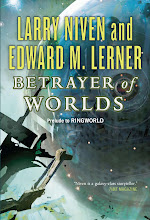
Betrayer of Worlds

Puppeteers are the sneakiest, most conniving -- and for many SF readers, most fascinating -- aliens in the galaxy. They're certainly the most cowardly. Arguably, they're the most ruthless.

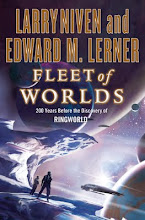
Maybe that's why I so enjoy writing about them. As in -- just released today -- the latest installment in Larry Niven's and my epic Fleet of Worlds series: Betrayer of Worlds.
Since the chain reaction of supernovae at the galactic core sent a trillion Puppeteers aboard the Fleet of Worlds fleeing for their lives, the two-headed aliens have lurched from one crisis to the next ...

Until now, when -- like every Puppeteer's worst nightmare -- past crises have converged.

Tuesday, October 5, 2010

A big part of why I do what I do ...

NPR recently reported that "Sci-Fi Inspires Engineers To Build Our Future."


I already knew that, of course -- and I'm sure SF lures folks into science as well as into engineering. Heck, once upon a time, SF lured me into physics. I know I've read articles in which astronauts say about themselves that science fiction (never "sci-fi") first interested them in space, or science, or technology. From one such article, "Real Astronauts in Fictional Space," a quote:

"One thing most all astronauts have in common is their love of science fiction and “space-operas”, especially those that treat contemporary issues in their stories, and those, like Star Trek, that inspire future generations to put no limits on their imaginations and encourages them to excel in the sciences."

Inspiring others to expand human knowledge, unleash their imaginations, and explore new worlds. Not too shabby a reason to go to work every day.

Thursday, September 30, 2010

InterstellarNet: New Order

Updated 12-04-2023

Hurrah! Now back in print and electrons

Updated 07-29-2023

Temporarily out of print and electrons, but under contract for reissue.

Machiavellian?  That's kids' stuff!  Beware humanity's new neighbors ...


Machiavelli advised that, "There is nothing more difficult to take in hand, more perilous to conduct, or more uncertain in its success, than to take the lead in the introduction of a new order of things." And he only schemed about petty squabbles between Italian city-states.

That brings me to InterstellarNet: New Order, the latest installment in my InterstellarNet future history.

Tuesday, September 28, 2010

Wild, wacky stuff

The universe is strange. If I'd ever been so foolish as to think I understood the place, any of the following recent discoveries would have disabused me of the notion.

Apparently the sun affects the decay rates of radioactive elements here on Earth. The effect is tied to solar flares and the rotation rate of the sun's core.

Tuesday, September 21, 2010

When robots collide

Today's topic: some interesting articles I've accumulated from the world(s) of computer science.

Like progress toward self-driving vehicles. See how the University of Parma’s Artificial Vision and Intelligent Systems Laboratory drove a robotic car from Italy to China. (It wasn't always quite autonomous, or always entirely trusted, but this was an impressive feat nonetheless. See article for exceptions. )

Wednesday, September 15, 2010

Of Gw'oth and Jotoki

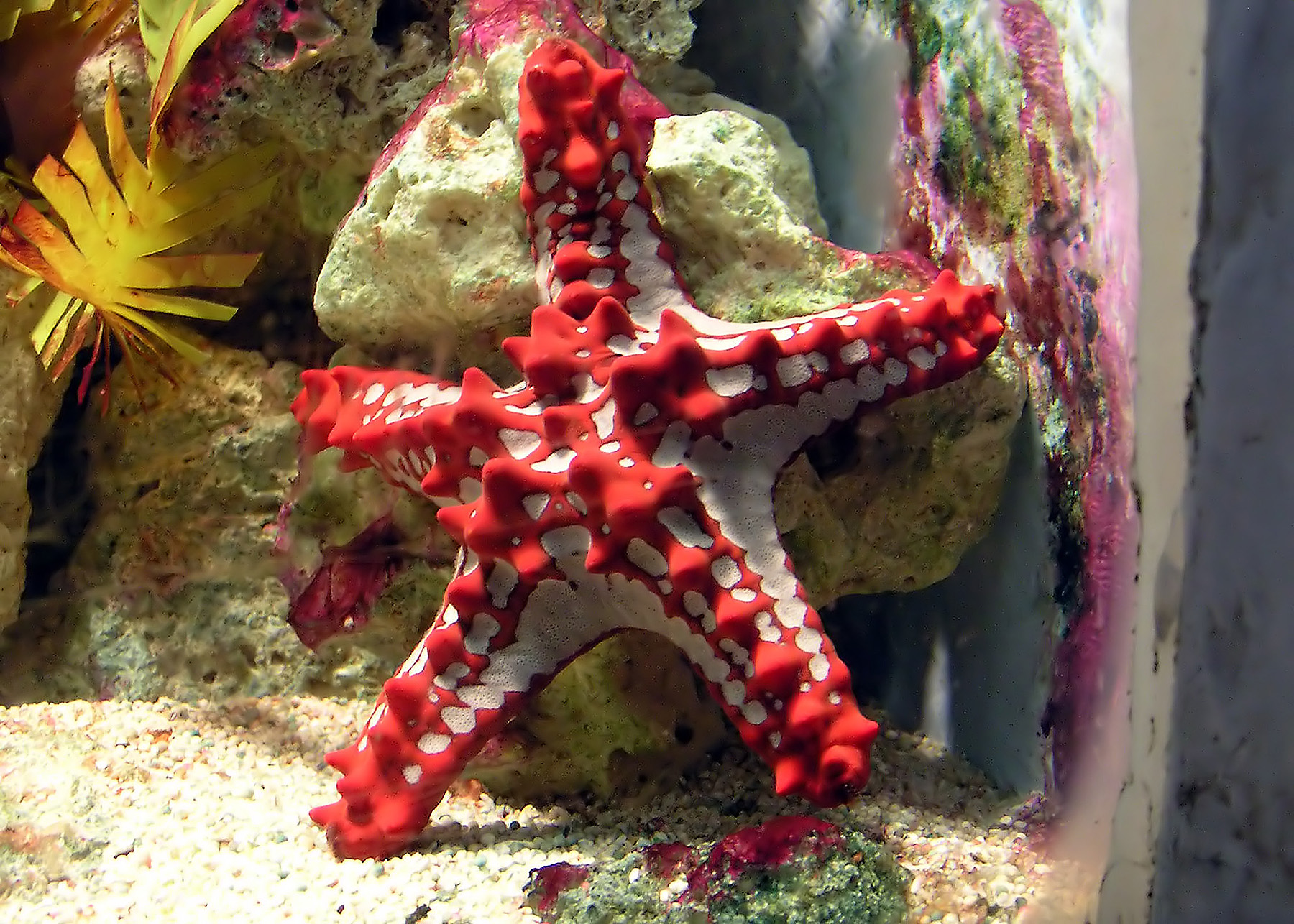
It's less than obvious from this post's subject line, but I can still type. Gw'oth (singular, Gw'o) are starfish-like aliens that figure in the Fleet of Worlds series of novels. Jotoki (singular, Jotok) are starfish-like aliens that figure in the Man-Kzin War series of books.

The FOW novels are my space-operatic collaborations with Larry Niven. The MKW books are short-fiction space-operatic collections "created by Larry Niven," with most stories contributed by other authors. Both series share a setting Larry calls Known Space.

But that's a very spacious (pun unavoidable) setting: call it a thousand years of future history in a steadily growing volume that is many light-years across. Plenty of room therein for storytelling ... MKW and FOW do not meet.

Humanoid aliens teem in SF, with seldom any speculation that the species are related even when the humanoids share a fictional universe. No such forbearance for starfishoid aliens. Speculation abounds, as in this Wikipedia article about Known Space, that Gw'oth and Jotoki are related.

They're not.

Tuesday, September 7, 2010

Juggling chainsaws

Mental chainsaws, anyway. Working too many projects at the same time *is* hazardous to one's mental health. But there's relief in sight. In the past few days I: