 |
| Too often, how we all feel |
Tuesday, October 20, 2015
Strange but true
I spent way too long last week configuring a new PC (aka learning -- doing battle with -- Windows 10). That makes today a good day to recover a bit of time by posting from my stockpile of accumulated SF and Nonsense-relevant esoterica.
Is the problem that I haven't been getting enough sleep? In simpler times, before much in the way of artificial lighting, did people evolve to need a lot of sleep? Say, to need the oft-recommended eight hours per night? Well, maybe no one ever got that much sleep. See (from Reuters, via Yahoo News), "What a nightmare: sleep no more plentiful in primitive cultures."


Sunday, October 18, 2015
Night of the Talking Heads
This TV appearance just out from Fast Forward: Contemporary Science Fiction ...
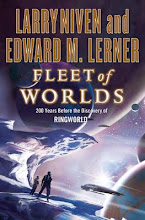
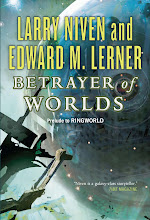
I'm interviewed about (mostly) my latest novel, InterstellarNet: Enigma. Tom Shaad, host of the show, also got me talking about some of the finer points of the InterstellarNet series, my writing process, and collaborating (on the unrelated Fleet of Worlds series) with NYT bestselling author Larry Niven. And it's all certified SFW.
Among the joys of the writer's life is the -- how shall I put it? -- casual dress code. It takes a lot these days to get me into a coat and tie. Going on TV to talk about writing will do it :-)
I'm interviewed about (mostly) my latest novel, InterstellarNet: Enigma. Tom Shaad, host of the show, also got me talking about some of the finer points of the InterstellarNet series, my writing process, and collaborating (on the unrelated Fleet of Worlds series) with NYT bestselling author Larry Niven. And it's all certified SFW.
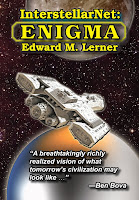 |
| To read about the novel ... |
Monday, October 12, 2015
Star-sighted
At risk of seeming starry-eyed ...
In my 2012 technothriller, Energized, an astronomer at the National Radio Astronomy Observatory (NRAO) appeals to NASA to stop work on solar-power satellites. Her concern: microwaved power from the satellites would interfere with radio telescopes. In a more mundane instance of life imitating art, NRAO recently appealed to the FCC to bar radio-controlled robotic lawnmowers. Again, the concern was over possible interference. And again imitating art, NRAO did not convince the FCC. See "iRobot's robotic lawn mower gets U.S. regulatory approval."
 |
| Life imitates art ... sorta |
Tuesday, October 6, 2015
Getting physical
News about physics being a popular topic on SF and Nonsense, herewith a few interesting (but not especially publicized) tidbits ...
Old-fashioned light bulbs emit a broad spectrum of colors. LEDs? They're red or green or (and this was difficult) blue. If you wanted white light -- white, of course, being a blend of colors -- you needed to mix the emissions from separate red, green, and blue LEDs. But maybe not for long. See (from IEEE Spectrum), "The First White Laser."
The heart of the new device is a sheet only nanometers thick made of a semiconducting alloy of zinc, cadmium, sulfur, and selenium. The sheet is divided into different segments. When excited with a pulse of light, the segments rich in cadmium and selenium gave off red light; those rich in cadmium and sulfur emitted green light; and those rich in zinc and sulfur glowed blue.
 |
| White light thru yonder prism breaks |
The heart of the new device is a sheet only nanometers thick made of a semiconducting alloy of zinc, cadmium, sulfur, and selenium. The sheet is divided into different segments. When excited with a pulse of light, the segments rich in cadmium and selenium gave off red light; those rich in cadmium and sulfur emitted green light; and those rich in zinc and sulfur glowed blue.
Thursday, October 1, 2015
Coming (to an end) soon ...
Over the summer, as part of his launch support for InterstellarNet: Enigma, my esteemed publisher offered promotional ebook pricing for earlier novels in the series. But summer is over. Pretty soon, that promotional pricing will be, too.

 There's more on my website about the InterstellarNet series. Or get to the Edward M. Lerner Bookstore, on Amazon, while the gettin's good ;-)

Lots of people scooped up InterstellarNet: Origins and InterstellarNet: New Order ebooks at $2.99 ... but October 15, the ebook prices return to their original $7.99.
“Edward M. Lerner’s InterstellarNet is
one of the most original and well-thought-out visions of an interstellar
civilization I’ve ever seen.”
— Stanley
Schmidt, Author of Argonaut
Tuesday, September 29, 2015
Some highs and lows of high tech
Indulging my interest in high tech, let's consider some recent news items on that theme.
We'll start with the teaser that "Intel and Micron Announce 'Revolutionary' Mystery Memory." Most everything these industry leaders have to say generally merits attention -- but when they talk about "a new form of nonvolatile memory that the companies say is 1000 times speedier than NAND Flash and ten times denser than DRAM," one really should take notice. I look forward to hearing more about the new technology -- and how (assuming it progresses to the product stage) it will impact computer architectures.
From the tiny domain of modern microelectronics, let's turn to the vast realm of space. Regarding the latter, a Canadian firm has proposed a new type of space elevator.
Traditionally (and here I quote myself from "Alien Adventures: Rising to the Challenge," in the October 2015 issue of Analog), a space elevator is "just what it sounds. Rather than rocket into space -- carrying fuel to carry the fuel to carry yet more fuel ... to carry a comparatively tiny payload -- creep up a long cable in an elevator car. The elevator ride will take days, not minutes, but it will be far more economical, and far more environmentally friendly, than rocketry. First proposed in 1895, the space-elevator concept was popularized by Arthur C. Clarke in his 1979 novel, The Fountains of Paradise."
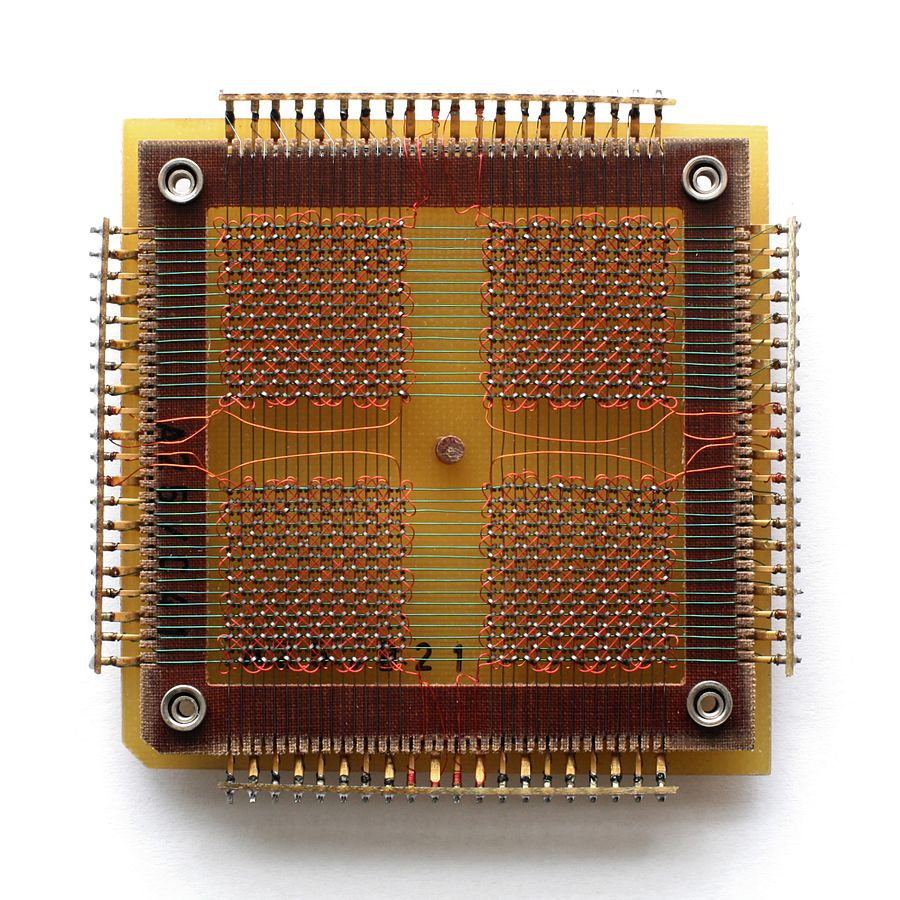 |
| At the core of the matter :-) |
From the tiny domain of modern microelectronics, let's turn to the vast realm of space. Regarding the latter, a Canadian firm has proposed a new type of space elevator.
 |
| First step is a doozie |
Wednesday, September 23, 2015
A(n inter)stellar start to the day
Not to step on my lede, the finalists for the inaugural Canopus Award, given for interstellar-themed SF, were announced today. And in the novel category -- well, that's the (inter)stellar news. I'll come to that.
First, some background ...
It's been nearly a year since I posted about participating in a 100 Year Starship Symposium (as one topic among several in "Nanotech and starships and fusion, oh my!"). 100YSS.org, seeded with NASA and DARPA funding, headed by physician and onetime shuttle astronaut Dr. Mae Jemison, is an awesome organization, its five-year mission: "To boldly go ..." (No, wait. That's another interstellar organization.)
 And the mission of 100YSS?
First, some background ...
It's been nearly a year since I posted about participating in a 100 Year Starship Symposium (as one topic among several in "Nanotech and starships and fusion, oh my!"). 100YSS.org, seeded with NASA and DARPA funding, headed by physician and onetime shuttle astronaut Dr. Mae Jemison, is an awesome organization, its five-year mission: "To boldly go ..." (No, wait. That's another interstellar organization.)
We exist to make the capability of human travel beyond our solar system a reality within the next 100 years. We unreservedly dedicate ourselves to identifying and pushing the radical leaps in knowledge and technology needed to achieve interstellar flight, while pioneering and transforming breakthrough applications that enhance the quality of life for all on Earth. We actively seek to include the broadest swath of people and human experience in understanding, shaping and implementing this global aspiration.And why this made my day? Still coming.
Tuesday, September 22, 2015
Exotica
(Not a typo. What were you thinking?)
As happens from time to time, I'm posting today with eclectic items of interest -- interesting to me, in any event -- that are, despite their esoteric variety, nonetheless germane to this blog.
 First up: the latest progress to be reported by the nascent DC-area Museum of Science Fiction (MOSF). I figure that I should -- before the third quarter ends -- pass along the MOSF's second-quarter report.
And an MOSF preview: I suspect that an item to be reported for the third quarter, when its progress summary becomes available, will be the "MOSF Journal of Science Fiction." In brief: the museum, in partnership with nearby University of Maryland, is setting up an academic journal focused on SF.
And the one commercial update within this stream-of-association post ... For entirely uninteresting reasons, the print edition of my time-travel-themed chapbook, A Time Foreclosed (2013), has been available -- using the modifier ironically -- only with a weeks-long shipping lag. Big surprise: people don't care to wait that long for a book. Today I'm happy to report that, as of a few days ago, Amazon is offering a new ATF print edition -- without that delay, and for a mere $4.99. (ATF remains available as an ebook, of course, for your instant gratification -- for just 99 cents.)
And speaking of said dominant etailer ...
As happens from time to time, I'm posting today with eclectic items of interest -- interesting to me, in any event -- that are, despite their esoteric variety, nonetheless germane to this blog.
And an MOSF preview: I suspect that an item to be reported for the third quarter, when its progress summary becomes available, will be the "MOSF Journal of Science Fiction." In brief: the museum, in partnership with nearby University of Maryland, is setting up an academic journal focused on SF.
 |
| Now meaningfully available |
And speaking of said dominant etailer ...
Subscribe to:
Posts (Atom)








 Posts


