Monday, August 27, 2018

My visit to The Innovation Show

It was recently my privilege to be on The Innovation Show: "an international show for innovators." Host Aidan McCullen and I discussed a lot:
  • Augmented humanity
  • Cyborgs
  • Robots
  • Genetic therapy
  • Brain/machine interfaces
  • Autonomous weapons
  • Artificial intelligence
  • Super intelligence
  • Neural networks
  • Dystopia
  • The future skills of humanity
  • What we (humans) do when everything becomes automated
Let's just say, it was a busy three-quarters hour :-) 

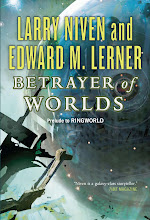
The impetus for this interview? That would be last spring's release of Trope-ing the Light Fantastic: The Science Behind the Fiction. (And in forty-eight minutes, we covered no more than a third of the topics in the book!)

Curious? Then check out the podcast at "The Science behind Science Fiction with Edward M.Lerner: Augmented Humanity, AI, Superintelligence."

Tuesday, August 21, 2018

Because what could *possibly* go wrong?

This article about the much-touted Tesla 3 -- an electric car for the masses (or, anyway, such members of that group as happen to have a spare $35K+) -- is, IMO, well worth reading.

I grant you: it is pretty.
I don't think I care to add anything beyond ... I'm not ready for this.

See "Behind the wheel of a Tesla Model 3: It’s a giant iPhone — for better and worse."

And I believe my reticence is for reasons beyond that I'm an Android guy :-)

Tuesday, August 14, 2018

What's up, Doc?

Astronomical news, of course :-)

Neutrinos are amazing particles. They interact so weakly with more familiar matter that it took decades to decide a neutrino had any mass at all. Aim a beam of neutrinos at a light-year thickness of lead, and half the neutrinos will emerge out the far side.

Our neighborhood neutrino factory -- aka, the Sun -- spits out a torrent of these particles. "Theoretical calculations say that about 65 billion neutrinos pass through every square centimeter region of the Earth's surface every second." (*) So how amazing is it that one neutrino recently made big news?
(*) "Nobel neutrinos

Blazar saddles?
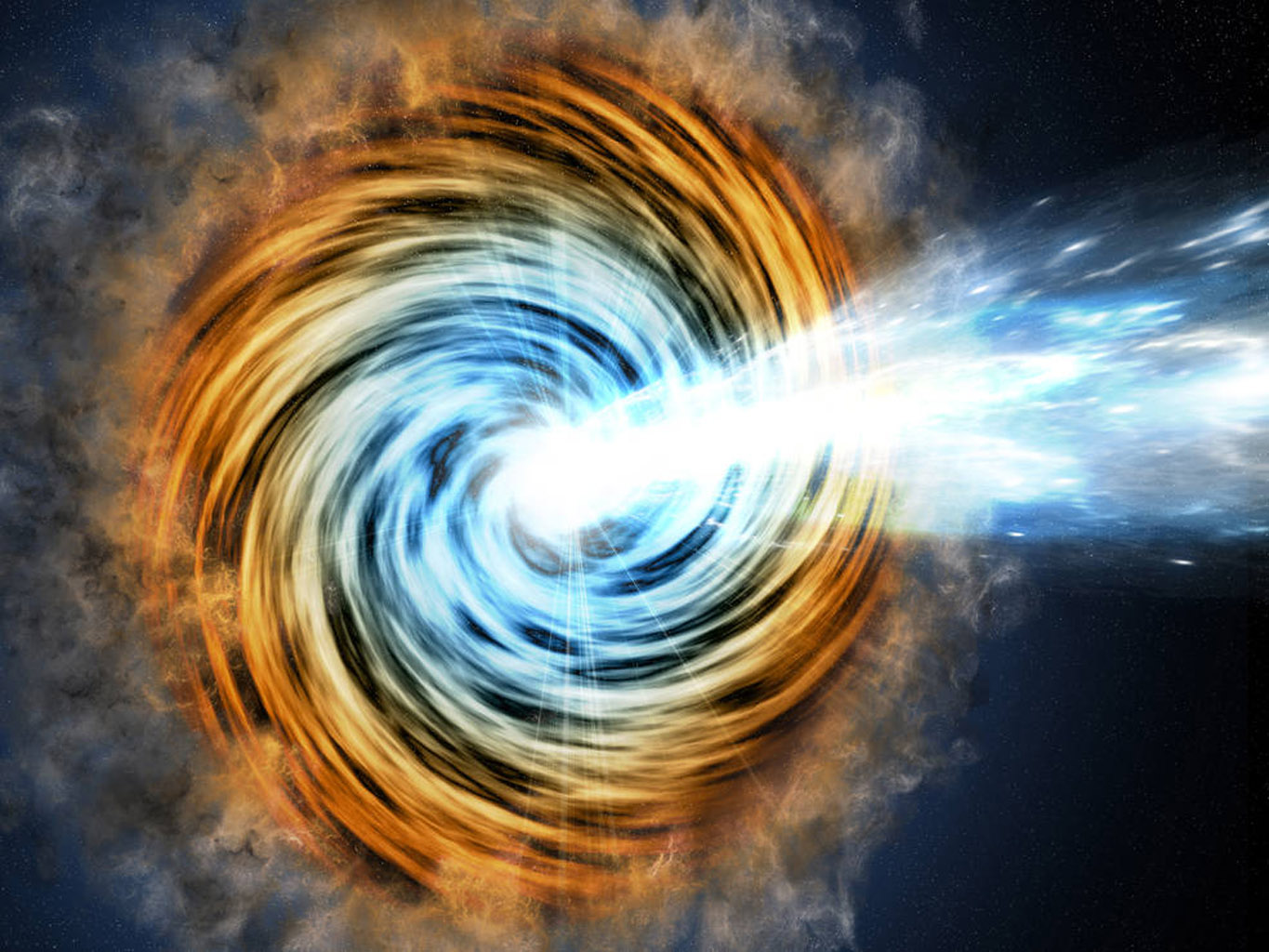
IMO, pretty amazing. Because this extremely high-energy neutrino was correlated to a particular event: a blazar -- aka, an active galactic nucleus -- about four billion light-years (and years) distant. 

This correlation marks the first step toward a third type of observation in the nascent science of multi-modal astronomy. That is, in addition to traditional observations (using, from longest to shortest wavelengths: radio waves, microwaves, infrared, visible light, ultraviolet, X-ray, and/or gamma-ray electromagnetic radiation) and -- for a very few years now -- gravitational-wave observations, we can now foresee combining neutrino observations. In a word: awesome.

For more on this particularly fascinating neutrino detection, see "Why a 4-Billion-Year-Old Particle That Hit Antarctica Is Such a Big Deal."

Tuesday, August 7, 2018

Curioser and curioser

Among the terrific -- and the terrible -- aspects of the web are the many odd articles that one somehow happens upon. Setting aside the disinformation among them, and the ulcer-inducing pieces, and the hoary repetitions, we're left with ... fascinating time sinks. Herewith, several such:
In the beginning?
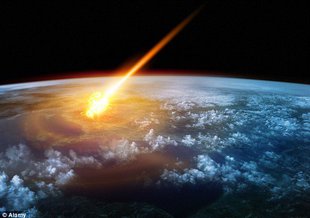
How did life on Earth begin? There's lots of speculation, and precious little by way of answers. (I'm talking about biology here, not theology.) One theory is that life didn't begin on Earth, but arrived from elsewhere. That's the Panspermia ("all seeds") explanation. What if primitive life drifted to Earth from another star system(s) and, once here, then evolved?  

And almost as speculatively, what if humans could hibernate? What if, to conquer the vastness of the void between stars, humans could be put into -- and revived from -- some kind of suspended animation?

In seeming -- but certainly, incomplete -- support of both these "what ifs," consider: "Siberian Worms Frozen In Permafrost For Up To 42,000 Years Defrosted Back To Life." The ability of any terrestrial life to survive millennia frozen makes both Panspermia and human hibernation seem slightly less impossible.

Monday, July 30, 2018

The short and the short of it

My posts of late have focused on books and book reissues. I'm overdue with reporting what's new with my writing at shorter lengths ....

Let's start with the sale of a guest editorial to Analog. That's "Dystopic? Or Myopic?" (The first draft was for what I expected to be a post in this space -- but as it kept growing, I decided to redirect.)

Words leaking out of fingertips :-)
Next comes a short story: "I've Got the World on a String." As it happens -- and no spoilers here -- this story also involves some venting. "String" will appear in Galaxy's Edge.

And I've got another newly completed piece of short fiction out looking for its home.

Tuesday, July 24, 2018

Bring out your dead

No, this post isn't about Monty Python and the Holy Grail (though that movie is a hoot).

But just as the one guy in that particular scene isn't quite dead, today's post deals with something also still with us -- and yet, less than energetic. To wit: books from deep in one's back list. Any author who has been plying his craft for as long as I have has a a book or three like that. Case in point ....

For no discernible reason, this morning I found myself remembering my earliest collections. These contain stories of which I remain fond -- but the books don't get a lot of (read: any) visibility. Haven't in years ....

So: I'm going to indulge myself with a few words about these early authorial endeavors. If this post ends up only Your Humble Blogger taking a stroll down Memory Lane? I'm okay with that.

Tuesday, July 17, 2018

InterstellarNet: Complete

Updated 01-31-2024: The omnibus ebook is no longer offered — but the individual novels are available from InterstellarNet’s new publisher. This post remains here for historical purposes.)

Three epic adventures ...
Some of my favorite work ...
All in one newly released, discounted ebook bundle! 

The entire InterstellarNet series
InterstellarNet: Origins. When the first call from the stars comes, do we even dare to answer?
"A wonderfully thought-provoking story ... Lerner's world-building and extrapolating are top notch.
-- SFScope
InterstellarNet: New Order. In which humanity discovers that meeting aliens face to face is very different -- and a lot more dangerous -- than sending and receiving messages.
"... A twisted plot complete with conspiracies, alien psychology, antimatter physics neep, AI spies, and plenty of shooting action at the end."
-- Internet Review of Science Fiction
InterstellarNet: Enigma. Humanity once feared that we might be alone in the universe. Now we know better. And it turns out there are far worse things than being alone ....
"An exceptional book in an excellent series .... If you enjoy a good story on a large scale told by sympathetic characters, read Interstellar Net: Enigma. If you enjoy space opera, space combat, and unlikely heroes saving the earth, you will enjoy this book. If you enjoy mysteries, the futuristic elements will not detract. This is one of the few novels that combine an action mystery with a sweeping science fiction and excels at being both."
-- Galaxy's Edge
And winner of the inaugural Canopus Award "honoring excellence in interstellar writing."
And of the overall InterstellarNet series:
"Edward M. Lerner’s InterstellarNet is one of the most original and well-thought-out visions of an interstellar civilization I've ever seen."
-- Stanley Schmidt, editor of Analog Science Fiction and Fact
As I type, InterstellarNet Complete for the Kindle -- that is, the entire trilogy -- is available from Amazon and in other popular formats for only $9.99. Check your favorite ebook retailer. Will update when the situation changes.

Perhaps you're not ready for a three-book commitment. Fair enough. You can read about any individual InterstellarNet title by clicking its corresponding cover on the right. (For now, the first two of these standalone ebooks are each discounted to $4.99)

Monday, July 9, 2018

Life, the universe, and everything ...

And yet, the number 42 isn't involved :-)

The not-so-little observatory that could
Great observatories have (ahem) greatly extended our understanding of the universe. So, first, let us mark an imminent sad passing: "NASA put its famous planet-hunting telescope to sleep because it’s almost out of fuel: The Kepler Space Telescope’s life is finally coming to an end." This fine astronomical instrument detected more than 2K subsequently confirmed exoplanets (with more confirmations likely  yet to come). Quite the legacy.

The ESO VLT
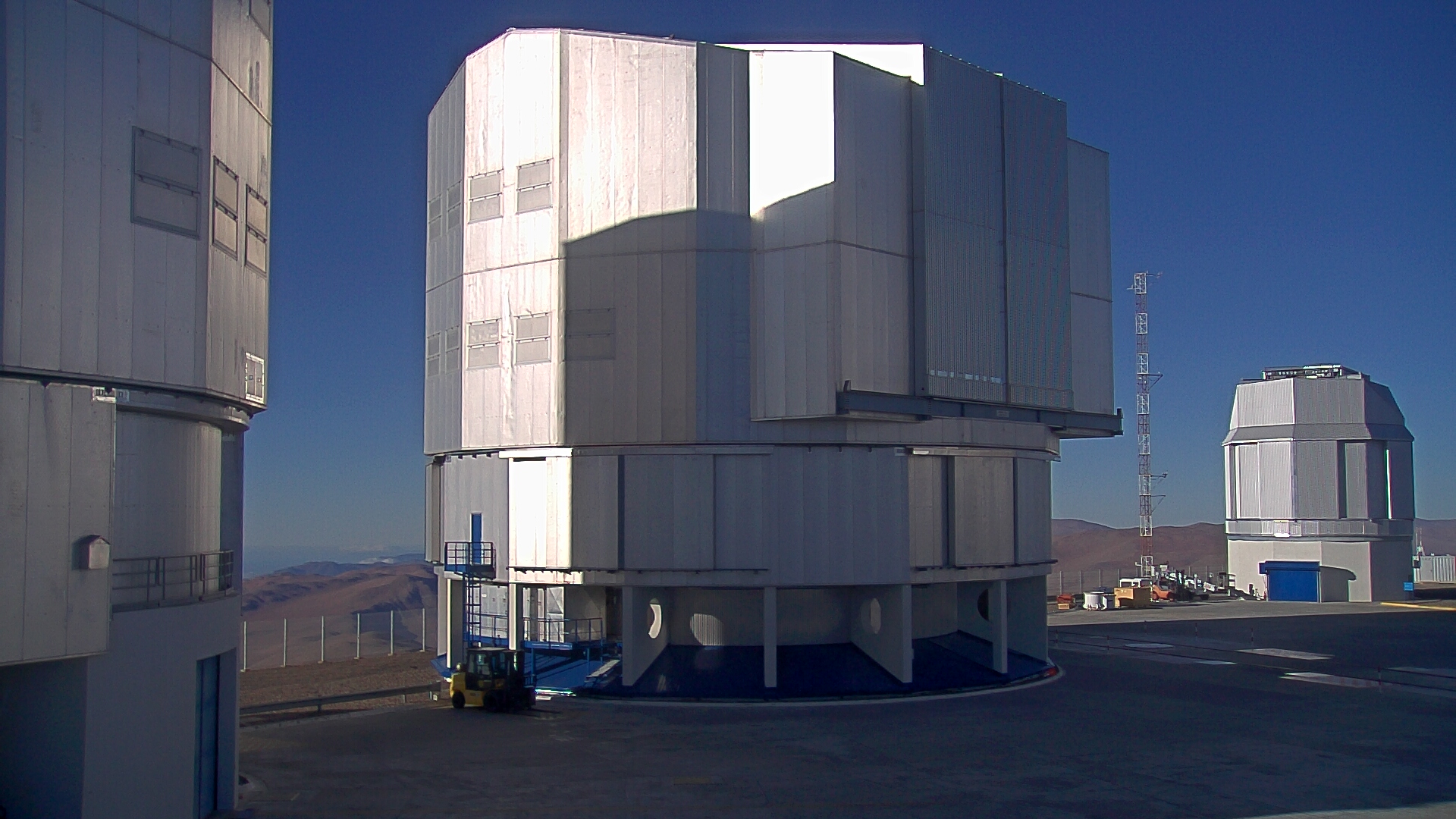
Another fine instrument -- this one Earthbound: the European Southern Observatory’s Very Large Telescope -- has, for the first time, caught a planet in the very first stages of formation. See: "First confirmed view of a newborn planet: A planet coalesces from the disc of dust and gas around the dwarf star PDS 70."

The JWST. Much assembly required.
Alas, the it's-been-coming-forever James Webb Space Telescope -- NASA's long-heralded successor mission to the (fortunately still hanging in there) Hubble Space Telescope -- has hit another snag. As in, "NASA Delays Launch of James Webb Space Telescope Again — This Time to 2021."

That's one day's view of (viewing) the universe. As for the life part of the subject line, an over-hyped bit of last week's science news. First, an example of the more breathless reporting: "Large molecules show Enceladus 'clearly is habitable for life' " And here is a more cautiously (IMO, more precisely) worded version: "No, NASA Did Not Find Even 'Hints Of Life' On Enceladus."

And everything? That was everything for today ;-)