Monday, August 3, 2015

And now for something (in fact, many somethings) completely different

I read mostly SF and current science/technology. For a change of pace, I recently pulled off my shelf a thick volume that I had forgotten even owning. It's been years -- at the least -- since I bought it.

But this book was well worth the wait.

Highly recommended
The Discoverers: A History of Man's Search to Know His World and Himself, by Daniel J. Boorstin, is as ambitious as the title suggests. Boorstin, if the name isn't familiar, was Librarian of Congress from 1975 to 1987. An historian, educated at Harvard, Oxford, and Yale, his writing is as solid and meticulously detailed as anyone could want -- and for all its encyclopedic depth and breadth, eminently readable.

The Discoverers takes on -- and admirably discharges --  the project of  surveying how our modern scientific understanding came about. It's a scholarly salute to the pioneers of dozens of fields, from explorers to clock makers to archeologists to ... you name it.

Beyond fascinating and cogent introductions to many scientific topics, and the often quirky biographies of the key players, Boorstin provides context. Why did a particular advance occur when it did? Why in one part of the world, or in a particular culture, and not others? How did deference to Ptolemy, Aristotle, Galen, and Confucius, among many,  inform -- or impede -- the development of science? How did prevailing beliefs, both religious and philosophical, advance or impede particular revolutions in thought? How did seemingly disjoint scientific awakenings pave the way for whole new disciplines?

The Discoverers examines geographical exploration, the invention of objective methods of measurement, standardization of calendars and chronologies (how else can one even hope to talk about world history?), evolution, economics, anthropology, the discovery of prehistory, advances in astronomy, and much more.

But beyond its fascinating narratives and diverting anecdotes, The Discoverers offers food for thought. Throughout mankind's millennia-long career, the common understanding(s) of our world's true nature has undergone revolution upon revolution. Much that we moderns immodestly take to be proven fact is of very recent vintage. Most science dates back no more than a few centuries -- and some branches are younger than that. Peer back even a few decades at what was then perceived wisdom, and it looks quaint. Cutting-edge technology from that same era already often seems primitive. It's enough to make one wonder: how much of what we feel certain about today will likewise seem misguided mere decades hence?

The Discovers, by Daniel J. Boorstin. Highly recommended.

Sunday, July 26, 2015

Hugo voting closing soon

Many visitors to SF and Nonsense, not surprisingly, read SF. Some are also, through a membership at last year's or this year's Worldcon, eligible to vote for this year's Hugo awards. If that's you, please note: voting closes on July 31. That's this coming Friday! (Where does the time go?)

The envelope please ...
As this year's puppygate controversy continues to swirl, it's more important than ever that nonpartisan readers (as I imagine visitors here to this blog to be) participate in the awards process. The more fans who -- turned off by all the squabbling and posturing, politicizing and agend-izing -- sit out this awards cycle, the more at risk this prestigious award becomes. The squabblers and politicizers will vote.

Full disclosure (though not news to regular droppers-by): I have a novelette on this year's final Hugo ballot. If you should find "Championship B'tok" award-worthy, that's keen. If you don't care for it, or think another(s) of the candidates is worthier -- fair enough. I thank all Hugo voters -- however they chose to vote -- who assess the nominated stories on their intrinsic merits.

(And if you're curious about my take on the controversy, see, "Of Hugo Awards, Sad Puppies, and notoriety.")

Tuesday, July 21, 2015

Cool stuff other than Pluto

Let me say upfront that the recent New Horizons flyby of Pluto was awesome. But NASA's images speak for themselves; you don't need my two-cents worth on the topic.
When it rains, it pours
Instead, today I'll write mostly about some interesting computer (in)security topics. (You also don't need me to tell you how awful the recent OPM hack was, or the ho-hum non-response from the executive branch, so I'll cover less prominent security topics.)

Tuesday, July 14, 2015

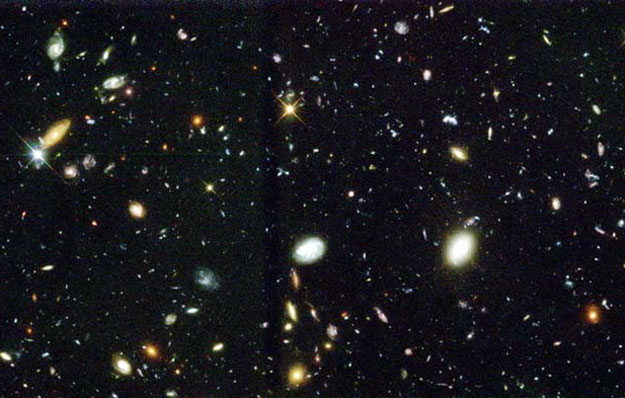
20 Unbelievable (Really!) Facts About Outer Space

I'm too busy to post this week ... but why should you suffer?

More than meets the eye (or the HST)
You won't want to miss "20 Unbelievable Facts About Outer Space."

Happy Pluto Flyby (and Bastille) Day :-)

Tuesday, July 7, 2015

The curious state of publishing

Some observations about the (generally troublesome) state of publishing ...

Is the shift from print to ebooks hurting publishers? Are brick-and-mortar bookstores dying? Conventional wisdom says yes to both. And (sometimes) conventional wisdom is wrong. See Hugh Howey's "Two Important Publishing Facts Everyone Gets Wrong."

(If you're unfamiliar Hugh Howey, he's one of the most successful self-published authors around. He got his start with self-published Kindle books -- although based on that success, he's conventionally published, too.)

Sunday, June 28, 2015

InterstellarNet: Enigma -- now (finally!) -- on paper :-)

Updated 12-04-2023

Hurrah! Now back in print and electrons

Updated 07-29-2023

Temporarily out of print and electrons, but under contract for reissue.

It's been an ebook serial. It's been an ebook book (or, as the publisher would have it, an ebook omnibus). It incorporates the Hugo Award-nominated novelette "Championship B'tok." But for the many who prefer the feel of a physical bound volume in their hands? They've been without an option.

Latest and greatest
It is InterstellarNet: Enigma, the third -- and, IMO, most ambitious yet -- adventure in the InterstellarNet saga. And as of today, I'm delighted to report, this novel is, finally, also available in print.

"When people talk about good hard SF -- rigorously extrapolated but still imbued with the classic sense-of-wonder -- they mean the work of Edward M. Lerner, the current master of the craft. InterstellarNet: Enigma is Lerner's latest gem, and it's up to his usual excellent standards; a winner all around."
-- Robert J. Sawyer, Hugo Award-winning author of Red Planet Blues

For a bit more about the story, read on.

Tuesday, June 23, 2015

We will sell no wine before its time

Fine wine -- and even, if you're old enough, the not-so-fine, screw-top beverage the subject-line slogan will evoke -- must age to reach its full potential.

I find the craft of writing to be like that. Sure, I've knocked out the first draft of some short stories in a few consecutive days (or even one!), allowing nothing to interrupt. For longer stories and novels, the process is more complicated -- and not merely because longer stories require (at the least) months to complete.

For longer works, the original story concept -- no matter how detailed my research, going-in outline, and character sketches -- benefits from a time-out. From a bit of aging, if you will. More often than not, I'll set aside a long work once the first quarter of it (give or take) is in first draft. Even when that pause comes simply from a reprioritization -- writing under contract must trump writing done on spec -- I've found that the time away is always for the best.

Tuesday, June 16, 2015

Physics in flux

With the daily news so often grim, and the 2016 presidential campaign already seeming endless, I find it uplifting, from time to time, to reground myself in less well covered -- but more meaningful and exciting -- dispatches from the frontiers of science. Today: reports and speculations from the frontiers of physics.

A chip off the Moore's Law block
We'll begin with applied physics. Since the Sixties, we've been on a pell-mell race to continue upping the density (read: continue decreasing the cost and/or size) of electronics. It's that steady progress that brings us such goodies as HDTV and smart phones.

Regularly the prognostication is made that Moore's Law (the doubling of component densities every two or so years) must soon come to a screeching halt. Intuitively, that makes sense -- over the decades, some features of state-of-the-art chips have been reduced to a mere 14 nm across. (Interatomic spacing in crystals is about 0.1 nanometers -- we're not talking about a lot of atoms across such tiny features.) Technologists, fortunately, keep coming up with clever approaches to sustain the trend. See "Intel: Moore's Law will continue through 7nm chips."

How long can such progress go on? Perhaps until  single molecules serve as electronic components. See "Molecular Electronics Takes Large Stride Forward" for the example of single-molecule diodes.